
Related videos:
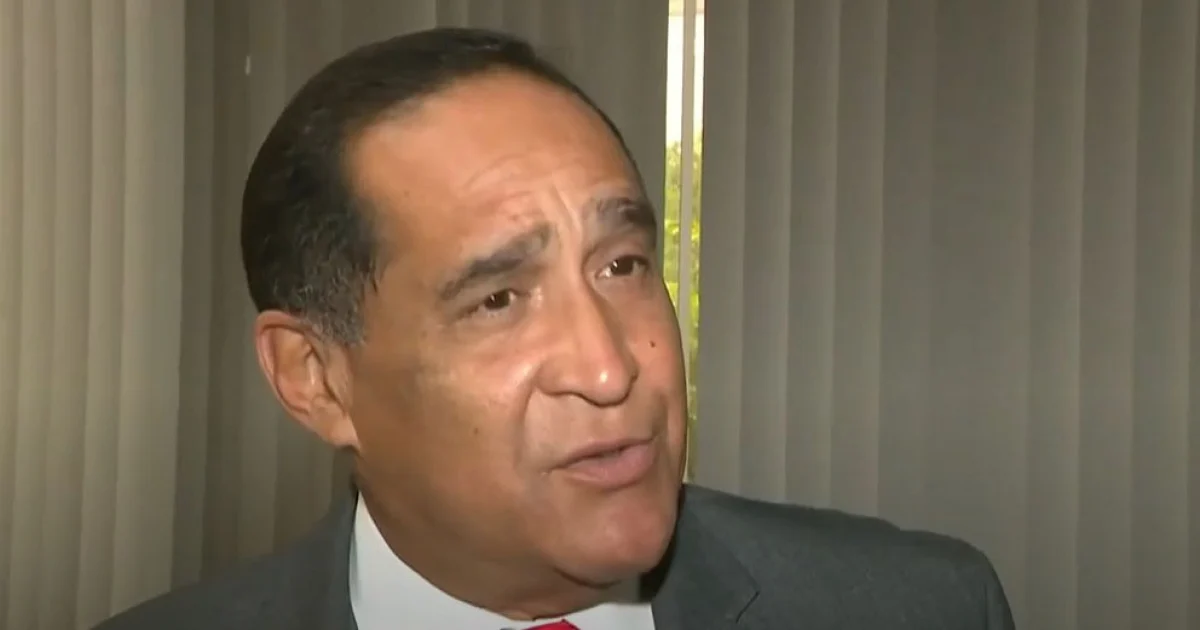
Former Miami-Dade County Commissioner Joe Martínez was sentenced this Monday to 34 and a half months in state prison (almost three years) after being found guilty of illegal compensation and conspiracy.
It involves the charges stemming from having received $15,000 in bribes from local businessmen in exchange for promoting an ordinance that favored their business interests.
Despite the severity of the sentence, Martínez will not be going to prison immediately: he will remain free on a bail of $15,000 while his defense files an appeal, the first step of which is scheduled for September 21, 2026.
The judge ordered that both sentences be served concurrently and acknowledged the time the politician has already been detained, which could reduce his effective stay behind bars if the appeal is unsuccessful.
Bribery and the accusation
The state attorney's investigation revealed that between 2016 and 2017, Martínez received three payments of $5,000 each from Jorge Negrín, owner of Extra Supermarket, and his landlord Sergio Delgado.
The money was intended for the then-commissioner to promote legislation that would allow the use of storage containers on a property owned by Negrín, which had multiple code violations.
Although the ordinance was never approved or put to a vote, the Prosecutor's Office argued that the mere act of accepting money in exchange for an official act constituted the crime of corruption.
For prosecutors Tim VanderGiesen and William González, the key evidence was that the payments stopped as soon as the legislative proposal failed. "The legislation was not approved, so there was no reason for more money to be needed," VanderGiesen argued in his closing statement.
Defense strategy and stance of the former commissioner
Martínez's attorneys, Ben Kuehne and Kendall Coffey, argued that the payments were acts of personal gratitude and not a quid pro quo. They claimed that their client never formally promoted an ordinance, but merely drafted a proposal that could be overlooked by the Commission.
They also insisted that there was no evidence of economic necessity that would drive him to corruption.
Martínez, of Cuban origin and a former lieutenant of the Miami-Dade Police, stood firm in his innocence until the end.
"I couldn't look at myself in the mirror, or face my children, my friends, my followers, and say, 'Yes, I am guilty of this,' when I didn't do it," he declared after learning his sentence.
His defense argues that the case is rife with "legal issues" and will base the appeal on questioning the admissibility of some of the evidence used in the trial, although it did not specify which pieces it will challenge.
Timeline of the case
August 2022: Martínez is arrested and suspended from his position by order of Governor Ron DeSantis.
November 2024: a jury finds him guilty of illicit compensation and conspiracy.
August 2025: the prosecutor requests 34.5 months of imprisonment, the minimum sentence according to the guidelines.
September 15, 2025: the judge issues a ruling and grants bail pending appeal.
Trajectory: Rise and Fall
Martínez was first elected in the year 2000 as a commissioner for Miami-Dade, a position he held for five terms, including two stints as president of the Commission. He unsuccessfully attempted to run for mayor in 2012 and for the federal Congress in 2014.
In 2020, he had achieved his re-election as commissioner, but his career was overshadowed in 2022 by the arrest that led to this legal proceeding.
State Attorney Katherine Fernández Rundle celebrated the verdict: "Twelve citizens of Miami-Dade heard all the evidence and decided that the use of public office for personal gain will not be tolerated in this community."
For his part, the former commissioner now faces an uncertain future: if the appeal fails, he will have to serve a sentence in prison that, although less than the 20 years he initially risked, represents a harsh end for a political figure who was once influential in South Florida.
Frequently Asked Questions about the Joe Martínez Case and Corruption in Miami-Dade
Why was Joe Martínez convicted?
Joe Martínez was convicted for accepting bribes from local business owners to promote their commercial interests through an ordinance in Miami-Dade. He received $15,000 in three payments of $5,000 each from Jorge Negrín and Sergio Delgado. Although the ordinance was never approved, the mere act of accepting money in exchange for an official act constituted the crime of corruption.
What was Joe Martínez's defense strategy?
Joe Martínez's lawyers argued that the payments were acts of personal gratitude and not a quid pro quo. They defended that Martínez did not formally advocate for an ordinance, but only drafted a proposal that the Commission could choose to ignore. Additionally, they insisted that there was no evidence that Martínez had a financial need to engage in corruption.
What consequences does Joe Martínez face after his conviction?
Joe Martínez was sentenced to 34 and a half months in prison, but he will remain free on bail while his defense appeals the sentence. If the appeal fails, he will have to serve the sentence in prison, which marks a complicated ending to his political career in Miami-Dade.
How does this case affect the public perception of the Miami-Dade government?
The case of Joe Martínez adds to a series of corruption scandals that have undermined trust in the local government of Miami-Dade. State Attorney Katherine Fernández Rundle emphasized that the use of public office for personal gain will not be tolerated, reflecting a strong stance against corruption in the community.
Filed under: