
Related videos:
Five executives from the Agricultural Supply Company of Sancti Spíritus were sanctioned for crimes of negligence and embezzlement that resulted in losses exceeding 97 million pesos, in a judicial process that has highlighted the lack of oversight and the impact of corruption in state entities that are crucial for the Cuban economy.
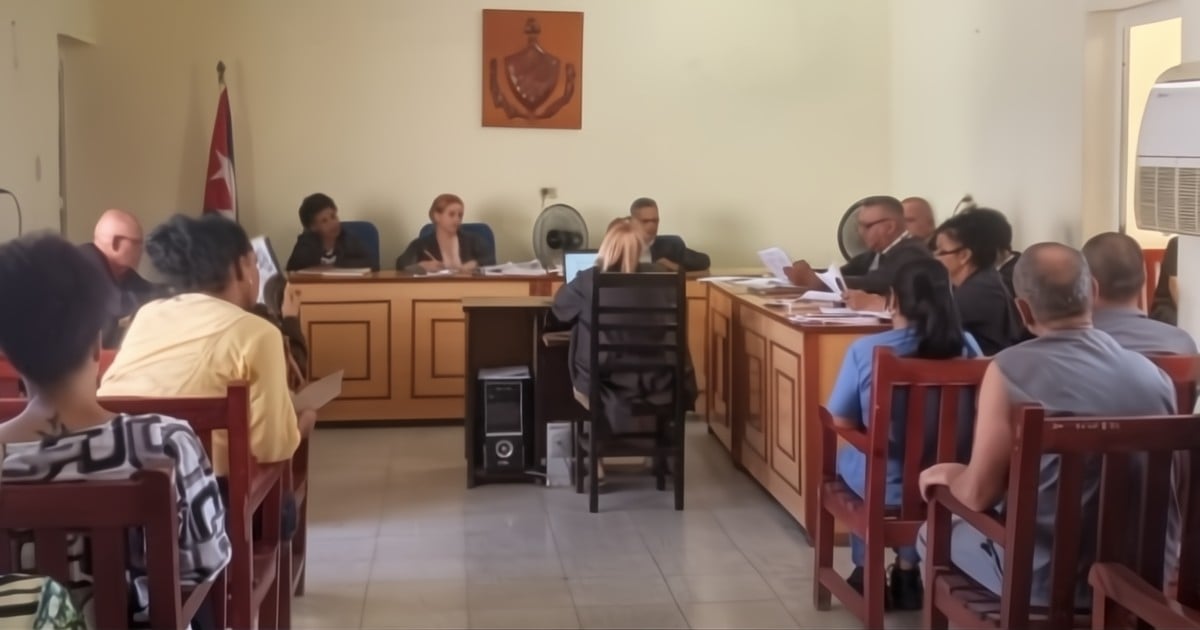
According to an official report this Wednesday from the newspaper Escambray, Case No. 64 of 2025 was heard in an oral and public trial on August 22 and 23 in the Criminal Chamber of the Provincial People's Court of Sancti Spíritus.
During the hearings, facts were revealed regarding events that occurred between 2023 and 2024, involving both negligence in resource management and irregular contracts with external actors, resulting in millions of dollars in damages to the company.
One of the most striking episodes was related to the meat product refrigerator intended for the internal sustenance of the workers, located in the supply warehouse of the UEB Comercializadora y Servicios.
On two occasions, the camera suffered mechanical failures that prevented it from maintaining the necessary cooling.
The executives, despite being aware of the seriousness of the problem, did not implement effective alternatives to save large quantities of salami, sardines, hamburger patties, ground beef, and pork, as well as fish fillets.
The result was the decomposition of tons of food, with a loss exceeding three million pesos.
The case with the most economic weight was linked to operations involving an alleged self-employed worker, who presented himself as a representative of a Local Development Project.
Despite the regulation requiring immediate payment for goods, the officials handed over supplies on several occasions without any payment, trusting that these operations could improve the entity's revenue and ensure payment to the workers.
The reality was different: the individual appropriated products worth more than 94 million pesos and left the country, making it impossible to recover the money.
The Provincial People's Court found the crimes of Failure to Preserve Property in Economic Entities and Misappropriation to be proven, implicating both former general directors and the director of the UEB Comercializadora along with his legal advisor.
The imposed sanctions were exemplary: the former general director, who held the position until April 2024, received a 20-year prison sentence as a combined and singular penalty; the director of the Commercialization UEB was sentenced to 18 years; the commercial director to 16 years; and the legal advisor to 10 years.
The former general director, who was in charge in 2023, was sentenced to two years and six months of imprisonment, replaced by correctional work with internment.
All those sanctioned were also subjected to additional measures: deprivation of rights, prohibition from leaving the country and from issuing a passport, as well as restrictions on holding similar positions in the future.
In the civil context, they were compelled to jointly compensate for the losses incurred by the Agricultural Supply Company, in accordance with their responsibilities.
The ruling, which is not final, can be appealed to the Supreme People's Court, although it reflects the seriousness of the events and the authorities' intention to send a warning message.
Amid a severe economic and supply crisis in Cuba, this judicial process reveals how poor administrative decisions, combined with corruption, can cost millions to the public treasury and further exacerbate the deficiencies in society.
The recent trial of five executives in Sancti Spíritus, charged with negligence and embezzlement due to million-dollar losses, adds to a long series of events that highlight the extent of corruption in Cuba and its effects on everyday life.
Just weeks before, it was revealed that GAESA had accumulated debts of over 18 billion dollars, a sign of the financial mismanagement within the state framework.
The institutional deterioration has also been reflected in the courts, where two former housing officials were sanctioned for crimes related to resource management.
Cases like these highlight not only the corruption at high levels but also the infiltration of illegal practices in organizations responsible for addressing the basic needs of the population.
Meanwhile, the streets are showing the consequences of the crisis and the lack of state control. The clandestine sale of newspapers in Matanzas revealed how citizens are seeking alternatives to access information in an informal market that is growing in response to official shortages.
Similarly, in Havana, a state bus driver was caught charging 100 CUP per passenger, reflecting the pervasive nature of corruption in even the most basic services.
Overall, these facts outline a picture in which embezzlement, impunity, and the informal economy are intertwined, further weakening public trust and deepening precariousness in essential sectors for the Cuban population.
Frequently Asked Questions about Corruption Sanctions in Cuba
Why were the officials of Sancti Spíritus sanctioned?
Five executives from the Agro-Food Supply Company of Sancti Spíritus were sanctioned for negligence and embezzlement, resulting in losses exceeding 97 million pesos. The case highlighted the lack of oversight and corruption within state entities vital to the Cuban economy.
What were the economic consequences of the negligence in Sancti Spíritus?
Negligence and irregular contracts with external parties in Sancti Spíritus led to losses exceeding 97 million pesos due to food spoilage and the delivery of supplies without payment to an alleged self-employed worker, who appropriated products and left the country.
What sanctions were given to those involved in the Sancti Spíritus case?
Those involved in the Sancti Spíritus case received prison sentences of up to 20 years, in addition to a ban on leaving the country and restrictions on holding similar positions in the future. They were also required to compensate for the losses incurred by the company.
How does this case compare to other exemplary trials in Cuba?
This case is part of a series of exemplary trials in Cuba, aimed at sending a warning message to the population. However, these trials also reflect structural problems in the country, such as corruption and a crisis-stricken economy, which are not addressed with harsh penalties.
Filed under: