
Related videos:
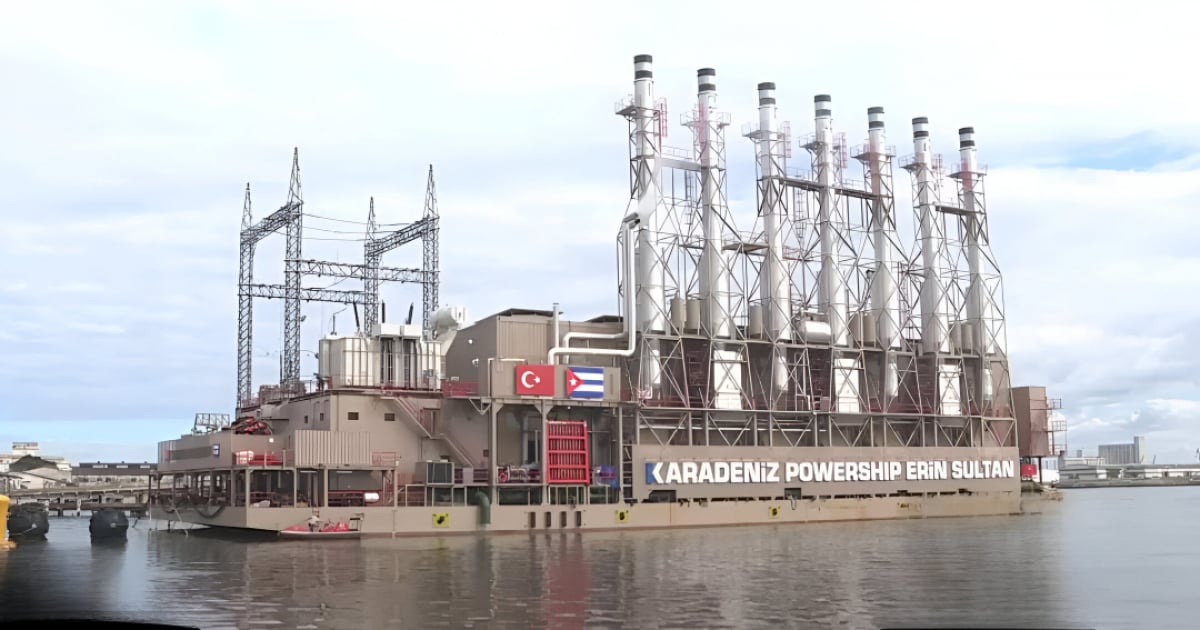
The Minister of Energy and Mines of Cuba, Vicente de la O Levy, publicly acknowledged that one of the main causes of the worsening energy crisis in the country has been the withdrawal of electric barges due to non-payment.
During a press conference this Wednesday with official media such as Granma, the official explained that only two out of the eight floating barges that were operating in the country remain. They contribute 70 megawatts to the National Electric System (SEN).
"Everyone in Cuba knows, because they are smart, that the reason for the departure of the barges is that it could not be paid," stated De la O Levy.
The departure of these floating units occurred in August and led to an increase in the electricity deficit during the peak demand period. Officially, it was reported that the withdrawal was due to commercial reasons
"We may have inefficiencies, but over 95% of the root cause is the lack of funding. It has been shown that the workers in the electrical system do not rest, and there is a real lack of resources. If we do not have 100 million dollars, we cannot provide maintenance to the Guiteras Thermal Power Plant," the minister stated.
Blackouts, deficit, and critical generation
The head of Minem indicated that the electrical system is currently operating with a generation deficit of over 2,000 MW, which has led to prolonged and widespread blackouts, such as the one recorded this week in Havana following the unexpected outage of unit 5 in Nuevitas. To prevent a total collapse of the system, entire circuits in the capital were disconnected.
During the intervention, it was also reported that unit 1 of the Lidio Ramón Pérez thermal power plant, located in Felton, Holguín, will be integrated into the National Electrical System (SEN) this weekend, with a capacity exceeding 220 MW, following an early completion of repairs.
Additionally, the recovery of generation at the Mariel sites was mentioned, which had been affected by a break in a seawater pipeline, along with the completion of adjustments in unit 5 at Renté.
Solar energy and batteries are on the way
Amid the collapse of the system based on outdated and poorly maintained thermal power plants, the Cuban government is betting on the expansion of solar generation. De la O Levy indicated that 656 MW of the 1,000 MW planned for this year have already been installed, and solar parks are being synchronized weekly.
This is complemented by the acquisition of energy storage batteries for frequency regulation, which are already ready for shipment and installation. The minister stated that these technologies are essential to prevent system outages and improve stability.
Despite the optimistic projections, the financial landscape remains a serious obstacle. The minister himself acknowledged that "it doesn't mean the fuel is stable," and admitted to severe tensions due to a lack of resources for lubricants, spare parts, and maintenance.
Frequently Asked Questions about the Energy Crisis in Cuba
Why were the electric buses withdrawn in Cuba?
The electric barges were removed mainly due to the Cuban government's inability to pay for their services. Currently, only two of the eight floating barges that operated in the country remain, which has exacerbated the energy crisis in Cuba. This withdrawal was officially reported as a "commercial" decision, but it is primarily due to a lack of funding.
What is the main cause of the energy crisis in Cuba?
The main cause of the energy crisis in Cuba is the lack of funding. The national electrical system operates with a generation deficit exceeding 2,000 MW, which has resulted in prolonged blackouts. Additionally, the fuel deficit and the obsolescence of thermal power plants significantly contribute to the critical situation.
What measures is the Cuban government taking to address the energy crisis?
The Cuban government is betting on the expansion of solar generation and the acquisition of energy storage batteries. Currently, 656 MW of the 1,000 MW planned for this year have been installed in solar parks. Battery systems are also being implemented to enhance the stability of the system. However, the lack of financial resources continues to be a critical obstacle.
How does the energy crisis affect the Cuban population?
The energy crisis is causing prolonged blackouts that impact the daily lives of Cubans. These power outages have led to situations such as spoiled food, hospitals in emergency conditions, and a daily life marked by uncertainty and a lack of basic services. The population is facing constant power interruptions without a short-term solution.
Filed under: