
Related videos:
The energy crisis in Cuba, characterized by prolonged blackouts and breakdowns in key plants, may ease in October, as promised by the sector head, Vicente de la O Levy, who used the old tactic of manipulation to offer hopes for a better future.
The information was disclosed this Wednesday by the official journalist Lázaro Manuel Alonso on his Facebook profile, after speaking with the Minister of Energy and Mines.
De la O acknowledged the critical situation of the National Electric System (SEN), exacerbated by the shutdown of unit 1 at Felton, failures in the Mariel engines, the trip of Nuevitas 5, and the non-operation of Renté 5 after maintenance, which raises doubts about the promises made.
The official explained that the crisis worsens due to a combination of aging equipment, postponed maintenance, and a lack of funding for capital repairs, the same arguments used by the regime to justify its inability over the past years.
It was also admitted that of the eight floating generation plants, only two remain in the country, contributing just 70 MW, as the others were withdrawn due to the inability to pay the contracts.
Despite the adverse situation, the minister assured that this weekend Felton 1 should come back online with more than 220 MW, and the adjustments for Renté 5 should be completed, promises that remind us of those made during the summer when, supposedly, there would be fewer blackouts.
In October, it is expected that block 4 of the Céspedes thermoelectric plant and block 2 of Santa Cruz del Norte, both delayed since summer, will be added to the National Electric System (SEN).
De la O Levy highlighted that the country has 650 MW of solar generation and that by December, it's expected to reach 1,000 MW, along with the incorporation of battery systems to store energy and regulate frequency.
In parallel, it was announced that in December, comprehensive repairs will be undertaken on the Antonio Guiteras, taking advantage of the "low electricity demand" at the end of the year.
The minister acknowledged that distributed generation is not going through its worst moment in terms of fuel, although there have been serious issues with lubricants, which he assured must improve in the coming days.
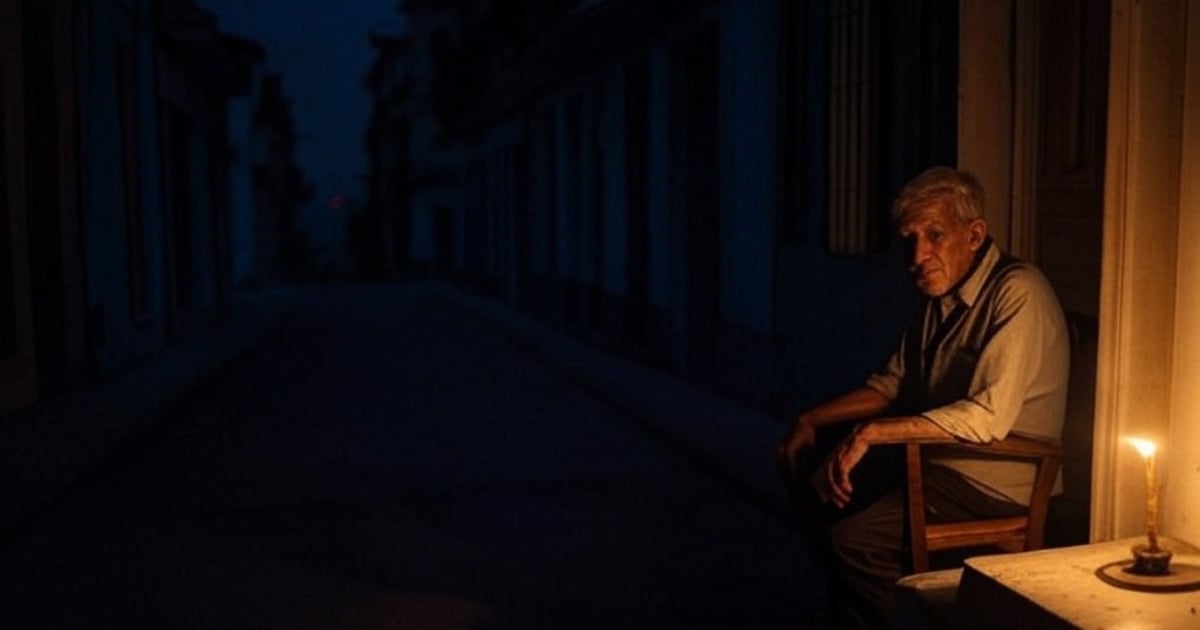
Meanwhile, the Cuban population continues to face daily power outages, with days when much of Havana was left without electricity to prevent a complete system collapse.
Apart from the regime's new promises, the reality is the criterion of truth: the reality is that the country continues to be mired in endless blackouts that keep thousands of families on edge, and in some towns, such as Gibara, Holguín, has sparked recent social outbursts.
The report from the Electric Union (UNE) issued this Wednesday confirms what the population is experiencing firsthand: the generation deficit exceeded 2,000 MW, a level that condemns the SEN to paralysis.
Another example occurred this Monday when Havana was plunged back into darkness following the unexpected shutdown of a generation unit that caused a deficit of 150 MW and affected several key substations, including Plaza, Príncipe, Boyeros, Tropical, Rincón, and Santiago, as confirmed by the Electric Company of the capital.
Frequently Asked Questions about the Energy Crisis in Cuba
What are the main causes of the energy crisis in Cuba?
The energy crisis in Cuba is primarily due to the obsolescence of thermoelectric plants, the lack of adequate maintenance, and the deficit of fuel and lubricants. These conditions have led to recurring failures in the National Electric System (SEN), resulting in prolonged and widespread blackouts.
What has the Cuban Minister of Energy promised to improve the electrical situation?
The minister Vicente de la O Levy has promised to improve the electrical situation in October with the commissioning of several thermal units and the addition of more solar energy. However, the context suggests that these promises may not be enough to resolve the structural crisis facing the system.
What role does solar energy play in Cuba's electricity crisis?
Solar energy is seen as an alternative to partially alleviate the deficit in electricity generation. Currently, the country has 30 solar parks that generate about 600 MW. However, the lack of storage systems limits their effectiveness, as they only produce energy during the day.
How does the energy crisis affect the daily life of Cubans?
The energy crisis severely affects the quality of life of Cubans, who face prolonged blackouts that impact food preservation, access to basic services, and the operation of hospitals. Additionally, the restrictions affect economic activity, especially in the non-state sector.
What measures has the Cuban government taken to address the energy crisis?
The Cuban government has implemented measures such as the construction of new solar parks and the repair of thermoelectric units. However, these actions have not been enough to resolve the crisis, and power outages continue to be a part of daily life for Cubans.
Filed under: