
Related videos:
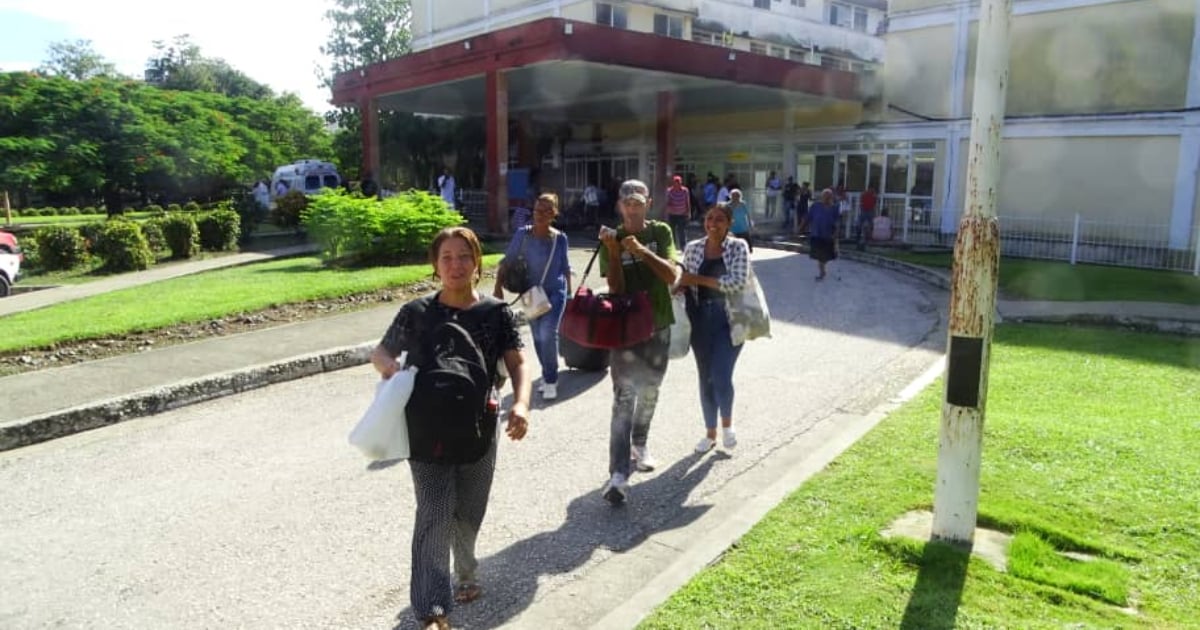
The passengers who were poisoned on train extra number 18, which covered the Manzanillo-Bayamo-Havana route, were released from the hospital today in Villa Clara after an episode of food poisoning that highlighted yet another aspect of the precariousness of rail transport in Cuba.
All patients under observation were discharged at nine in the morning this Friday, following a new medical evaluation, explained Dr. Yandry Alfonso Chang, director of Medical Assistance and Medications in Villa Clara.
The initial investigations suggest that the source of the incident was a food consumed during the journey. Samples were sent to the laboratory, and the final results will take between 24 and 72 hours, reported through his profile on Facebook by the Minister of Transport, Eduardo Rodríguez Dávila.
Meanwhile, the affected passengers were transported by bus to Havana, as confirmed by the transportation delegate in Villa Clara, Juan Carlos Ferriol.
Likewise, the head of Transportation expressed gratitude for the care provided by healthcare personnel and the solidarity of the neighbors in the town of Jicotea, in the municipality of Ranchuelo, who assisted those affected during the emergency. He also emphasized the media coverage and the actions taken by the authorities.
Although the government tried to emphasize the institutional response, this episode once again highlights the vulnerability of transportation and food services for domestic travel, where improvisation and structural deterioration have become the norm.
In a previous post, Rodríguez Dávila pointed out that upon arriving at the Central Station of Havana, around midnight on Thursday, the passengers were transferred by bus to their municipalities of residence, with the participation of provincial authorities and the Transport Company of the capital.
He noted that units from the SIUM (Integrated Medical Emergency System) remained available, although they were not needed, as it was confirmed that neither passengers nor crew experienced any additional health issues.
He emphasized that "an event like this should not occur, especially at a time when decisions are being made to improve food services on national passenger trains."
For this reason, in addition to reiterating apologies to those affected, he promised additional measures to prevent the recurrence of such incidents and to improve the railway service, while investigations by specialized agencies continue to determine the causes.
The day before, An outbreak of diarrhea forced the emergency stop of extra train number 18, after several passengers showed symptoms of food poisoning during the journey.
According to the official report, the protocols of the Provincial Health Department were immediately activated; 653 passengers were screened and 25 were taken to hospitals: 20 adults and five children.
The children were admitted to the José Luis Miranda Pediatric Hospital in Santa Clara, while the adults were taken to the Arnaldo Milián Castro Provincial Hospital.
Frequently asked questions about food poisoning on the train to Havana
What caused the food poisoning on the Manzanillo-Bayamo-Havana train?
The initial investigations suggest that food consumed during the journey is the source of the poisoning. Samples have been sent to a laboratory, and definitive results are expected within 24 to 72 hours.
How did the authorities respond to the poisoning outbreak on the train?
The authorities activated emergency protocols and the affected passengers were transported by bus to Havana. Medical institutions responded quickly, although the incident highlighted the vulnerability of the railway transportation system in Cuba.
How many people were affected by the poisoning on the train?
In total, 653 passengers were screened and 25 were taken to hospitals, including 20 adults and five children. Among the crew, three individuals also suffered from poisoning.
What measures are being taken to prevent future poisonings on Cuban trains?
The Minister of Transport promised to implement additional measures to prevent the recurrence of such incidents and to improve rail service. Investigations are ongoing to determine the exact causes of the outbreak.
Filed under: