
Related videos:
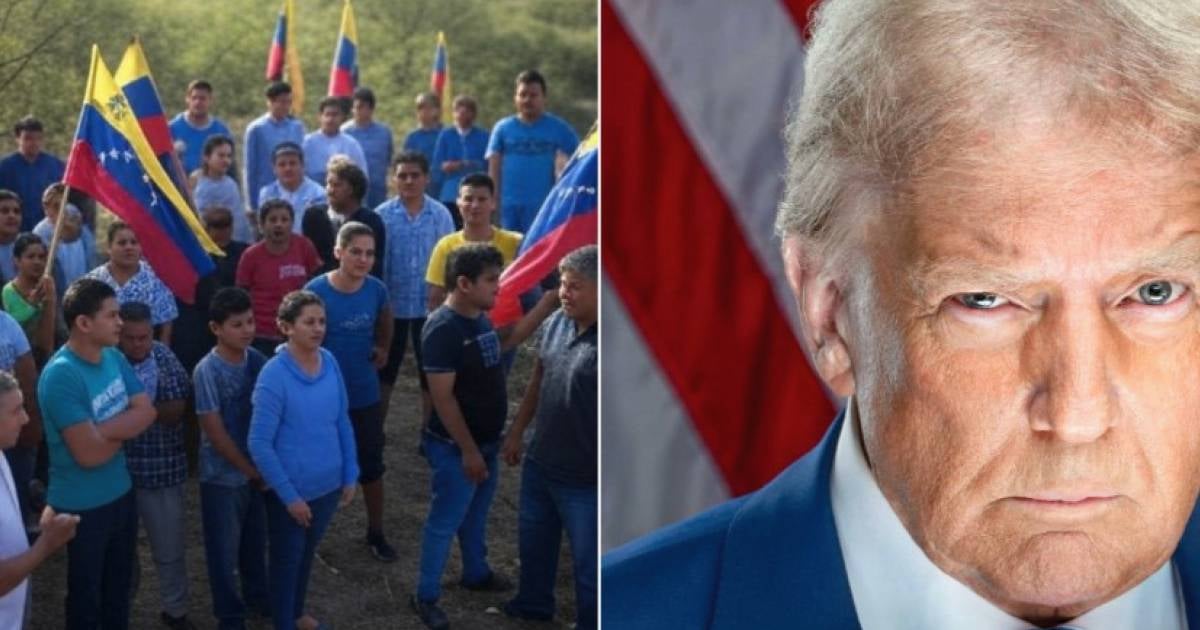
The government of Donald Trump filed an emergency request on Friday with the Supreme Court of the United States to revoke the Temporary Protected Status (TPS) granted to more than 300,000 Venezuelan migrants.
The request comes after a federal judge from the Northern District of California and an appeals court deemed the Department of Homeland Security's (DHS) initiative to revoke this immigration protection as “arbitrary and capricious,” reported the channel Telemundo.
It is the second time this year that the Trump administration has resorted to this measure to eliminate TPS for Venezuelan migrants.
In May, the highest court provisionally authorized the revocation of this status, although it did not issue written grounds for its decision, which is common in emergency proceedings.
In September, Judge Edward Chen ruled in favor of migrants once again, blocking the cancellation of TPS yet again.
This decision was reaffirmed shortly thereafter by the Ninth Circuit Court of Appeals.
Since returning to the White House in January, the Trump administration has pushed measures to revoke immigration protections granted during Joe Biden's presidency, including the termination of TPS for approximately 600,000 Venezuelans and 500,000 Haitians.
This attempt at revocation adds to other recent actions by the Executive, such as the end of the humanitarian parole program (CHNV), which impacted migrants from Cuba, Haiti, Nicaragua, and Venezuela.
On September 12, the Supreme Court allowed the government to withdraw that benefit without the need for individual assessments, paving the way for mass deportations.
Human rights organizations have expressed concern about the impact of these decisions, which could leave thousands of people in vulnerable situations and at risk of family separation.
Frequently Asked Questions about Trump's Request to Terminate TPS for Venezuelans
What is Temporary Protected Status (TPS) and why is it relevant for Venezuelans?
The Temporary Protected Status (TPS) is a legal mechanism that allows citizens from crisis-affected countries to legally remain and work in the United States. For Venezuelans, it is crucial as it provides protection against deportation due to the political and humanitarian conditions in Venezuela. This protection has been the subject of controversy under the Trump administration, which seeks to revoke it, potentially affecting more than 300,000 Venezuelans in the country.
Why does the Trump administration want to eliminate TPS for Venezuelans?
The Trump administration argues that conditions in Venezuela have improved and that maintaining TPS undermines its efforts to secure the border. However, this stance has been criticized by human rights organizations and some judges, who believe that conditions in Venezuela remain dangerous and that the revocation of TPS could be driven by racial bias.
What has the Supreme Court decided regarding TPS for Venezuelans?
The Supreme Court of the United States has provisionally allowed the revocation of TPS for Venezuelans, but the decision has been blocked by lower courts multiple times. The court has yet to issue a definitive ruling on the matter, leaving the situation of thousands of Venezuelans in the United States uncertain.
How does the cancellation of TPS affect Venezuelan migrants in the United States?
The cancellation of TPS would leave thousands of Venezuelans at risk of deportation and in a situation of legal and economic vulnerability. Many of them have established their lives in the United States, with formal jobs and families, so the revocation of TPS could result in family separations and job loss.
What other immigration measures has the Trump administration recently promoted?
In addition to attempting to revoke TPS, the Trump administration has sought to eliminate the humanitarian parole program for migrants from Cuba, Haiti, Nicaragua, and Venezuela. These actions are part of a stricter approach to immigration, which has been criticized for its humanitarian impact and the legal tensions it has created.
Filed under: