
Related videos:
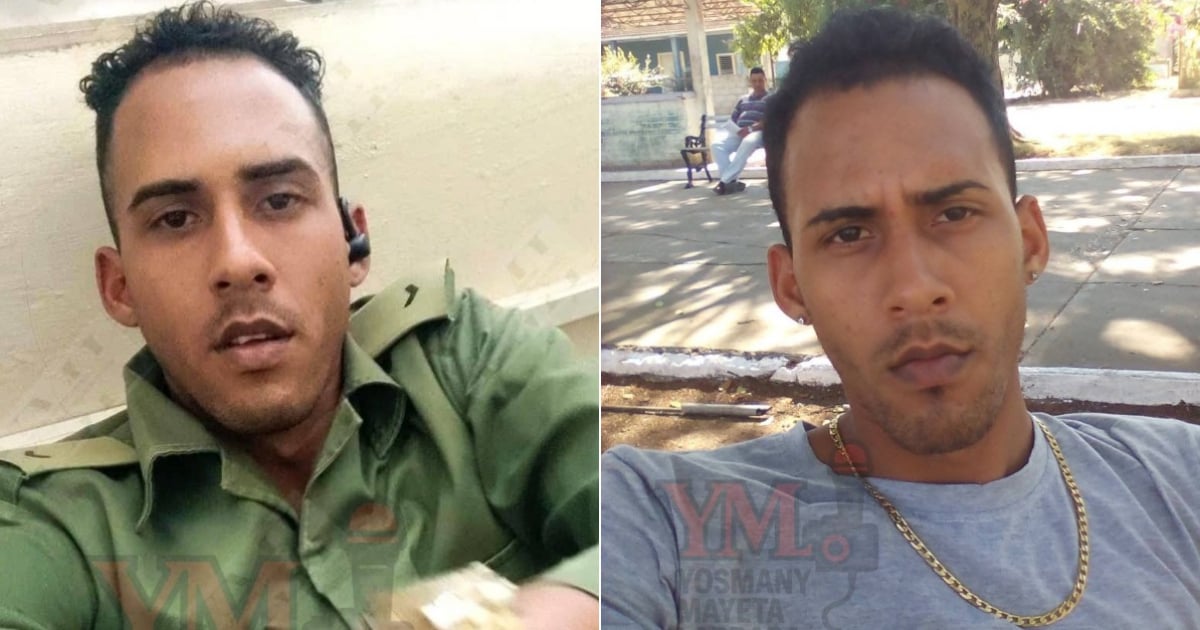
Former lieutenant Freddy Torres Quiala, 31 years old, has been behind bars for over a year without a trial, a victim of an arbitrary process that began after he publicly reported the pressures and abuses within the Revolutionary Armed Forces (FAR).
Torres Quiala, a native of Niquero in Granma, served for eight years as an officer in the 1448 Tank Division in Managua, Havana.
On August 25, 2023, he posted a video in which he recounted his delicate health condition - chronic sacrolumbalgia, spina bifida, rheumatism, and insomnia - and how, despite being medically assessed, he was repeatedly denied military discharge.
From complaint to prison
Just ten days after that video, Torres was imprisoned in the military prison El Globo.
Initially, he was punished for his testimony, but soon they added a fabricated charge of "extortion" to worsen his sanction. His wife reported that this accusation was absurd: Freddy had been detained for only a few days and did not know anyone in that prison.
Since then, his file—identified as number 92—has gone through the Provincial Prosecutor's Office and a lower court, in both cases with the same outcome: lack of evidence.
However, instead of releasing him, the authorities have sought pretexts to keep him imprisoned, such as the alleged "lack of notification to other defendants."
During this time, he has been moved between various prisons, including Valle Grande, and is currently located in Jóvenes Occidente, in El Guatao, La Lisa municipality, in Havana.
A year of punishment without trial
According to a report by independent journalist Yosmany Mayeta Labrada on Facebook, Torres has already spent a year in pretrial detention without a conviction, which violates Cuba's own laws.
Even so, he remains steadfast in his stance: he asserts that he does not regret telling the truth about his experiences in the FAR, although he admits that "a year has passed and he has paid for what he did."
His wife, accompanied by their daughter—who turned seven this month and has been waiting to celebrate with her father—claims that this is all a form of exemplary punishment.
"They no longer know what to invent to punish him further. It’s outrageous what they are doing. According to the Prosecutor's Office itself, there is not enough evidence, but they keep him imprisoned to set an example," he stated.
The warning fulfilled
That first report from the young man, which made him a dissenting voice within the army, was forcibly removed from Facebook after receiving threats. The excuse was Order 4 from the Minister of the FAR, which prohibits officers from exposing the internal reality of the institution on the Internet.
What Freddy Torres said in that video has been confirmed by his own case: the regime seeks exemplary measures to instill fear in officers and soldiers. The intent is clear: to ensure that no one else dares to report abuses within the Army.
Before being imprisoned, Torres had requested military discharge for five years, even going to the Ministry of the Armed Forces and sending a letter to the minister himself. He never received a response.
"I am being forced, despite my health issues, to continue in the Armed Forces," he had reported.
With 12 years of service—four as a cadet and eight as an officer—his greatest "offense" was questioning a system that does not respect either the health or the will of its own military personnel.
Today, sick and separated from his young daughter, he has become a hostage of political punishment.
Without justice or legality
The case of Freddy Torres Quiala highlights the lack of guarantees in Cuba. Neither the Prosecutor's Office nor the courts have been able to prove any crime, yet the former military officer remains in prison.
The indefinite extension of his detention shows that, more than a legal process, this is a matter of political revenge.
The complaint from his family and the visibility of his story highlight what many within the army fear: in Cuba, there is no legality, only repression against those who dare to speak out.
Frequently asked questions about the pretrial detention of Freddy Torres Quiala and the human rights situation in Cuba
Why is Freddy Torres Quiala in prison without trial?
Freddy Torres Quiala is in prison without trial as a result of an arbitrary process after reporting abuses within the Revolutionary Armed Forces (FAR) of Cuba. Despite the lack of evidence and violations of Cuban law regarding his prolonged detention, the regime seeks to keep him incarcerated as a punitive measure to deter others from reporting injustices within the army.
What health problems does Freddy Torres Quiala face, and how have they influenced his situation?
Freddy Torres Quiala suffers from chronic sacrolumbalgia, spina bifida, rheumatism, and insomnia. Despite being assessed by medical professionals, he was denied military discharge, which led him to publicly denounce his situation. His delicate health condition exacerbates the injustice of his imprisonment, as the authorities have not taken these circumstances into account for his release or improvement in his situation.
How does the case of Freddy Torres Quiala reflect the human rights situation in Cuba?
The case of Freddy Torres Quiala is an example of the lack of legal guarantees and political repression in Cuba. Although neither the prosecution nor the courts have been able to prove his guilt, his prolonged imprisonment without trial demonstrates the Cuban regime's practices of political vengeance against those who dare to denounce injustices, highlighting the systematic repression of dissenting voices.
What has been the response of Freddy Torres Quiala's family regarding his situation?
The family of Freddy Torres Quiala, especially his wife and daughter, has publicly denounced his situation as a demonstrative punishment. Despite the lack of evidence, authorities continue to seek excuses to keep him in custody, which his family describes as a blatant attempt to silence and punish those who question the system.
Filed under: