
Related videos:
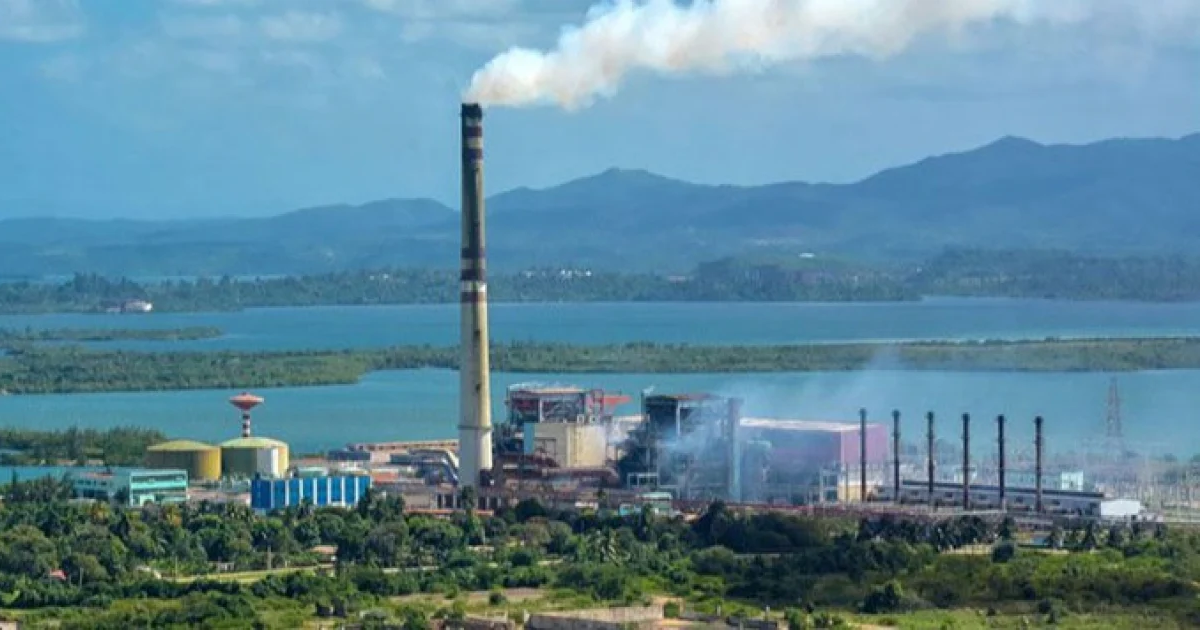
The Electric Union (UNE) announced that unit 1 of the Lidio Ramón Pérez "Felton" thermal power plant started up this Monday online with the National Electric System (SEN) and is increasing its load.
At 5:31 AM, the Holguin plant was steadily producing 170 megawatts (MW), a figure that falls short of covering the severe deficit that keeps the country in constant blackouts.
Felton 1 synchronized on Sunday with the SEN, after more than two weeks out of service due to a malfunction in the transformer.
According to what he told the Cuban News Agency, its director, Eric Milanés Quinzán, stated that the online activation occurred on Sunday around 3:00 PM, following a repair prompted by a malfunction in the transformer used by the plant.
The shutdown, scheduled for 20 days, aimed to fix a hydrogen leak in the main generator, as well as address accumulated issues in various equipment.
The actions taken included the inspection of the turbine's axial bearing, the cleaning of the steam condenser, and the repair of a high-pressure heater. Additionally, gaskets were replaced in the flue ducts, and a deep cleaning of the boiler was carried out.
The work involved brigades from the Electric Power Plant Maintenance Company (EMCE), the Engineering Works Construction Company 3, staff from the plant itself, and support forces from the Nickel Union in Nicaro.
A history of accidents and broken promises
While the official press presents the return of block 1 of Felton to generation as a victory, block 2 remains inactive since the fire that occurred in 2022 during a failed start, when it was expected to contribute 220 MW to the national electricity system (SEN).
The regime insists that there is a project to rehabilitate it with a new design that will allow it to operate with domestic crude oil, but two years after the incident, the turbo group remains out of service, a symbol of the authorities' inability to restore the largest thermoelectric plant in the country.
The UNE celebrated on social media the synchronization of Felton 1, initially announcing the connection at 3:47 PM on Sunday, followed by the increase in load to 150 MW after 6:00 PM, and finally the stable 170 MW reached this Monday.
However, the company acknowledged that the electricity service was disrupted for 24 hours on Sunday and that by Monday morning, the outages were still ongoing.
A system on the brink of collapse
The overall state of the SEN shows that the entry of Felton 1 is merely a temporary relief. At 6:00 am this Monday, the availability was 1,730 MW against a demand of 3,000 MW, leaving 1,270 MW uncovered.
The UNE report reveals the extent of the deterioration: Unit 2 of Felton, Unit 6 of Nuevitas, and Unit 6 of Rente are still out of service.
Two blocks from Santa Cruz and unit 4 from Cienfuegos are under maintenance.
This is compounded by thermal limitations amounting to 527 MW, along with 53 distributed generation plants halted due to a lack of fuel and lubricants, resulting in an additional loss of 501 MW.
For peak hours, the organization forecasts a availability of just 1,910 MW compared to a demand of 3,500 MW. This results in a deficit of 1,590 MW and an estimated impact of up to 1,660 MW, figures that ensure that blackouts will continue to affect millions of Cubans.
Neither the repairs in Felton nor the announcements regarding the synchronization of units succeed in concealing the reality: Cuba is facing a structural energy collapse that the government tries to mask with triumphalism.
While families endure whole days and nights without electricity, the regime celebrates every recovered megawatt as if it were a victory, ignoring that the country remains engulfed in darkness and despair.
Frequently Asked Questions about the Felton Thermoelectric Plant and the Energy Crisis in Cuba
What is the current status of the Felton thermoelectric plant?
Unit 1 of the Felton thermoelectric plant is operational and connected to the National Electric System (SEN), contributing 170 megawatts (MW). However, this is not enough to address the energy deficit that Cuba is facing. Unit 2, which was affected by a fire in 2022, remains inactive with no clear timeline for rehabilitation.
What problems does the National Electric System (SEN) of Cuba face?
The SEN is facing a structural collapse due to constant breakdowns, lack of maintenance, and logistical deficiencies. Currently, the system has an availability of 1,730 MW against a demand of 3,000 MW, which causes ongoing blackouts. Additionally, many units are out of service for maintenance or repairs, and there is a severe shortage of fuel and other resources.
How does the energy crisis affect the Cuban population?
The Cuban population suffers prolonged blackouts that can last up to 20 hours a day, affecting well-being and daily activities. The situation generates frustration and outrage, as the solutions proposed by the government are insufficient and the promises of improvement are not fulfilled.
What measures has the Cuban government taken in response to the energy crisis?
The government has attempted to rehabilitate damaged units and has invested in maintenance and floating generation, but these measures have not been sufficient to resolve the energy crisis. The lack of adequate investment and the unproductive centralization of the energy sector remain unresolved issues.
Filed under: