
Related videos:
The plight of Cubans with open immigration processes in the United States continues to worsen.
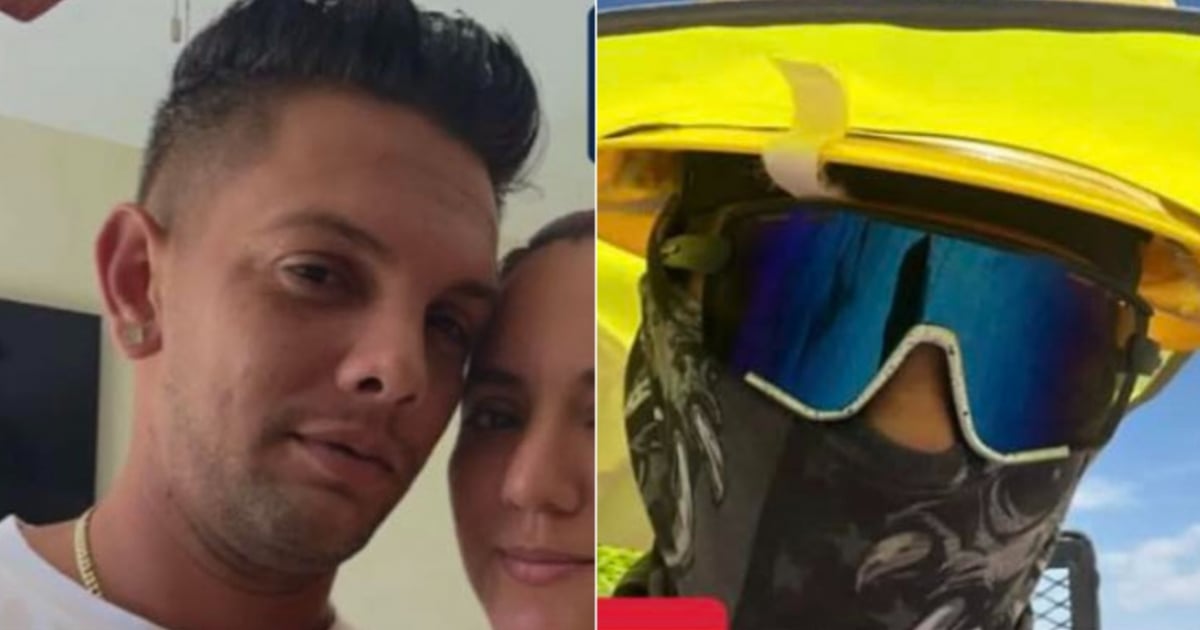
The last case is that of Harold Luis Navarro, a migrant with I-220A status who was detained in Arizona after finishing his workday installing solar panels and returning home.
Navarro, originally from Camagüey, had no criminal record and held a work permit valid until 2029. However, on August 29, according to his wife, he faced his final asylum hearing while in detention and lost the case.
Currently, he has a deportation order and remains in the custody of Immigration and Customs Enforcement (ICE) at the detention center in Florence, Arizona.
His arrest has had devastating consequences on a personal and family level: his wife gave birth while he was already incarcerated, and to this day, he has not been able to meet his newborn baby.
The immigration authorities have not approved a visit, which increases the family's pain.
The journalist Javier Díaz from Univisión 23, who has been following these processes, shared the case on Facebook and called for empathy towards these families, reminding that most migrants are not criminals and that making these episodes public is a way to support them.
A troubling trend against Cubans with I-220A
Harold's case is not an isolated one.
In recent months, at least three Cubans with I-220A have been detained by ICE in different states, which has caused fear and confusion in the migrant community.
The Havana native Yasmani Guía Pablo, a Lyft driver in Texas, was arrested in Williamson County after an officer accused him of driving under the influence of substances, without any evidence from breathalyzer tests or laboratory exams.
His wife claims that it was an arbitrary arrest, as he does not consume alcohol and dedicates his life to the church.
Another case is that of the Pinar del Río pastor Michel Roque Armas, who attended a routine appointment with ICE in San Antonio, Texas, and ended up detained despite having a hearing scheduled for 2027.
A judge later issued a deportation order against him.
More recently, in Miami, Rubén del Valle was arrested inside a courthouse in September, right after a judge dismissed his immigration case.
Now wait until October 15 to appeal; otherwise, you will be deported.
Legal insecurity and fear in the Cuban community
These incidents reinforce the perception that Cubans with I-220A status—a document that allows them to remain free while their immigration cases progress—are facing an increasingly uncertain and arbitrary situation.
It is estimated that over 380,000 Cubans are under this status in the United States, and according to activists and lawyers, the lack of transparency in the processes, coupled with sudden detentions and deportation orders, has created an environment of legal insecurity that harshly impacts families that have begun to build a life.
While Harold remains in detention, his wife is taking care of their newborn baby alone, hoping that ICE will at least allow a meeting between father and son, although uncertainty looms over the family and over thousands of Cubans who fear being in the same situation at any moment.
Frequently asked questions about the detention of Cubans with I-220A status in the U.S.
What is the I-220A status and what does it imply for Cubans in the U.S.?
The I-220A status is an administrative document that allows Cuban migrants to remain free while their immigration cases progress in the United States. However, it does not guarantee permanent residency and, recently, has left many in a state of legal uncertainty, exposed to arbitrary detentions by ICE.
Why are Cubans with I-220A being detained?
Cubans with I-220A status are being detained due to a change in immigration policy driven by the Donald Trump administration, which tightens measures against irregular immigrants. This has resulted in an increase in detentions, even of those without criminal records and with ongoing legal proceedings.
What impact does the detention of Cubans with I-220A have on their families?
The detention of Cubans with I-220A has devastating consequences for their families, such as the separation from loved ones and uncertainty about the future. Many relatives are left helpless, as in the case of Harold Luis Navarro, who has not been able to meet his newborn baby due to his detention.
What actions are being taken to support Cubans detained with I-220A?
Journalists like Javier Díaz from Univisión 23 are making the plight of detained Cubans public to generate empathy and support for these families. Additionally, some activists and lawyers are working to raise awareness of these cases and provide legal assistance to those affected.
Filed under: