
Related videos:
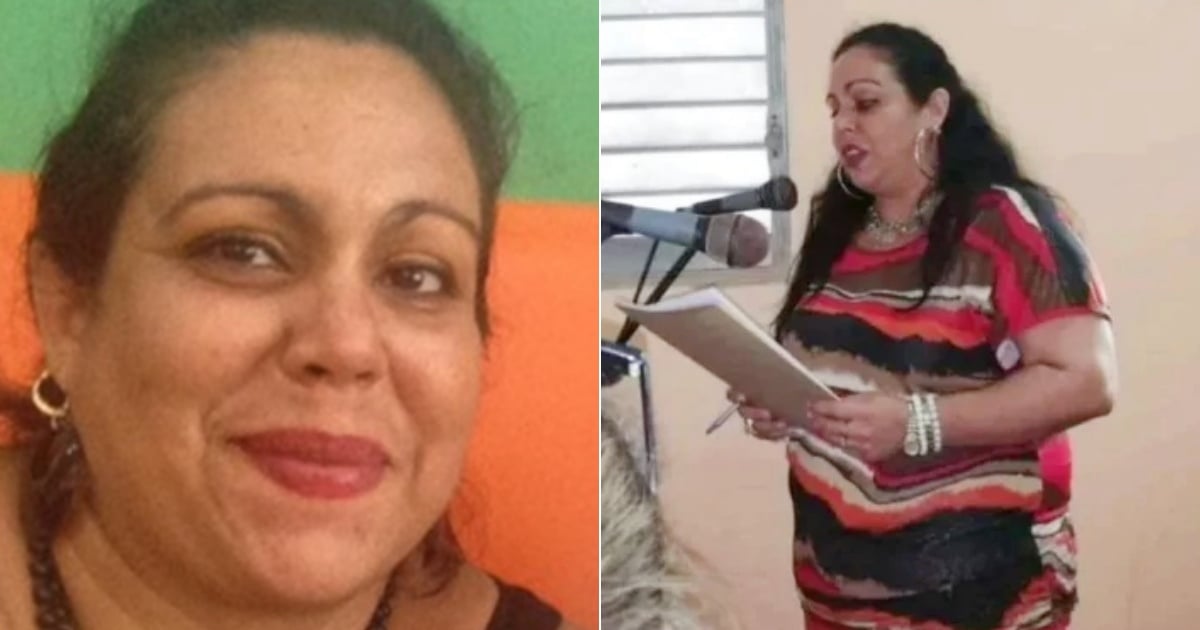
The former Cuban judge Melody González Pedraza could be deported to Cuba this Thursday, September 25, according to her cousin, Roberto Castellón, who informed the independent media Diario de Cuba (DDC).
The source also confirmed that the brother of the former judge, Ruber González Pedraza, is being held in an immigration detention center and that his release will also be "swift."
“He has already signed his self-deportation and it will be swift. His sister will be deported tomorrow,” Castellón said this Wednesday in statements to the cited media.
In the case of González Pedraza, if his departure is finalized, it would bring to an end a temporary legal stay that extended for more than four months, after an immigration judge ordered his deportation in June.
Ruber González, brother of the former judge, was arrested last Tuesday while dropping off his daughter at a daycare.
According to Castellón, the arrest would be related not only to his kinship with Melody González but also to his own academic and political history in Cuba.
"They linked him to his sister and because he studied at UCI, it was complete cruelty towards him," the family source stated.
The University of Informatics Sciences (UCI) has been repeatedly identified as a technological arm of the Cuban regime, used for cyber attacks against independent journalists, activists, and political opponents.
These attacks include hacks and attempts to interfere with social media accounts, and they have been reported by members of Cuban civil society both inside and outside the country.
Ruber González's history also includes managing an official blog during his student years, as recently revealed by the media CubaNet.
In that space, González Pedraza reproduced propaganda content related to the release of the five Cuban spies from the Red Avispa, who were convicted in the United States.
Recently, sources from the U.S. Immigration and Customs Enforcement (ICE) confirmed to Martí Noticias that Ruber González is being held at the Krome detention center in Florida.
Who is Melody González?
Melody González Pedraza, former president of the Municipal Court of Encrucijada, in the province of Villa Clara, arrived in the United States on May 30, 2024 through the humanitarian parole program implemented under the administration of then-president Joe Biden.
Accompanied by her husband, William Hernández Carrazana, the former official arrived in the country just days after imposing prison sentences on four young Cubans without sufficient evidence, a decision that she herself confessed to Diario de Cuba was made under coercion from State Security.
Despite her testimony and political asylum request, the former judge was initially denied formal entry into the country and later the asylum, in a process that has been more influenced by her affiliation with the Communist Party of Cuba (PCC) until days before her departure from the country, rather than by her judicial actions in the aforementioned case.
The ex-judge's husband, William Hernández Carrazana, has already been returned to Cuba.
The case of Melody González Pedraza has reignited the debate over the moral and political responsibility of former officials of the Cuban regime seeking refuge in the United States.
While some advocate for the possibility of redemption and collaboration with justice in exile, others demand greater scrutiny regarding the backgrounds of those who served the repressive apparatus of the Cuban judicial system.
At the time, the former judge stated that she had no choice and that her actions were influenced by pressures from the regime's intelligence apparatus.
From the U.S. she even requested freedom for the young individuals she had sentenced.
However, her membership in the PCC and her recent judicial record appear to have had a greater influence on the migration decisions made against her.
What would happen if he/she/they return to Cuba?
In an article published in June, Diario de Cuba - an independent media outlet that has closely followed the case and has even included testimony from the former judge herself - warned that, if Melody González were to be returned to the island, her situation could lead to multiple scenarios.
They believe she could be arrested and prosecuted for offenses such as "enemy propaganda," "disobedience," "incitement to hatred," "spreading false news," and other actions "against state security," referring to her statements to the independent media about the manipulated trial in which she handed down sentences without evidence against four young Cubans.
Moreover, the outlet suggested that, due to her former position as a judicial official, she could be accused of violating ethical standards, disclosing official secrets, or contributing to acts deemed harmful to state security.
Even if she is not arrested, they believe that González could face police surveillance, domestic harassment, "preventive" summons, interrogations, and media smear campaigns. According to DDC, this pressure could also extend to her immediate family.
“A certainty that the jurist can have is that they will not be able to return to work in the Cuban judicial system and may even find it difficult to obtain any other type of employment,” concluded Diario de Cuba.
Lawyer Santiago Alpízar: "She is not a victim."
However, many do not share the perception that Melody González is or could become a victim of the Cuban system from now on.
The lawyer Santiago Alpízar, representative of the organization Cuba Demanda, expressed a critical viewpoint in an interview with journalist Mario J. Pentón.
Alpízar lamented that Diario de Cuba “has followed the case treating her more as a victim, when she is actually the perpetrator.”
The lawyer specified that the organization he represents actively participated in the judicial process in the United States and submitted a report arguing that González should not be granted asylum.
"We believed that Melody was not a victim of the communist system, but an active agent of the PCC and a repressor who, from her position as a judge, had committed the crime of misconduct in favor of State Security and the government," she stated.
"She is not a victim. Nothing is going to happen to her when she returns to Cuba; they might even give her a medal," Alpízar concluded sarcastically.
It also highlighted that the former judge made use of all the procedural guarantees available in the U.S. legal system, opportunities that she notes many Cubans being deported from the U.S. have not had.
Frequently Asked Questions About the Deportation of Melody González and Its Impact
Why is Melody González being deported to Cuba?
Melody González, former Cuban judge, is being deported to Cuba due to her previous involvement with the repressive apparatus of the Cuban regime. Despite seeking asylum in the United States, her history as an official of the Communist Party of Cuba and her participation in trials lacking due process guarantees have been crucial in denying her asylum request. The U.S. government believes that her past does not qualify her for protection under the pretext of political persecution.
What risks does Melody González face upon returning to Cuba?
Upon returning to Cuba, Melody González could face multiple risks, including arrest, legal prosecution for offenses such as "enemy propaganda" or "dissemination of false news," police surveillance, and home harassment. Her situation could become even more complicated due to her statements regarding the manipulated trial in which she condemned young Cubans without sufficient evidence. While some believe she could be used again by the regime, others fear severe reprisals for having exposed irregularities in the Cuban judicial system.
What implications does the deportation of Melody González have for other former officials of the Cuban regime in the U.S.?
The deportation of Melody González sets an important precedent in the United States regarding how cases of former officials from the Cuban regime seeking refuge in the country are handled. This case reinforces the stance of U.S. authorities not to grant asylum to individuals who have participated in repressive activities, sending a clear message that the immigration system will not be used as a refuge for perpetrators of the regime. This measure could influence future cases of former officials trying to settle in the U.S. while hiding their past.
What role does the U.S. judicial system play in the deportation of former Cuban officials?
The U.S. judicial system plays a crucial role in the deportation of former Cuban officials. Immigration judges carefully assess the history of asylum applicants to determine whether their backgrounds disqualify them from receiving protection. In the case of Melody González, her past actions as a judge in Cuba and her affiliation with the Communist Party were taken into consideration, resulting in the denial of her asylum and a deportation order. This judicial process seeks to ensure that only those who are genuinely fleeing from repression, rather than those who have perpetuated it, receive asylum.
Filed under: