
Related videos:
The accident of a private jet in Venezuela not only temporarily disrupted the country's air operations but also reignited suspicions about the dealings of foreign contractors with the regime of Nicolás Maduro.
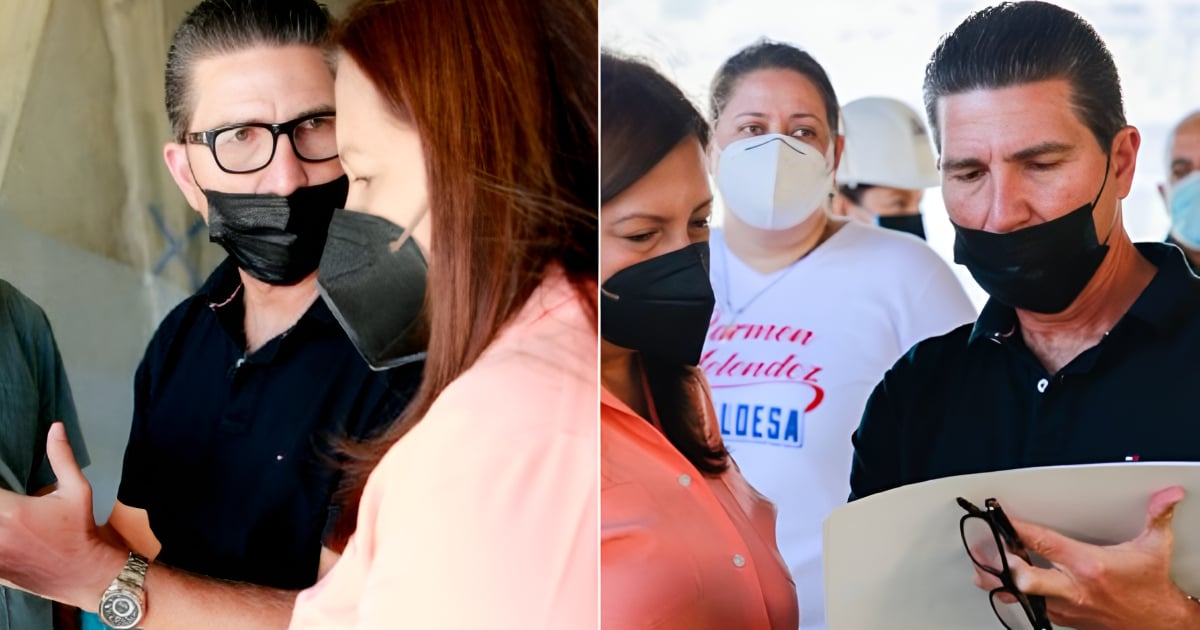
The Learjet 55, registration YV-3440, crashed this Wednesday at noon at Simón Bolívar International Airport in Maiquetía, in the state of La Guaira. Among the passengers was the Panamanian Ramón Carretero Napolitano, who has benefited from contracts worth hundreds of millions of dollars under the chavismo and is noted for his closeness to the presidential family.
According to the National Institute of Civil Aviation (INAC), the accident occurred at 12:52 p.m., necessitating the activation of emergency protocols and resulting in a thick column of smoke visible from various points along the central coastline.
Unconfirmed information indicates that two people were rescued alive and are in stable condition in health facilities in Caracas. According to the media Infobae, one of them is said to be the controversial Panamanian businessman.
The aviation authority announced the opening of an investigation to determine the causes of the incident.
From public contract to private payment
Carretero is not just any passenger. A collaborative investigation by CLIP, Transparencia Venezuela en el Exilio, Armando.Info, and La Prensa de Panamá revealed that the businessman began receiving contracts in Venezuela in 2013, when Hugo Chávez was in his final days and Maduro was assuming power temporarily.
In just seven months, your company Lanvicorp signed three contracts with the Pro-Patria 2000 Foundation worth about 700 million dollars to build gyms, renovate hotels in La Guaira, and construct the "Hugo Chávez" baseball stadium in Caracas.
Payments from the regime quickly began to flow. Bank statements show that between 2013 and 2014, Lanvicorp received at least 138 million dollars from the National Development Fund (Fonden) as an advance for those projects.
A few days later, some of those funds ended up in accounts controlled by Juan Carlos López Tovar and Iriamni Malpica Flores, niece of the First Lady Cilia Flores.
In 2014 alone, Carretero's companies transferred at least 5.8 million dollars to entities linked to López Tovar. The mechanism included million-dollar checks, alleged dividends, and letters of recommendation issued by the businessman himself to facilitate mortgage loans for the couple in Panama.
Shared flights and joint ventures
The relationship between Carretero and López Tovar went beyond mere transactions. They shared dozens of flights on private jets between Caracas and Panama on the same days that contracts were awarded and million-dollar disbursements were released.
In 2014, they jointly established the company Grupo Carrelop, a name that combined their last names, and another company called Galeras del Este, focused on real estate and aircraft rentals.
The couple formed by López Tovar and Malpica Flores acquired luxury apartments in Panama for over three million dollars, partially financed with loans recommended by Carretero.
They also spent tens of thousands at boutiques of Louis Vuitton, Gucci, and Salvatore Ferragamo in a single day in December 2014, while Venezuela was experiencing one of the toughest years of shortages.
Banks under suspicion
Money movements were detected by compliance departments in banks such as Allbank in Panama and Banco del Orinoco in Curacao, both linked to financier Víctor Vargas, known as "Chávez's banker."
In 2015, Allbank closed the accounts of Carretero and the López-Malpica family after multiple alerts of suspicious transactions, although by then the transfers had already financed properties and luxuries in Panama.
Panamanian and U.S. authorities later sanctioned several companies linked to the Flores and López Tovar families. Despite this, Carretero continued his business dealings with the regime: between 2016 and 2018, he signed contracts with the state-owned Corpovex to import toys, appliances, tires, and equipment related to the Carnet de la Patria, for amounts exceeding an additional 45 million dollars.
Connections with Cuba
The business network of Carretero also expanded to the island. Through the Caribbean Logistics Corporation, his companies operated in Cuba for more than two decades, facilitating supplies and business in state-controlled sectors.
Flight records show that the crashed Learjet had been making regular trips to Havana, on the same route that has served for years to connect interests between Caracas and Havana.
Previous investigations documented that some of the contracts awarded in Venezuela were executed with logistics in Cuba, where Carretero established connections with authorities of the Havana regime. The crashed aircraft was among the jets used by Chavista officials for their frequent trips to the island.
An accident with political resonance
Carretero's trajectory symbolizes how foreign contractors enriched themselves due to their closeness to the Chavista leadership and the Cuban regime, while millions of Venezuelans faced soaring inflation, food shortages, and a collapse of services.
His presence among the survivors of the Maiquetía accident now casts the shadow of those operations over an event that, in another context, would have been confined to the news of the day.
Neither the Venezuelan government nor the Panamanian authorities have officially confirmed the identity of the passengers or their current status.
The investigation into the technical causes of the accident has only just begun, but Carretero's story reopens an uncomfortable file: that of the businesses that, under the shadow of Chavismo and in connection with Cuba, fueled private fortunes while the country sank into crisis.
The accident in Maiquetía occurs in a climate of maximum tension for chavismo. The military and diplomatic pressure from the United States, under the administration of Donald Trump, has sparked rumors of defections and fueled paranoia in Miraflores.
In this scenario, the incident involving a jet used by prominent figures of chavismo for flights to Cuba and Panama, with a key regime contractor on board, adds to the episodes that portray an image of a besieged and vulnerable power.
Although the authorities insist that the causes of the accident are the subject of a technical investigation, many analysts believe that the incident illustrates the moment of uncertainty and potential capital flight that is shaking the Chavista elite.
Filed under: