
Related videos:
Health authorities in Matanzas have confirmed a worrying increase in cases of dengue and chikungunya in six municipalities of the province, where efforts for surveillance, fumigation, and vector control are being intensified in response to the rise in arboviral diseases.
The most affected territories are Matanzas, Cárdenas, Colón, Jovellanos, Jagüey Grande, and Pedro Betancourt, as stated by Andrés Lamas Acevedo, provincial director of Hygiene, Epidemiology, and Microbiology, to Periódico Girón. “In all those territories, both diseases are present to a greater or lesser extent.”
During a meeting with hospital directors and the municipal health system, the implementation of a plan to combat arboviral diseases was discussed, as well as "the availability of resources for this purpose."
Lamas explained that dengue is the disease "most urgently needed to be addressed, as it is acute, hemorrhagic, and can lead a person to a critical state." He detailed that "the main actions are directed towards those suspected of having it," whereas in the case of chikungunya, "it causes joint pain and high fevers, but does not result in a critical condition."
He also urged people to see a doctor "in the presence of warning signs (intense abdominal pain, vomiting, bleeding, fainting)" and clarified that "hospitals are prepared for this." He denied that there is a collapse and affirmed that there is "sufficient capacity for care and hospitalization."
Lamas warned that "since there are not enough bazookas available to undertake this task, priority is given to the territories most prone to the phenomenon." He added that "as the equipment increases (like many that are currently being repaired), fumigations will expand to other areas."
In that sense, "various organizations contribute to integrating vector control teams alongside personnel from the sector."
The official assured that all municipalities have a response plan, though in some it is implemented with greater intensity. In Colón, for example, "there are 200 medical students involved in this effort." The investigations, in addition to identifying cases of fever in households, allow for determining "where the highest morbidity is located."
Health authorities emphasized the need for community cooperation to achieve a better health situation in the coming months. "We also require the cooperation of the popular councils, delegates, CDR, and districts; in other words, from all levels, to ensure that the months of November or December are more favorable in the province, as we hope."
In Jovellanos, there is an active extramural fumigation system with a vehicle that "takes care of sanitation in streets and outdoor areas." The same model will soon be implemented in Matanzas and Cárdenas.
Lamas assured that oral rehydration salts are available in pharmacies, although "they do not cover the entire possible demand." For this reason, he advised the public to prepare homemade solutions as an alternative, "using one liter of water, one tablespoon of salt, a little bicarbonate, sugar, and half a lemon, which yields a homemade equivalent to a rehydration solution," he said.
According to the national director of Epidemiology, Francisco Durán, the circulation of chikungunya in Matanzas began between June and July, as part of an outbreak of arbovirosis that also includes dengue and oropouche. Although no severe or critical patients have been reported, hospital admissions for risk monitoring are ongoing, and early medical consultation is prioritized for any feverish symptoms.
In the municipality of Colón, 435 nonspecific febrile syndromes were reported in the last week. More than 46% of the admissions are related to children, and five patients show warning signs, according to Dr. Mario Muñoz Monroy Hospital.
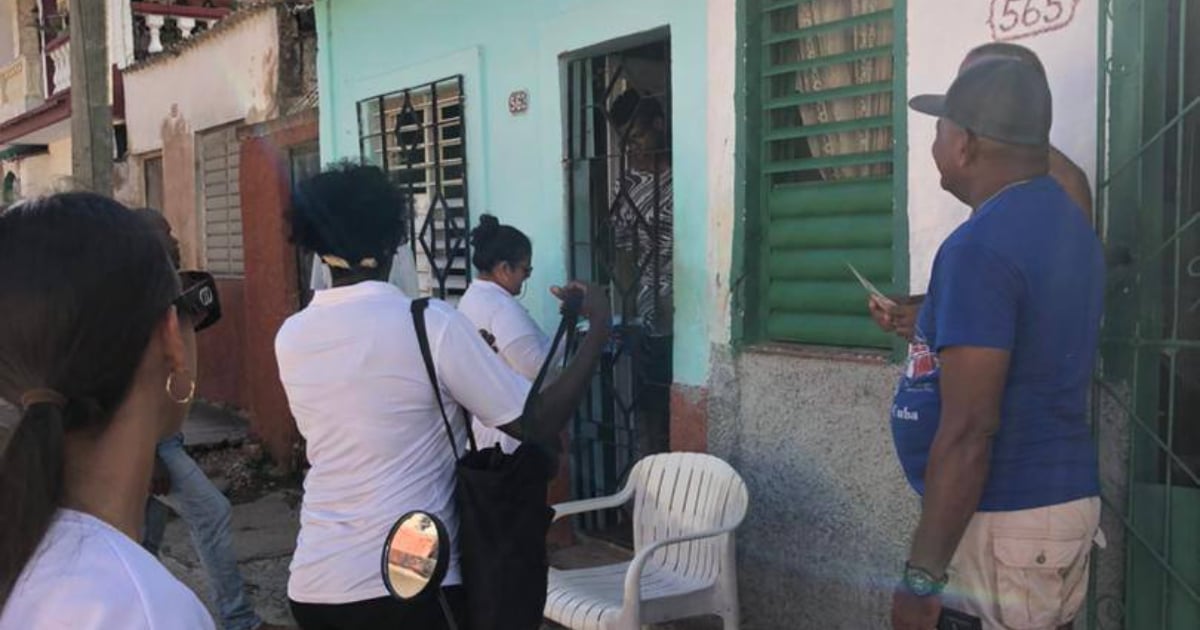
The material limitations have also been recognized by the Ministry of Public Health, which is facing challenges in ensuring the availability of insecticides, sprayers, fuel, and trained personnel. Fumigation campaigns now rely on the support of volunteers, students, and workers from other sectors.
The health situation in Matanzas continues to be monitored weekly by authorities, who aim to contain the outbreak before the end of the year. However, current material conditions are still limiting the effectiveness of actions on the ground.
Frequently Asked Questions about the Dengue and Chikungunya Outbreak in Matanzas
Which municipalities have been most affected by the outbreak of dengue and chikungunya in Matanzas?
The municipalities most affected by the outbreak of dengue and chikungunya in Matanzas are Matanzas, Cárdenas, Colón, Jovellanos, Jagüey Grande, and Pedro Betancourt. Authorities are implementing intensive control measures in these areas due to the significant increase in cases.
What measures are the authorities taking to combat the arboviral outbreak?
The authorities are intensifying surveillance, fumigation, and vector control efforts. However, the scarcity of resources such as insecticides and fumigation equipment limits the effectiveness of these actions, which is why support from volunteers and workers from other sectors is relied upon.
What symptoms do people affected by chikungunya and dengue in Matanzas present?
The symptoms of chikungunya include high fever, severe joint pain, and inflammation. Dengue, on the other hand, can be hemorrhagic and lead a person to a critical state, presenting symptoms such as intense abdominal pain, vomiting, bleeding, and fainting.
How is the outbreak affecting the healthcare infrastructure in Matanzas?
The authorities assure that hospitals have sufficient capacity to care for patients. However, material limitations, such as the lack of insecticides and fumigation equipment, are hindering vector control campaigns, which has led to reliance on support from volunteers and students.
What role does the community play in controlling the outbreak of dengue and chikungunya?
Community cooperation is crucial for achieving a better healthcare scenario. Authorities are calling for massive participation in cleaning, sanitation of common areas, and the elimination of mosquito breeding sites, in addition to maintaining hygiene practices at home.
Filed under: