
Related videos:
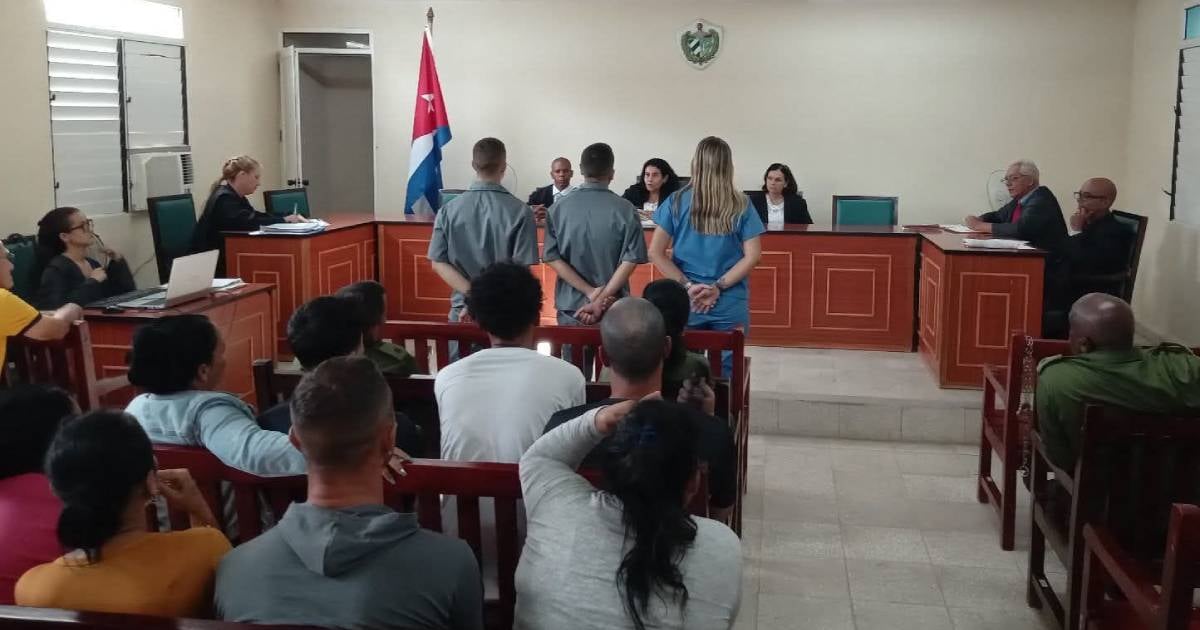
The Provincial People's Court of Holguín held a deterrent trial against three Cubans accused of drug trafficking, in a process presented by authorities as part of the “National Exercise for Prevention and Combating Crime.”
The case was reported by an official pro-government page on Facebook, aligned with the Cuban regime, , which emphasized the “prophylactic and preventive” nature of the process, even towards individuals with “potential delinquency.”
This formulation has generated criticism, as it opens the door to punishing not only proven behaviors but also the mere suspicion that someone might commit a crime, which contradicts basic principles of modern criminal law.
According to official information, the accused were sanctioned as co-authors of the crime of drug trafficking as outlined in the current Penal Code, receiving sentences ranging from 4 to 10 years in prison. Additionally, the court deemed it an aggravating factor that the crime was committed at night, a circumstance that can increase the severity of sentences in Cuba.
A national "zero tolerance" campaign
The Holguín trial is not an isolated case. It is part of a national campaign of exemplary trials, presented by the regime as a response to the rise in drug consumption and trafficking, particularly of synthetic cannabinoids, commonly known as “químico” or “papelillo.”
In Havana, on September 22, the Provincial Court sentenced José Alberto Ducá Valón to 15 years in prison for selling cocaine and synthetic drugs. According to the accusation, the defendant transported narcotics from Santiago de Cuba to the capital and sold them for prices of up to 14,000 pesos per gram.
In Matanzas, another trial left a young man from Jagüey Grande awaiting sentencing after he admitted to having purchased and resold synthetic drugs. The prosecution requested a seven-year prison sentence, despite the fact that the accused had no prior criminal record.
Social control and judicial propaganda
The authorities insist that these processes are conducted with "full legal guarantees", but in practice they operate as public shaming and social warnings. The idea that they serve to deter “individuals with potential criminal intent” reveals that the regime also uses them as a tool for political and social control, in a country where judicial institutions lack independence.
Although the government has intensified penalties and increased exemplary sentences, the Ministry of the Interior itself recently acknowledged that more than 1,500 people have been arrested for drugs and that the consumption of synthetic substances has surged to unprecedented levels on the island.
Frequently Asked Questions about Exemplary Trials in Cuba for Drug Trafficking
What is an exemplary trial and why is it criticized in Cuba?
An exemplary trial is a judicial process that aims to send a deterrent message to society, demonstrating that certain behaviors will be severely punished. In Cuba, these trials are criticized because they are used as tools of propaganda and social control, punishing even individuals for their "criminal potential," which contradicts the principles of modern criminal law and the fundamental rights of presumption of innocence and due process.
What is the objective of the Cuban regime in conducting these exemplary trials?
The Cuban regime uses exemplary trials as a strategy for political and social control. The goal is to demonstrate a tough stance against drug trafficking and send a preventive message to the population, but in practice, they serve more as public punishments and warnings than as transparent judicial processes that respect individual rights.
What types of drug-related crimes are currently being prosecuted in Cuba?
In Cuba, crimes related to the trafficking of different types of drugs are being judged, including marijuana, cocaine, and synthetic cannabinoids known as "chemicals." The penalties for these crimes are severe, reaching up to 30 years in prison or even the death penalty, depending on aggravating circumstances such as the involvement of minors or the amount of drugs involved.
What impact does the strategy of exemplary trials have on the issue of drug trafficking in Cuba?
The Cuban regime's strategy of exemplary trials, despite its severity, has not managed to curb the problem of drug trafficking on the island. Drug consumption and trafficking continue to rise, demonstrating that harsh penalties are insufficient to tackle an issue that has roots in poverty, unemployment, and the lack of socio-economic alternatives in the country.
Filed under: