
Related videos:
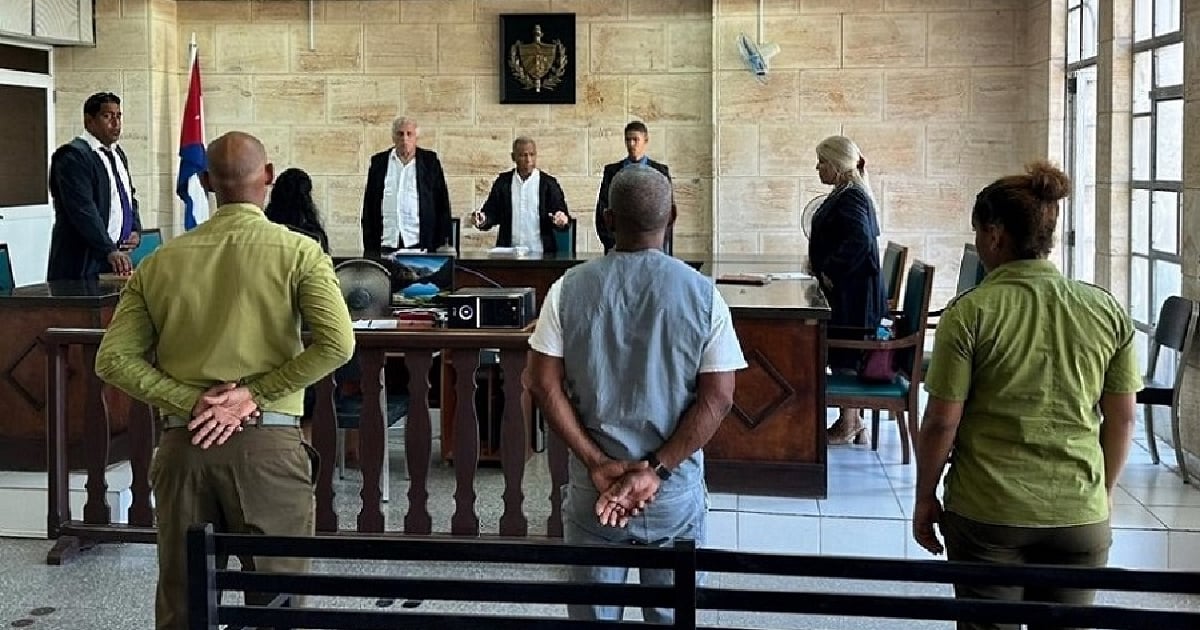
The Provincial People's Court of Havana sentenced a Cuban citizen to 15 years in prison this Monday, who was accused of trafficking cocaine and synthesized cannabinoids.
The Chamber of Crimes Against State Security of the Havana court, functioning in the criminal jurisdiction, issued a sentence against the accused José Alberto Ducá Valón, whom it found guilty of drug trafficking, “as defined and punished in the Penal Code under the designation of ‘Crimes related to illicit drugs or substances with similar effects’.”
According to a news release from the Provincial Court of Havana, the evidence presented in the oral trial showed that, since August 2024, the accused was involved in transporting “drugs of the types cocaine and synthesized cannabinoid in the form of packages” from Santiago de Cuba to the Cuban capital, where he sold them.
Ducá Valón sold cocaine for 14,000 pesos per gram and synthetic cannabinoid at 4,000 pesos per gram, specified the official statement.
On September 12, 2024, while intending to travel to the province of Santiago de Cuba, he was arrested by members of the Anti-Drug Combat Agency. At the time of his arrest, five packages weighing a net of 3.38 grams of synthetic cannabinoid and a digital scale for marijuana were seized from him.
The note from the Provincial Court stated that "during the investigation and the development of the oral trial, the defendant had the guarantees established in the criminal procedural legislation, exercised his right to defense, and was represented by a public defender as he had not appointed one of his choice.”
In addition to the prison sentence, Ducá Valón was imposed accessory sanctions including a prohibition on leaving the national territory and the confiscation of "property related to the crime," among others.
This trial is part of the Cuban regime's campaign aimed at curbing the rising crime rate in the country, including the increase in drug trafficking, particularly of the synthetic cannabinoids commonly known as “chemical” or “paper”, which has surged to unprecedented levels in recent years.
Despite the fact that the government has intensified the criminal penalties and imposed exemplary sentences against drug traffickers, both the sale and consumption continue to rise, showing that the government strategy is insufficient.
The Supreme People's Court of Cuba issued a serious warning in August about the rise in the sale and consumption of synthetic drugs in the country, particularly in Havana, and approved a ruling with harsher punitive measures against those who possess or distribute these highly harmful substances.
The Ministry of the Interior (Minint) revealed last week that the anti-drug operations have led to the arrest of more than 1,500 people, many of whom are in preventive detention.
The authorities reported that they also seized 81 kg of narcotics, 11,000 plants, 23,000 seeds, five firearms, and properties of traffickers, and dismantled five criminal networks operating from José Martí International Airport in Havana.
Frequently Asked Questions about Drug Trafficking in Cuba and Recent Sentences
Why was José Alberto Ducá Valón sentenced to 15 years in prison?
José Alberto Ducá Valón was sentenced to 15 years in prison for drug trafficking, specifically cocaine and synthetic cannabinoids, from Santiago de Cuba to Havana. He was found guilty of selling these illegal substances, and evidence was seized at the time of his arrest.
What measures has the Supreme People's Tribunal of Cuba taken regarding the trafficking of synthetic drugs?
The Supreme People's Court of Cuba has tightened criminal penalties for synthetic drug trafficking due to its increasing sale and consumption. Opinion 476 has been approved, allowing individuals to be prosecuted for smaller amounts, provided that the high toxicity of the substance is demonstrated. This reflects the regime's "zero tolerance" policy towards drug trafficking.
What are the additional penalties faced by someone convicted of drug trafficking in Cuba?
The accessory penalties for those convicted of drug trafficking in Cuba include a prohibition on leaving the country, the confiscation of assets related to the crime, and the deprivation of public rights. These measures aim to hinder reoffending and strengthen state control over the convicted individuals.
How does the trafficking of synthetic cannabinoids affect public health in Cuba?
The trafficking of synthetic cannabinoids represents a serious public health issue in Cuba. These compounds, known as "the chemical," are highly potent and can cause devastating health effects, including seizures and heart attacks. Their easy access and low cost have made them a popular drug among young people.
Filed under: