
Related videos:
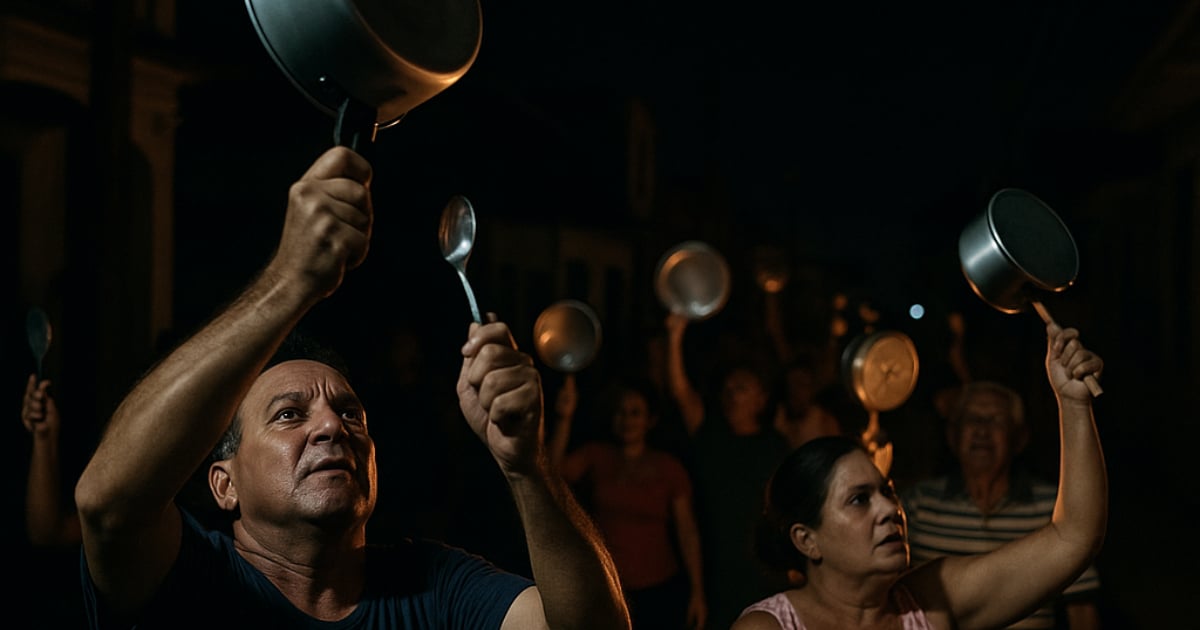
The Cuban prosecutor's office is seeking sentences of up to nine years in prison against six men accused of participating in a peaceful pot-banging protest against power outages in the town of Encrucijada, Villa Clara.
The information was released by the agency EFE, which had access to the document from the Prosecutor's Office, and emphasized that among those being processed is
Five of the accused have been held in provisional detention since the days following the protest that took place on November 7, 2024.
According to the accusation, the men led the demonstration with three pots "that could not be used" and shouted phrases like "Turn on the power, we want power," which, in the opinion of the Prosecutor's Office, disturbed "public order" and obstructed vehicular traffic.
However, this is another case of repression by the Cuban regime against the Cuban civilian population, weary of the economic crisis and the blackouts.
The process began this Wednesday at the Provincial Court of Villa Clara. During the hearing, activists reported the arrest of the opposition figure Guillermo “Coco” Fariñas while attempting to attend the trial.
The prosecution requests nine years in prison for two of the defendants, six years for Barrenechea, five for another one, and four for yet another. For the sixth defendant, a penalty of five years of restricted freedom is being sought. None of the accused had a criminal record.
The Cuban Observatory of Human Rights reported on X the conduct of the trial and recalled that several witnesses confirmed the peaceful nature of the protest.
"We demand justice and freedom for all the accused and for political prisoners in Cuba. We reiterate that peacefully protesting is not a crime," stated the organization.
According to the EFE agency, Amnesty International's researcher for Cuba, Johanna Cilano, also questioned the process: “Protest is a right; no one should be imprisoned simply for exercising their human rights.”
This trial adds to others held recently on the island, such as the one in Bayamo in March 2024, which resulted in sentences of up to nine years in prison for 15 protesters.
The energy crisis, characterized by blackouts that sometimes exceed 20 hours a day, has intensified social discontent in Cuba, leading to protests in various locations.
Frequently Asked Questions about the saucepan protests and repression in Cuba
Why is the Cuban Prosecutor's Office requesting sentences of up to nine years in prison for a pot-banging protest?
The Prosecutor's Office accuses the protesters of "public disorder" for peacefully protesting against the blackouts in Encrucijada, Villa Clara. The demonstration included chants and the use of pots, which, according to the Prosecutor's Office, disturbed public peace. However, human rights organizations criticize that these accusations are an attempt to criminalize social discontent.
Who are the defendants in the trial for the pot-banging protest in Encrucijada?
Among those accused is independent journalist José Gabriel Barrenechea and five other men. The sentences requested include up to nine years in prison for some of the accused, none of whom have criminal records. The protest was peaceful and no acts of violence were reported, according to witnesses and human rights organizations.
What has been the response of human rights organizations to this trial?
Various organizations have denounced the trial and demanded the release of the accused. The Cuban Observatory of Human Rights and Amnesty International have stated that peacefully protesting is not a crime and have criticized the lack of due process guarantees and state repression against dissent in Cuba.
What impact has repression had on José Gabriel Barrenechea's family?
The arrest of José Gabriel Barrenechea has had a devastating impact on his family, particularly on his mother, Zoila Esther Chávez, who passed away without being able to say goodbye to her son. Despite requests for Barrenechea to see her in her final days, the authorities did not allow the meeting, which has been viewed as an act of institutional cruelty.
Filed under: