
Related videos:
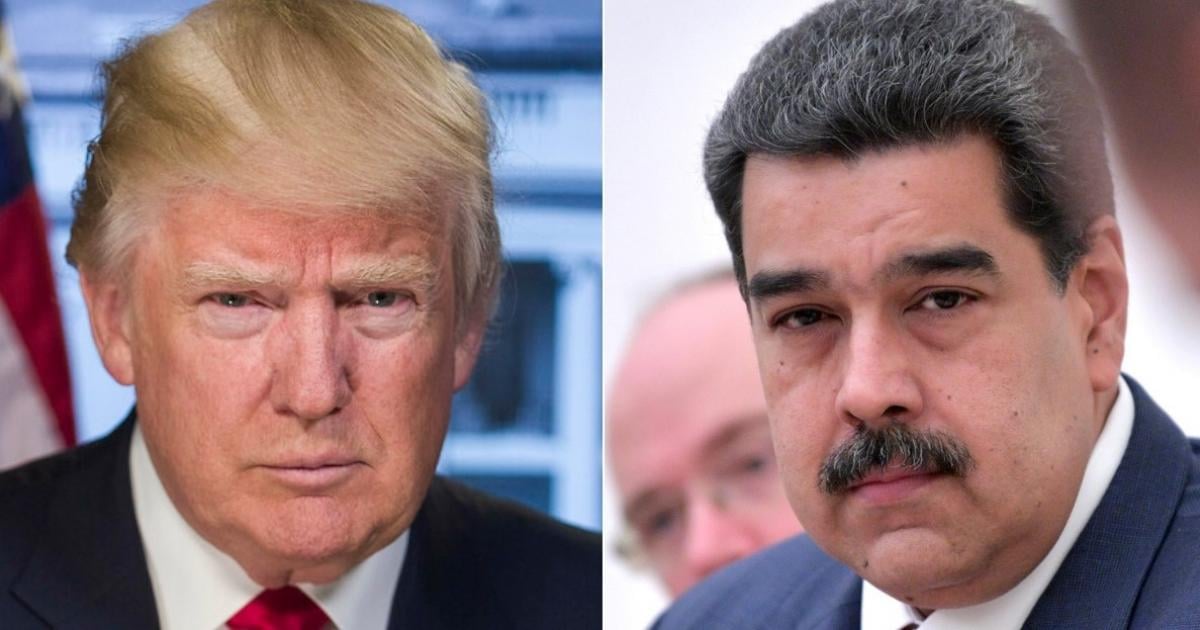
U.S. officials are developing options to execute attacks against drug traffickers inside Venezuela, a measure that could be implemented within weeks and would represent a new escalation in the military campaign driven by the Trump Administration.
According to four sources cited by NBC News, President Trump has not yet given final approval. According to these sources—two U.S. officials and two individuals familiar with the discussions—the plans focus on drone operations against members and leaders of criminal networks, as well as strikes on drug labs.
The White House referred to a previous statement from Trump (“we'll see what happens… it's unacceptable”), while the Pentagon declined to comment to that outlet.
The potential move to attack on Venezuelan territory comes after recent actions in the Caribbean, where the U.S. claims to have sunk at least three vessels from Venezuela allegedly connected to drug trafficking.
Washington has not presented evidence that all were transporting narcotics; however, authorities in the Dominican Republic stated that drugs were found in the water following one of the incidents.
Part of the drive, according to the Administration, is due to Nicolás Maduro "not doing enough" to curb the flow of drugs.
Meanwhile, the United States has increased its military presence in the region: at least eight ships and more than 4,000 personnel were deployed, along with F-35 fighters in Puerto Rico.
Sources consulted by NBC warn that this level of power in the Caribbean cannot be sustained indefinitely, which accelerates the assessment of "all options."
Even though Venezuela is not a significant producer of cocaine, it is regarded as a departure point for flights carrying drugs to third countries.
In 2020, the Department of Justice charged Maduro with drug trafficking, and recently the U.S. raised the reward for information leading to his arrest to 50 million dollars, linking him to criminal organizations such as the Tren de Aragua. Venezuela is not believed to be a source of the fentanyl that reaches the U.S.
In the political sphere, some officials do not rule out that a regime change may be a goal of these operations. Marco Rubio, Secretary of State, is among those who advocate for this approach, according to internal views of the Administration cited by NBC.
Maduro, for his part, has denied links to drug trafficking and claims that Washington is seeking to overthrow him.
While military options are being considered, there are indirect contacts: Middle Eastern leaders are acting as intermediaries in discussions between Washington and Caracas, in which —according to a senior official— Maduro has allegedly discussed concessions to remain in power.
In parallel, a certain level of practical coordination is being maintained: 54 deportation flights have been carried out up to last week.
Possible consequences
Consulted by NBC, the Venezuelan analyst Aníbal Sánchez Ismayel warned that an attack on Venezuelan soil could trigger anything from diplomatic protests to an increase in political persecution, reinforcing the narrative of defending sovereignty.
The White House, meanwhile, insists that Trump is “prepared to use all elements of American power” to curb drug trafficking and bring those responsible to justice.
Sources foresee that attacks could take place within Venezuela in the coming weeks, although no operation has been authorized yet.
The internal debate continues in a context of military pressure, diplomatic calculations, and mixed signals regarding the true extent of the campaign against drug trafficking in the region.
Frequently asked questions about the potential U.S. military intervention in Venezuela
Why is the United States considering military actions in Venezuela?
The United States is considering military actions in Venezuela as part of a campaign to combat drug trafficking in the region. The Trump administration argues that Maduro's regime has not done enough to curb the flow of narcotics into the U.S., and accuses it of collaborating with criminal networks such as the Tren de Aragua and the Cártel de los Soles.
What kind of military operations is the United States considering against Venezuela?
The United States is assessing the possibility of conducting drone operations to target leaders of criminal networks and drug laboratories within Venezuela. Additionally, it has increased its military presence in the Caribbean, which includes the deployment of warships, submarines, and surveillance aircraft.
What is Nicolás Maduro's stance on the drug trafficking accusations?
Nicolás Maduro denies the accusations of being linked to drug trafficking and claims that the actions of the United States aim to overthrow his government. He has labeled the military operations as an "imperialist threat" and has strengthened the military presence on the Venezuelan coasts.
What consequences could a U.S. military intervention in Venezuela have?
A U.S. military intervention in Venezuela could trigger diplomatic protests and an escalation of political tensions, both within Venezuela and internationally. Experts warn that it could bolster the Maduro government's narrative of defending sovereignty and increase instability in the region.
Filed under: