
Related videos:
The United States and Guyana agreed to
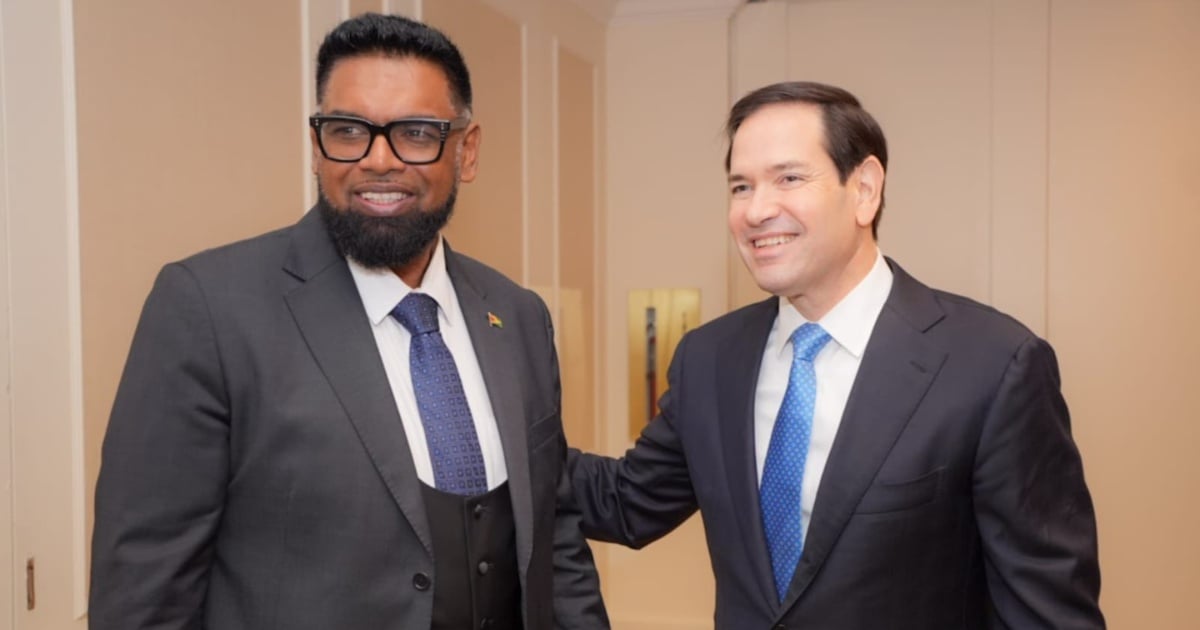
According to the official statement from the authorities, both leaders affirmed the strength of the alliance and highlighted a joint agenda to enhance security, expand economic opportunities, and strengthen stability in the Caribbean and South America.
The Secretary of State congratulated Ali on his reelection and emphasized the continuity of collaboration in key areas, focusing on economy and security.
According to the outcome of the meeting, Washington and Georgetown will maintain a tclose collaboration to address shared risks and enhance the operational capabilities of the institutions responsible for combating transnational crime.
As part of the regional security pillar, the United States reaffirmed its support for the territorial integrity of Guyana and announced that it will deepen cooperation with the Guyanese Defense Force to strengthen drug-fighting capabilities and improve bilateral mechanisms against common threats.
The agenda also included recognition of Guyana's efforts in supporting Haiti, particularly the UN Support Office and the new Gang Suppression Force, initiatives that Washington considers essential for stabilizing the regional environment.
On the economic front, both parties agreed to expand opportunities related to cooperation and a climate of stability as a condition for investment and growth.
The dialogue, according to the report, aims to deepen bilateral collaboration taking advantage of the diplomatic momentum from the high-level week at the United Nations.
The meeting established commitments to strengthen anti-narcotics cooperation, support the sovereignty of Guyana, back security initiatives in Haiti, and extend the economic agenda between both countries, while maintaining a strategic partnership with an emphasis on security and regional stability.
The meeting takes place in a context where Washington hhas reinforced a military presence in the Caribbean, near Venezuela, justified by the aim to target drug trafficking networks that —according to the U.S.— operate from Venezuelan coasts or are linked to Nicolás Maduro's regime. This deployment includes missile destroyers, submarines, and F-35 jets in Puerto Rico.
The U.S. sank vessels transporting drugs in the southern Caribbean; in one case, 11 fatalities were reported, and in another, three. The U.S. government has framed these actions as part of the fight against "narcoterrorists."
Donald Trump stated that three Venezuelan boats allegedly linked to drug trafficking were destroyed. A congressman claimed that one of the vessels belonged to the Cartel of the Suns, an organization identified by the U.S. for its connections with Chavist officials.
The Trump Administration has stated that it will use “every necessary power” to stop the flow of drugs and has made it clear that it is “ready to dismantle drug trafficking in Venezuela”; analysts quoted by the press suggest that the deployment goes beyond anti-drug operations.
In parallel, Marco Rubio visited the Southern Command, and images were released showing high-ranking officials in a gesture of coordination regarding regional security and the fight against drugs.
Frequently Asked Questions about the Security Strategy of the U.S. and Guyana
What is the primary objective of the security agreement between the U.S. and Guyana?
The main objective of the agreement between the United States and Guyana is to strengthen regional security, combat drug trafficking, and expand economic opportunities in the Caribbean and South America. The collaboration aims to address shared risks and enhance the operational capabilities of the institutions responsible for combating transnational crime.
How is the cooperation between the U.S. and Guyana framed within the current regional context?
Cooperation between the U.S. and Guyana is set against a backdrop of growing tension with Nicolás Maduro's regime in Venezuela, where the United States has increased its military presence in the Caribbean under the pretext of combating drug trafficking. This includes the deployment of warships near Venezuela, which has raised concerns about a potential confrontation scenario.
What role does Marco Rubio play in the U.S. security strategy in the region?
Marco Rubio, as Secretary of State, leads the U.S. security strategy in Latin America and the Caribbean. He has been a key figure in strengthening military operations in the region, as well as coordinating with allies to combat drug trafficking and security threats. Rubio has advocated for military deployment as a measure to protect U.S. national interests.
How is the U.S. military deployment in the Caribbean affecting the region?
The U.S. military deployment in the Caribbean has raised regional concerns due to its potential to escalate tensions with Venezuela and impact regional stability. The presence of warships and the vigorous rhetoric from the U.S. administration have been interpreted as signs of a possible intervention beyond anti-drug operations.
Filed under: