
Related videos:
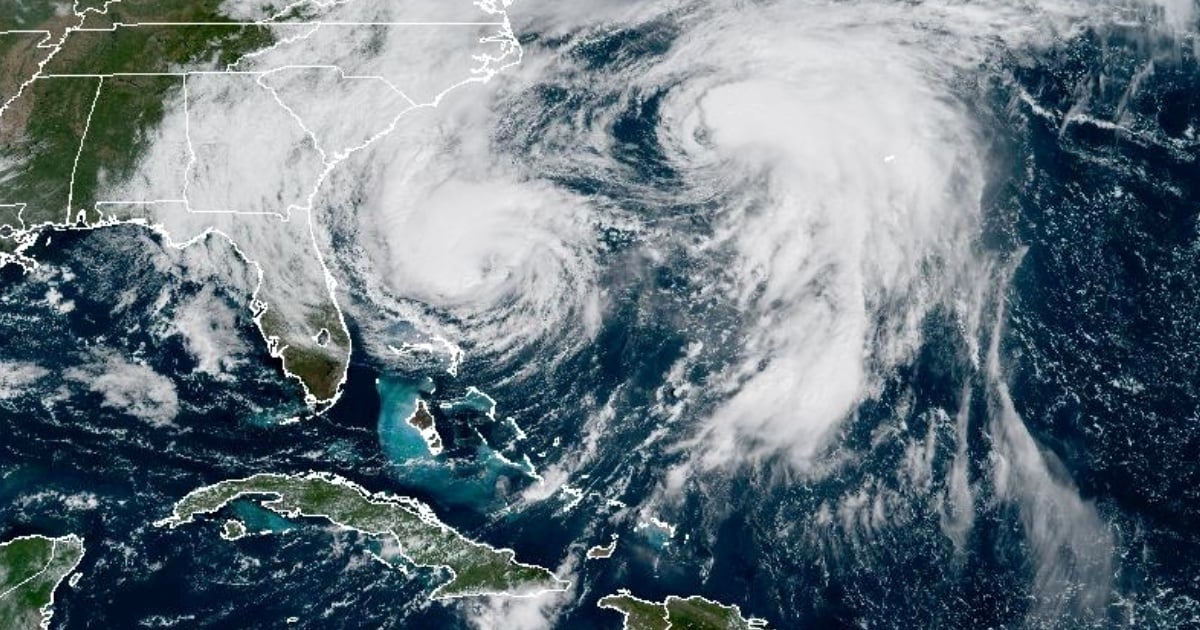
The tropical storm Imelda , fiercely striking the western Atlantic and directly affecting both the eastern coast of the U.S. and the Bahamas, as well as the Bermuda archipelago, where an even more severe impact is anticipated.
Although its center remains offshore, the hurricane has already wreaked havoc in several regions and poses a growing threat to the islands of the northern Atlantic.
An expanding hurricane heading towards Bermuda
Imelda is exhibiting maximum sustained winds of 130 km/h and continues to strengthen.
Its structure now encompasses hurricane-force winds extending up to 75 km from the center, and tropical storm winds reaching up to 295 km, a broad area of influence capable of generating significant threats at a considerable distance from its core.
The weather phenomenon is moving to the northeast at a moderate speed of 11 km/h, and it is expected to accelerate its movement in a east-northeast direction in the coming hours.
According to the latest bulletin from the National Hurricane Center (NHC), published at 11:00 a.m. EDT on Tuesday, the center of Hurricane Imelda was located at latitude 29.1 north and longitude 76.6 west, about 1,180 km west-southwest of Bermuda.
The Bermuda Weather Service has issued a hurricane warning, anticipating that the typical conditions associated with these phenomena—strong winds, heavy rains, and flooding—will begin to be felt in the archipelago on Wednesday afternoon and will last at least until Thursday.
Waves, surf, and flooding on the east coast of the U.S.
Although Imelda's eye remains far from the continent, the effects of the hurricane are already being felt on the east coast of the United States.
The swells generated by both Imelda and the massive Humberto are causing deadly rip currents, beach erosion, and coastal flooding from Florida to the Carolinas.
In Volusia, Florida, a 51-year-old man died after being swept away by rip currents, according to the sheriff's office.
The National Weather Service warns of possible minor coastal flooding along stretches of coastline from the Space Coast region in Florida to southern South Carolina.
In some areas, the water could rise between 30 and 60 cm above the usual level during high tides.
Rainfall of up to 100 mm is also forecasted in localized areas of southeastern North Carolina, with a risk of flash flooding in vulnerable zones.
An unprecedented double impact in Bermuda
Imelda does not arrive alone. Bermuda is on the unusual path of two nearly simultaneous hurricanes.
While Humberto, a strong Category 2 hurricane, brushes the west of the islands this Tuesday with bands of rain and dangerous surf, Imelda is approaching with greater intensity and a more direct path.
The phenomenon has been described by meteorologists as an exceptional situation.
According to expert Michael Lowry, Imelda and Humberto are separated by just 725 km, making them one of the ten closest storm pairs recorded in the Atlantic since satellite observations began in 1966.
This proximity has caused an interaction effect between both systems, with Humberto pulling Imelda out to sea, although not completely eliminating its threat to land.
Preliminary balance: Victims in Cuba and the United States
Imelda left a trail of death even before reaching hurricane status.
In Cuba, two people died as a result of the storm associated with the passage of the hurricane.
One of the deceased, a 60-year-old man, died when his home collapsed due to a landslide amid heavy rains, as confirmed by Cuban Prime Minister Manuel Marrero.
The storm also intensely affected the Bahamas between Sunday and Monday, battering the archipelago with torrential rains, hurricane-force winds, and a dangerous storm surge that flooded vulnerable areas.
An historically active hurricane season
With Imelda's transformation into a hurricane, the 2025 season has already recorded four cyclones with a minimum hurricane category.
However, unlike its predecessors—Erin, Gabrielle, and Humberto—which reached high intensity levels (categories 3, 4, and 5), Imelda has not yet exceeded category 1, although it is expected to strengthen to category 2 within the next 48 hours.
Hurricane Humberto briefly reached category 5 status last Saturday, with winds exceeding 250 km/h, before slightly weakening.
This intensity and speed in the formation of major storms has not been seen since 1935 and is considered by experts as a sign of the acceleration of climate change, according to reports from CNN.
Global warming, driven by greenhouse gas emissions, accelerates the rapid intensification of these systems.
The U.S. without hurricanes making landfall in 2025?
Despite the violence of the cyclones in the open sea, the United States has so far prevented any hurricane from making landfall in 2025.
The last tropical storm to impact the country was Chantal, which reached South Carolina in July, but it did so without hurricane strength.
If this trend continues, it would be the first time in a decade that the U.S. does not experience a hurricane with a direct impact.
Nevertheless, the authorities remain vigilant, as the phenomena could alter their trajectory due to dynamic factors still in evolution.
The evolution of Imelda and its interaction with Humberto represent a complex and high-risk weather scenario. Although the storm is expected to follow a path away from the North American continent, its indirect effects have already claimed lives and caused significant damage in the Caribbean and along the East Coast of the U.S.
Frequently Asked Questions about Hurricane Imelda and Its Impact on the Atlantic
What is the projected path of Hurricane Imelda?
Hurricane Imelda is moving northeast and is expected to increase its speed in an east-northeast direction in the coming hours. Although its center remains offshore, it is anticipated to pass near or over Bermuda, where a hurricane warning has already been issued.
What effects could Hurricane Imelda have on the East Coast of the U.S.?
Despite being far from the continent, its effects are already being felt on the east coast of the United States. There have been reports of high surf causing deadly rip currents, beach erosion, and coastal flooding from Florida to the Carolinas.
How has Hurricane Imelda affected Cuba and the Bahamas?
In Cuba, Imelda has resulted in the death of two people due to collapses and landslides associated with the intense rains. In the Bahamas, the hurricane has caused torrential rains, hurricane-force winds, and dangerous storm surges.
What warnings are in effect for Bermuda due to Hurricane Imelda?
A hurricane warning has been issued for Bermuda, where hurricane-force winds and heavy rain are expected starting Wednesday afternoon or evening. Adverse conditions are anticipated to persist until Thursday.
How does the 2025 hurricane season compare to previous years?
The 2025 hurricane season is especially active, with several intense cyclones, such as Erin, Gabrielle, and Humberto. Experts point out that this unusually high activity could be a sign of ongoing climate change.
Filed under: