
Related videos:
The U.S. Department of State has once again placed Cuba at Level 3 in its Trafficking in Persons Report (TIP), the most severe category, which includes countries that do not meet minimum standards for eliminating trafficking and are not making significant efforts to do so.
The 2025 document warns that the Cuban regime maintains a "policy or pattern" of state-sponsored human trafficking, particularly through the export of medical services, which is considered the country's main source of income, generating 4.9 billion dollars in 2022, the last year for which data is available.
Medical missions and forced labor
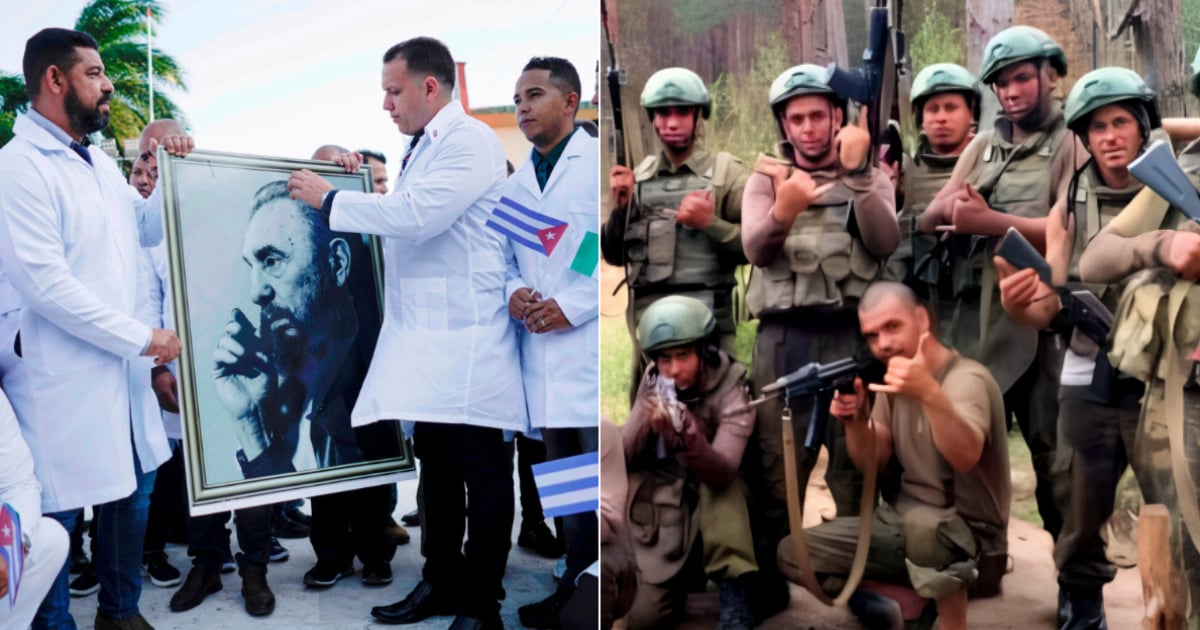
The report indicates that the so-called Cuban medical missions, presented as solidarity programs, conceal labor exploitation practices that approach modern slavery. The workers sent abroad, mostly health professionals, are recruited through deceit and under threats of retaliation.
Among the documented practices are the confiscation of passports and professional credentials, strict curfews, constant surveillance, and salaries that are significantly lower than those received by other foreign workers for similar tasks. A substantial portion of the salary is withheld in Cuba and is only disbursed in Cuban pesos, with payments contingent upon the successful completion of the mission.
The complaints include threats against the workers themselves and their families if they attempt to leave the program. NGOs, international organizations, and foreign governments have stated that these conditions represent serious human rights violations.
According to testimonies gathered in previous reports, more than 70% of professionals never saw a contract before being sent abroad, and nearly 80% experienced restrictions on movement and contact with the local population.
Judicial deficit and impunity
The document highlights the lack of progress in the prosecution of trafficking offenses. While the Cuban Penal Code punishes labor trafficking and some forms of sexual trafficking with prison sentences ranging from seven to 15 years, it does not explicitly address all cases of child trafficking.
In 2023, authorities reported 14 victims of child sex trafficking, all of whom were girls, but no investigations or convictions were recorded for labor trafficking of adults. The report emphasizes that the complicity of Cuban officials, who are responsible for monitoring and punishing those who leave the missions, fosters a climate of impunity that discourages reporting.
Cubans in the war in Ukraine
The TIP Report 2025 places greater emphasis on a complaint that had previously appeared in a more limited manner in earlier editions: the recruitment of Cuban citizens under deceit and coercion to fight in the Russian invasion of Ukraine.
According to the document, young people from the island were convinced with false promises of employment in Russia, mainly in construction, but upon arrival they were forced to fight on the front lines.
The report emphasizes that Cuban authorities may have facilitated these transfers through the expedited issuance of passports and the omission of exit stamps on the documents, which would have allowed them to officially deny any knowledge of the movement of recruits.
The novelty this year is that Washington includes this dynamic within the pattern of state-sponsored human trafficking by the Cuban government, on the same level as medical missions and other labor export programs.
In previous reports, the issue had only been mentioned in recommendations or as an emerging complaint, but now it is presented as a structural part of the accusation.
According to international sources cited in the report, between June 2023 and February 2024 more than 1,000 Cubans traveled to Russia to serve as fighters, with some being received in Moscow by Cuban military officials.
Several testimonies suggest that the island's authorities acted as facilitators and that the regime received payments for each citizen recruited.
The inclusion of this reference in the main body of the report increases international pressure on Havana, framing the participation of Cubans in the war in Ukraine not merely as an isolated phenomenon or one attributable to criminal networks, but as yet another expression of the state's policy of labor exploitation and human trafficking.
Recommendations and international pressure
The TIP Report 2025 includes Cuba in a list of 13 countries with state-sponsored trafficking patterns, alongside China, North Korea, Russia, Iran, and Syria.
Among the priority recommendations, Washington urges Havana to cease deceptive practices in worker recruitment, ensure direct wage payments, eliminate disproportionate penalties, investigate cases of trafficking, and allow workers to keep their identification documents.
Although in 2024 the regime approved a National Action Plan against trafficking and organized awareness workshops, the report considers these measures insufficient given the magnitude of the problem.
Reactions from Havana
Traditionally, the Cuban government has rejected accusations from Washington. In previous reports, Foreign Minister Bruno Rodríguez described the allegations from the United States as “slander”, assuring that Cuba maintains an “exemplary commitment” to the prevention and combat against trafficking, as well as in international medical cooperation.
However, reports of exploitation in medical missions and the recruitment of Cubans for the war in Ukraine have intensified international pressure on the regime, which continues to rely on the export of professional services as one of its main sources of foreign exchange.
The TIP Report 2025 concludes that the lack of political will to eradicate these practices keeps Cuba on the "blacklist" of countries that allow or support human trafficking, which poses an additional challenge for victims and an increasing condemnation in the international community.
Filed under: