
Related videos:
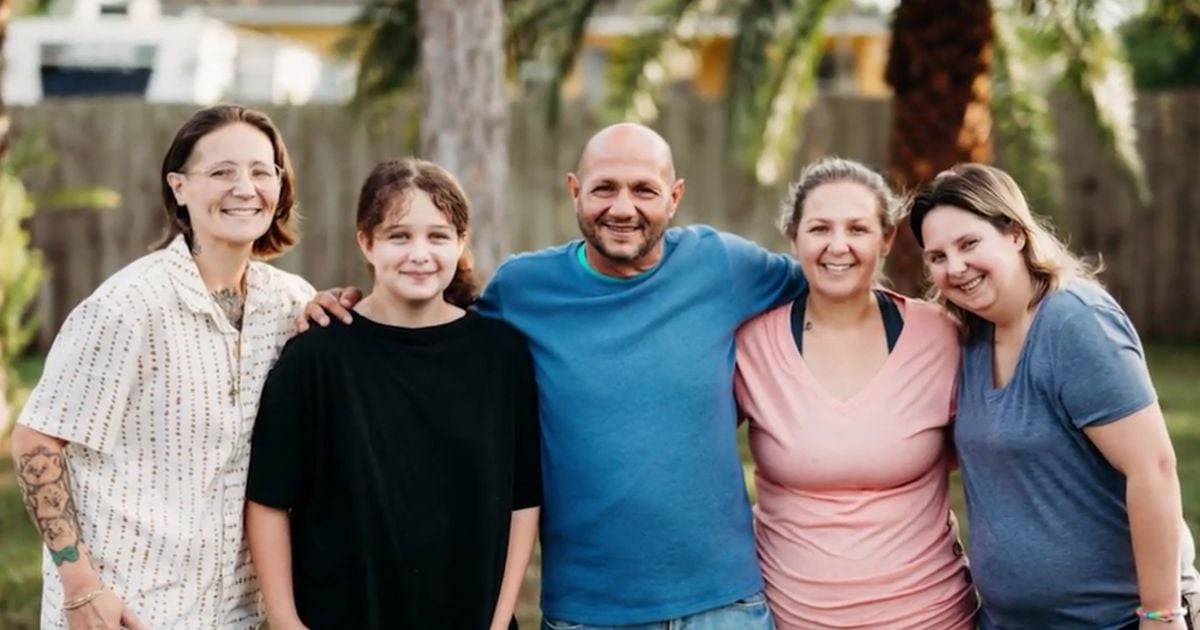
The family of Cuban José Manuel Allende, who arrived in the United States as a baby, reports that immigration authorities detained him last week in Florida and are now facing the possibility of his deportation after living in the country for 58 years.
According to the broadcaster WESH, this is José Manuel Allende, who arrived with his family in 1967 through the Freedom Flights program, which transported hundreds of thousands of Cubans to U.S. territory between 1965 and 1973.
At that time, Allende was only two years old, the source emphasized.
Her daughter, Sheena Allende-Smith, reported that the arrest happened on Friday when agents from Immigration and Customs Enforcement (ICE) and the Department of Homeland Security (DHS) arrived at their home shortly after she had taken her younger sister to school.
"My dad made himself a coffee, went out to the front of the house, and was greeted by ICE, national security," he said.
The detention is part of a state operation to control immigration in construction works, which resulted in 150 arrests in Brevard County.
Allende, who is now the owner of a small business, has a driver's license, a Social Security number, a home, a car, and two children—one of whom is a minor and the other has a disability—claims his daughter.
“He is not illegal. He is just like any of us, another citizen,” he insisted.
The Cuban has a criminal record from more than twenty years ago and has never been able to obtain U.S. citizenship.
In 2016, he received a deportation order, but the courts indicated that he could not be expelled from the country while under the Cuban Family Reunification Parole program, in which he has remained for the past nine years.
"They came legally; the government invited them in and now tells them to leave. Why do they have to go after 58 years?" questioned her daughter.
"It's not fair to us as children. I’m an adult, but he is still my dad," she added.
The situation of Cubans detained by immigration authorities in the United States has raised concern and tension among the exile communities.
Recently, a woman reported the deportation of her husband after 23 years in the U.S., describing the process as devastating for her family, especially due to the absence of recent crimes or threats to safety.
The operations conducted by ICE have included a variety of profiles. In one case, an undocumented Cuban was arrested after threatening another man with a knife during a neighborhood dispute, while another arrest involved an individual allegedly linked to the Sureños 13 gang. Both cases reflect how authorities act decisively in situations deemed risky.
However, there are also cases where detentions occur in more complex contexts. A 11J protester, exiled in the U.S., was arrested and later released, sparking criticism over the lack of clear criteria in the processes.
The Cuban asserted that his detention was unjustified, claiming that he poses no threat whatsoever.
In contrast, positive outcomes are also being reported. A 20-year-old was released after being detained and expressed his desire to become a firefighter, emphasizing the importance of second chances and community support in these migratory processes.
Frequently asked questions about the possible deportation of José Manuel Allende and U.S. immigration policy.
Why is José Manuel Allende facing deportation after 58 years in the United States?
José Manuel Allende faces deportation due to criminal records from over twenty years ago and the lack of U.S. citizenship, despite having lived in the U.S. since he was a baby under the Freedom Flights program. In 2016, he received a deportation order, but he has remained in the country under the Cuban Family Reunification Parole, which has complicated his situation with immigration authorities.
What is the Cuban Family Reunification Parole program?
The Cuban Family Reunification Parole is a program that allows certain Cuban citizens to enter the United States to reunite with family members who are already in the country. This program has provided an option for those who have ongoing immigration processes and wish to stay legally in the U.S. while their cases are resolved. José Manuel Allende has been under this program for nine years, which has influenced the authorities' decision not to expel him earlier.
What impact do current immigration policies have on Cubans in the U.S.?
Current immigration policies have led to greater uncertainty and risk of deportation for many Cubans in the U.S., including those without criminal records or with ongoing legal processes. The current administration has intensified inspections and detentions, impacting Cuban families who have lived in the country for years. Cases like that of José Manuel Allende reflect the tightening of these policies and their consequences on the Cuban community.
How can Cubans regularize their legal status in the U.S.?
Cubans can regularize their legal status in the U.S. through the Cuban Adjustment Act, which allows them to apply for permanent residency after one year and one day of presence in the country. However, not everyone qualifies automatically, as they must have been inspected and admitted or paroled by immigration authorities. The application of this law depends on the individual’s immigration history and the conditions of their entry into the country.
Filed under: