
Related videos:
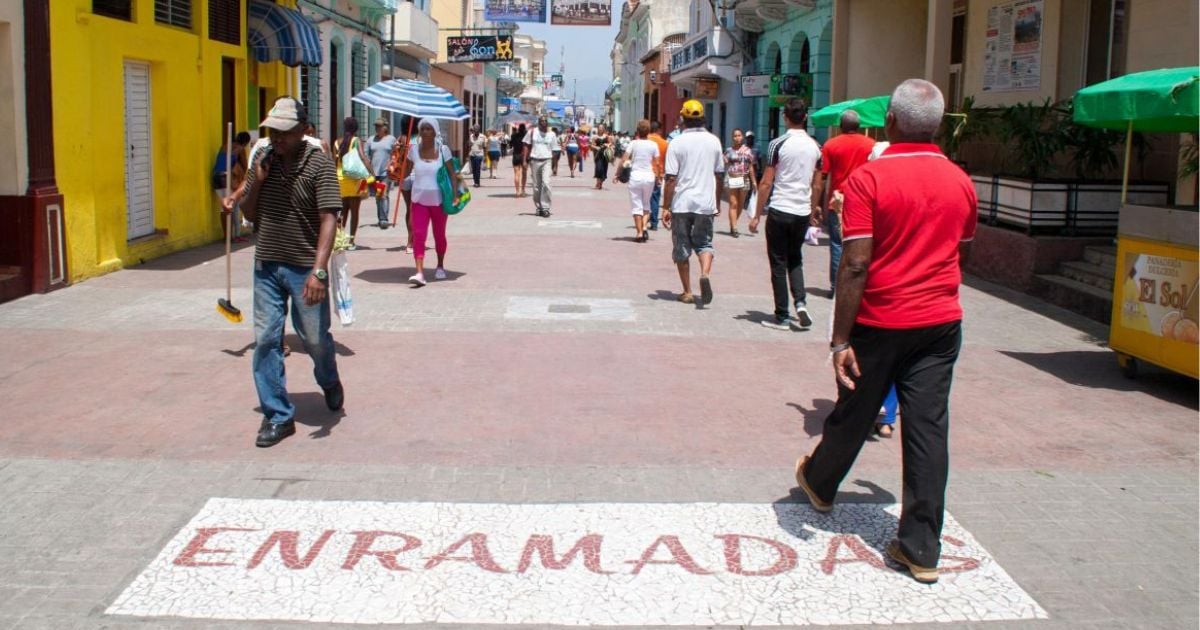
Nothing is more heartbreaking and pitiful than seeing a child "struggling" to survive. In Santiago de Cuba, a boy of just nine years old was seen selling concentrated chicken bouillon cubes on the busy Enramadas street to help support his family, a scene that starkly reveals the normalization of child poverty in the country.
The report was made this Sunday by activist Yasser Sosa Tamayo, who shared on Facebook the testimony and images of the minor, describing the moment as "painful and unbearable."
In his post, the activist recounted that the boy, wearing tattered clothes and with trembling hands, offered the pills as if distributing hope, but in reality, he was selling his childhood.
The minor told him that he lives with his mother and siblings, and that he himself makes "investments" with the money he receives.
At just nine years old, he already calculates profits and handles coins like an adult, in a country that, according to Sosa, has grown accustomed to looking without seeing.
The activist, who regularly highlights the invisible reality of Santiago de Cuba, expressed feeling moved and powerless by what he witnessed, noting that while official speeches and events are being held, many children in Cuba are losing their childhood "drop by drop, coin by coin."
"This is a 9-year-old boy selling his childhood on the street. Every coin he adds is a dream that fades away. Every adult who watches without taking action is part of this tragedy," Sosa said bluntly in the comments section.
The scene, which has generated numerous reactions on social media, highlights the institutional neglect and the lack of real protective mechanisms for minors in vulnerable situations.
A person named Alma Infante said, "Two days ago, very alarmed, I asked my mother if I had lived my life so quickly that I had never before noticed how, in the streets of my city, children, even during school hours, look for ways to earn money. Childhood faces where you don’t find a glimmer of hope, lost gazes yearning to earn a few bills to perhaps eat just once during the day."
He also emphasized, "I have witnessed in the streets images that I only knew from television. Scenes that existed in other realities, and of which my country took pride that they did not happen here. Kids parking cars, kids selling, kids begging... These are truths that terrify..."
Laritza Labori emphasized: "Three years ago, I saw a young child selling candy in the Alameda and I cried out of sadness, out of pain, at what my eyes were witnessing. The situation is outraging; the life of misery these incompetent dictators have imposed on the country is unacceptable."
In Cuba, where an increasing number of families rely on informal or child labor to survive, this case is not an exception but rather part of an increasingly widespread reality.
Sosa is an activist who has gained recognition in recent years for bringing attention to uncomfortable realities, and more than that, he has developed initiatives for the benefit of those who suffer most from the economic crisis.
In Cuba, child labor has become a visible consequence of the economic and migratory crisis.
An increasing number of minors are taking on tasks typically associated with adults, such as street vending of food, carrying goods, or collecting waste, often in unsafe conditions and without supervision.
Stories like that of two brothers who sell candies on the streets of Havana to help their grandmother have become commonplace. These children, who also make bracelets after returning from school, strive to contribute to their family's livelihood with dignity and hard work.
From Camagüey, another case moved public opinion: a ten-year-old boy rides through the streets on an old bicycle selling tamales.
He lives with his grandparents because his parents have emigrated or plan to do so, and every coin he earns is part of an effort to meet basic needs.
Also in Santiago de Cuba, a citizen report raised concerns about a father and his two young children who sell peanuts and collect cans in public spaces.
The youngest, only six years old, was carrying a sack of cans, and those who witnessed the scene sprang into action to offer assistance.
This type of imagery, which was previously associated with other Latin American realities, has become normalized on the island, despite legal restrictions against child labor.
In urban areas like La Habana, the phenomenon also intensifies. Children selling bread, fruits, or begging are becoming increasingly visible.
Frequently asked questions about child poverty and child labor in Cuba
Why is a nine-year-old selling chicken pills in Santiago de Cuba?
The nine-year-old boy sells concentrated chicken bouillon cubes in the streets of Santiago de Cuba to help support his family. This situation reflects the normalization of child poverty in Cuba, where many families rely on informal or child labor to survive due to the economic crisis.
What does the activist Yasser Sosa Tamayo indicate about childhood in Cuba?
Yasser Sosa Tamayo denounces that, while official speeches are being made, many children in Cuba are losing their childhood due to poverty and the lack of protective mechanisms. Sosa emphasizes the helplessness and shock in response to the reality of minors who take on economic responsibilities for family support.
What is the impact of child labor in Cuba according to the Food Monitor Program?
The Food Monitor Program warns about the increase in child labor in Cuba, especially in the food sector. The economic crisis is pushing more children into informal work, which limits their development and exposes them to risks. This situation undermines the fundamental rights of children in the country.
How does the economic crisis affect children and adolescents in Cuba?
The economic crisis, along with an aging population and migration, has forced many Cuban children and adolescents to work informally to support their families. Child poverty has become a daily reality, impacting their education, development, and overall well-being.
Filed under: