
Related videos:
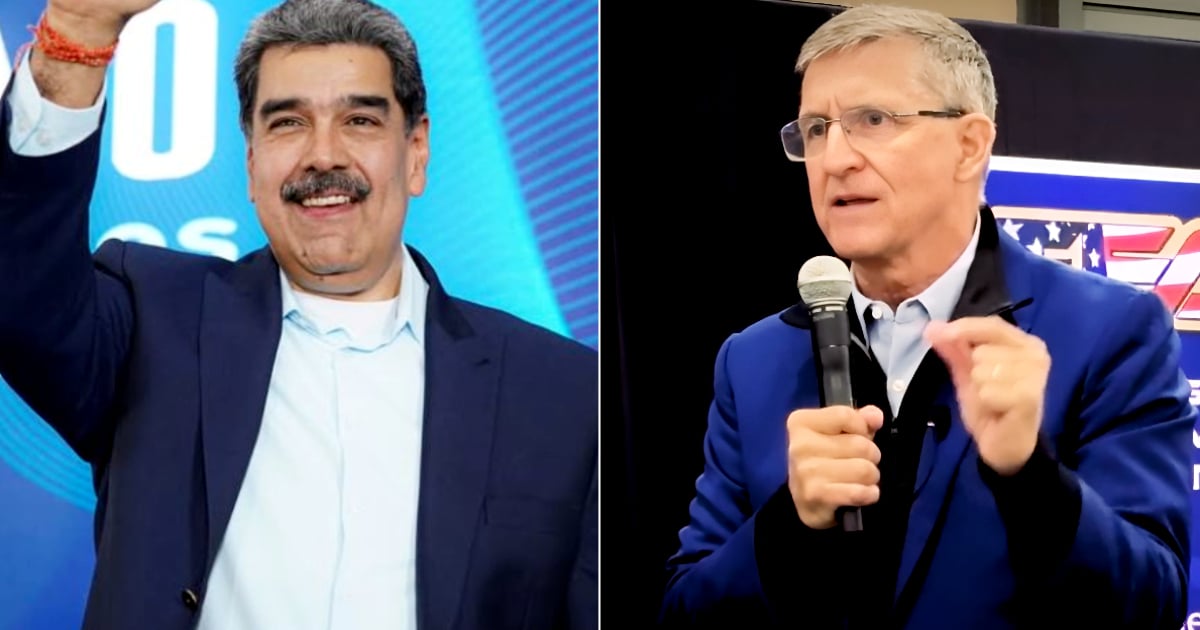
The retired general Michael T. Flynn, former National Security Advisor of the United States, stated this Saturday in a message posted on social media that "the days of Nicolás Maduro are severely numbered".
Flynn, close to the current president Donald Trump, labeled the Venezuelan leader as “the head of the largest foreign terrorist organization in the hemisphere,” and warned that there will be no room for a continuation of chavismo.
"There will not be a 'mini-Maduro' in his place", he wrote, mentioning that key figures in the U.S. government, such as Attorney General Pam Bondi, the Secretary of War, and the FBI Director, "will not allow it."
The former official emphasized that “terrorism, drug trafficking, child trafficking, and other illicit activities have come to an end,” and noted that Trump “is completely determined, and becoming more serious each day” in his stance against authoritarian regimes in the region.
Flynn also expressed his support for the Venezuelan opposition leader María Corina Machado, whom he referred to as "the Iron Lady," as labeled by Secretary of State Marco Rubio. "We need the duly elected and very strong @MariaCorinaYA," he stated.
He asserted that, in his experience “successfully hunting high-value targets,” Maduro should step down “while he still can”, and allow the Venezuelan people to freely choose their destiny.
The message came shortly after new statements from President Trump, who reiterated that his administration “will not tolerate criminal regimes in the Western Hemisphere,” a clear reference to the government in Caracas.
Military tension, drug trafficking, and the Cartel of the Suns in the Caribbean
In recent weeks, the Caribbean region has witnessed an unprecedented military escalation between the United States and Venezuela, related to the fight against drug trafficking and the growing power of the Cártel de los Soles.
Reports of air incursions, naval deployments, bilateral maneuvers with countries in the region, and explicit warnings from Washington to Caracas highlight the current news landscape.
The Venezuelan regime has responded by warning that it will not tolerate external military aggressions. At the same time, Washington has increased its naval presence in the Caribbean, including the deployment of a guided missile ship, the positioning of F-35 fighter jets, and anti-narcotics maritime operations.
This deployment coincides with Trump's statement declaring that the U.S. is in a "armed conflict" with drug trafficking cartels, which paves the way for a more aggressive interpretation of military actions within and near Venezuelan territory.
The Cartel of the Suns, supposedly links between structures of chavista power -led by Maduro- and drug trafficking, frequently appears in these narratives as the central target of the "anti-narcotics war" promoted by Washington.
In the midst of this tension, the Maduro government has responded by declaring a state of "external commotion", mobilizing troops and intensifying its resistance rhetoric.
In this context, the dispute goes beyond the realm of diplomatic discourse: the Caribbean becomes a stage for geopolitical confrontation with a real risk of military escalation under the banner of the fight against drug trafficking.
Filed under: