
Related videos:
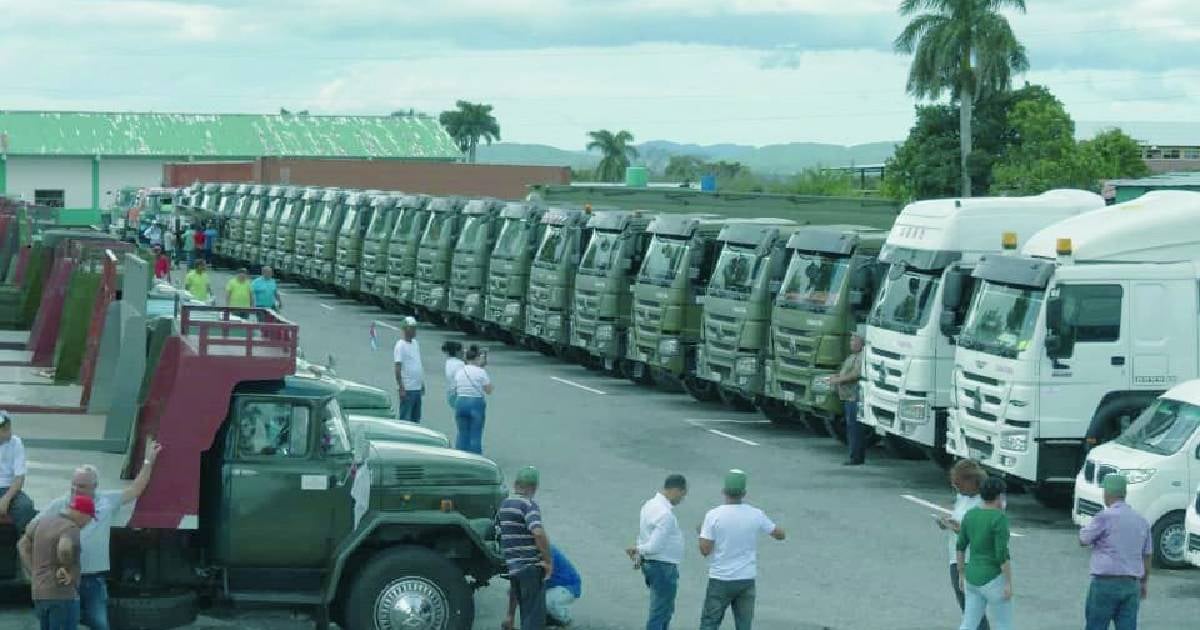
The Agropecuary Transport Company, part of Tabacuba, recently acquired a new fleet of heavy vehicles which, according to its executives, will enhance the transportation of resources for agricultural and agro-industrial tobacco activities in the province of Pinar del Río, reported the newspaper Guerrillero.
According to the media on their online space, the acquisition includes 10 tractor wedges, 21 semi-trailers, and five fuel tankers, as well as light vehicles for administrative use and funeral services in the tobacco-growing areas.
These vehicles are added to a fleet that is partly outdated, with units that exceed 50 years of operation, but have been maintained through scheduled repairs.
Better logistics... but producers are still waiting
According to Emilio Triana Ordaz, the general director of the company, the new means will expedite the transfer of more than 200 containers with resources for the upcoming tobacco campaign, which begins this month.
However, while Tabacuba improves its fleet and logistics structure, the Cuban countryside continues to face a severe shortage of basic supplies, ranging from fertilizers to fuel, a situation that has limited agricultural production in various provinces.
Diversification and control
The company has diversified its business operations: in addition to transporting wood and tobacco, it now also transports fertilizers, basic staple goods, materials for the housing program, and provides support for solid waste collection and funeral services.
It also implemented an internal control system: each driver is responsible for keeping their vehicle in optimal condition, and a committee of experts was established to assign positions to new drivers, with the aim of enhancing efficiency.
An evident contrast
As Tabacuba strengthens its logistical apparatus, the contrast with the reality of agricultural producers, many of whom are still awaiting resources for planting, becomes increasingly evident.
Although the company insists that the new fleet will improve efficiency in the "port-transport-internal economy" chain, the structural problems in Cuban agriculture go far beyond the transportation of supplies: chronic resource scarcity, dependence on imports, and a lack of autonomy for producers.
With these investments, Tabacuba aims to maintain its key role within the tobacco sector, which continues to be one of the main sources of export income for the island. However, on the ground, many farmers are still waiting for that machinery to translate into real supplies and productive improvements.
In August, six tobacco producers
Tabacuba acknowledges the use of prison labor to produce cigars
This week, the Cuban regime has been exposed after admitting, through a statement from Tabacuba, that incarcerated individuals on the island are involved in the production of the renowned Cuban cigars.
The statement, issued in response to a report from ONG Prisoners Defenders and published by the specialized outlet Halfwheel, confirms what has been denounced for years: the exploitation of prisoners as part of the production chain of one of the most lucrative industries in Cuba.
The report from Prisoners Defenders, based in Madrid, detailed that at the Quivicán prison, at least 40 inmates work as rollers, along with two civilians who serve as instructors and administrators.
Frequently Asked Questions about the situation of Tabacuba and the tobacco industry in Cuba
What new vehicles has Tabacuba added to its fleet?
Tabacuba has incorporated 10 tractor trailers, 21 semi-trailers, and five fuel tanks, as well as light vehicles for administrative use and funeral services in tobacco-growing areas. This acquisition aims to enhance the transportation of resources for the agricultural and agro-industrial activities of tobacco in Cuba.
How does the lack of supplies affect agricultural producers in Cuba?
Despite the logistical improvements by Tabacuba, agricultural producers in Cuba continue to face a severe shortage of basic inputs such as fertilizers and fuel. This situation has significantly constrained agricultural production in various provinces of the country.
Does Tabacuba use prison labor in the production of cigars?
Yes, Tabacuba has acknowledged that it uses the labor of incarcerated individuals in the production of Habanos cigars. This fact was confirmed following a report by the NGO Prisoners Defenders, which denounced the exploitation of prisoners within the production chain of the Cuban tobacco industry.
What incentives has Tabacuba offered to prominent tobacco producers?
Tabacuba has delivered cars to six outstanding tobacco producers as part of an incentive program. This measure aims to encourage production and promote participation in the value chain of the tobacco sector.
Filed under: