
Related videos:
While there are more than a thousand districts in the Cuban capital without sanitation and tons of garbage piling up in the streets, the regime organized a recognition event in the Comunidad Granma, in the municipality of La Lisa, one of the areas that Miguel Díaz-Canel publicly accused of not participating in the national sanitation day on October 5.
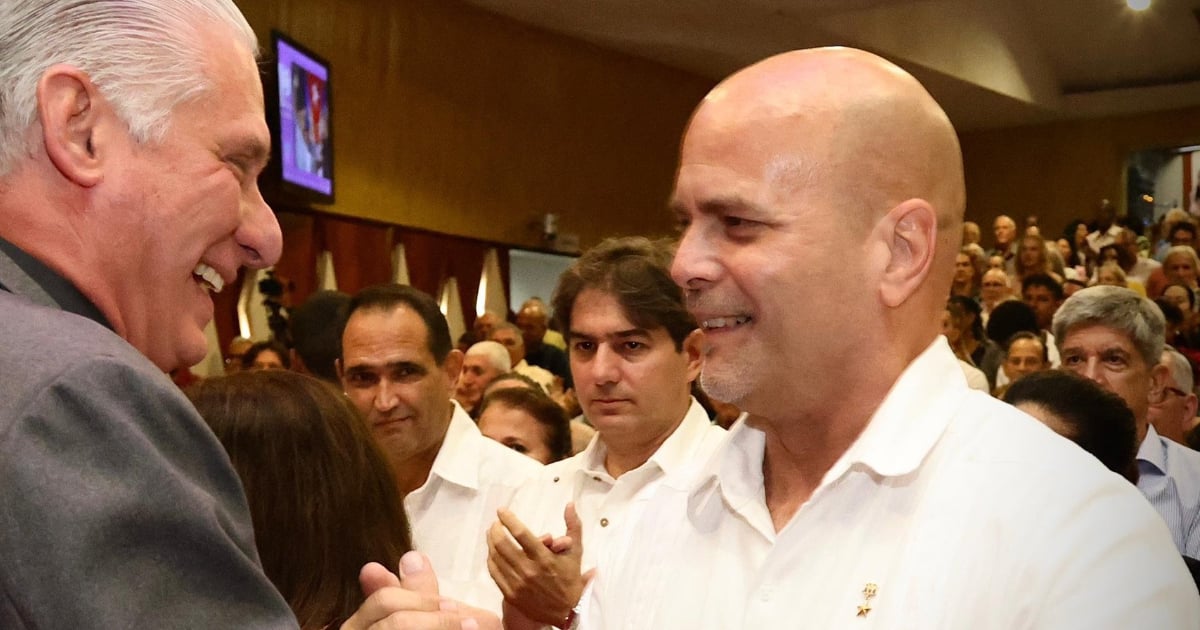
The appreciation event was presided over by Gerardo Hernández Nordelo, national coordinator of the Committees for the Defense of the Revolution (CDR), who presented awards to officials, state entities, and CDR members for their supposed "outstanding work" in sanitation tasks in the area.
Among the awardees were several departments of the Ministry of the Interior (MININT), representatives of the People's Power, and state-run business groups.
However, a few days earlier, Díaz-Canel reported in a high-level meeting that in La Lisa “no one showed up” to work on garbage collection, directly referencing last weekend's cleaning operation.
The official criticized the inaction of delegates and political coordinators in several municipalities and called for them to be held accountable "with names and surnames."
"On October 10th, there was no work done. There were places in Playa where nothing happened. In La Lisa, which is quite complicated, no one came out either. Don’t we have constituency delegates in those areas? Are there no political coordinators? Well then, let everyone come to account," Díaz-Canel asserted.
The contradiction between the presidential speech and the award ceremony highlights the chaos, dissonance, and lack of coherence in the management of the health crisis affecting more than two million residents of Havana.
The capital, mired in a deep crisis of infrastructure and services, has seen its solid waste collection system collapse, with the government failing to provide a structural solution.
According to official figures, the operation carried out last weekend collected over 35,000 cubic meters of garbage, but only managed to clean around 300 districts, which represents a minimal fraction of the city.
Despite this reality, the government chooses to reward institutional and military actors with flags and diplomas, while ignoring public discontent and complaints about the poor hygienic conditions in neighborhoods like Marianao, San Miguel del Padrón, or Cerro, where makeshift dumps coexist with children, the elderly, and schools.
During the event in La Lisa, participants took the opportunity to express solidarity with the Palestinian people and condemn the military presence of the United States in the Caribbean, diverting attention from the real issue affecting Cubans: the increasing unsanitary conditions in their neighborhoods.
Frequently Asked Questions about the Garbage Crisis in Havana
What is the current situation of garbage collection in Havana?
The waste collection situation in Havana is critical. The Cuban capital is facing a massive accumulation of trash in its streets due to a collapse in the collection system, exacerbated by a lack of trucks, fuel, and inefficient management. Despite recent efforts by the government, there are still over a thousand districts that have not been attended to.
How has the Cuban government responded to the health crisis?
The government has organized cleaning campaigns and sanitation operations in the city, mobilizing state workers, recruits, and police. However, these actions have been insufficient, and there are no sustainable structural solutions in sight. Authorities have tended to blame citizens for the lack of social discipline, instead of addressing the issues of infrastructure and management.
What contradictions have arisen in the management of waste collection?
There are contradictions between the actions and statements of the Cuban government. While President Díaz-Canel has criticized the lack of action in municipalities such as La Lisa, the national coordinator of the CDR, Gerardo Hernández, has rewarded these same communities for their supposed sanitation efforts, reflecting a lack of coherence in the management of the issue.
What impact does the accumulation of garbage have on public health in Havana?
The accumulation of garbage in Havana poses a serious risk to public health. The unsanitary conditions have contributed to the rise of diseases such as dengue and chikungunya, and worsen the quality of life for residents living in proximity to waste near schools, hospitals, and homes.
Filed under: