
Related videos:
Since Miguel Díaz-Canel took office as president of Cuba in April 2018, one of the most persistent and visible problems in the daily lives of Cubans — garbage — has shifted from being a chronic annoyance to becoming a widespread public health threat.
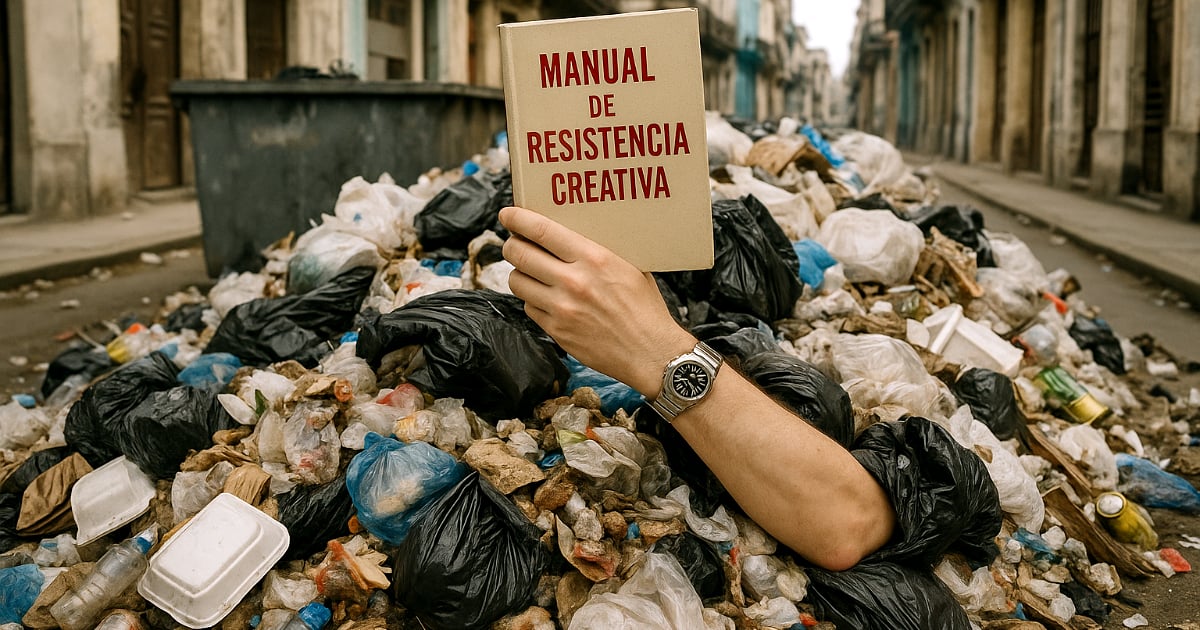
Seven years later, the mounds of waste in streets, parks, and vacant lots are the most tangible reflection of a State incapable of fulfilling one of its essential functions: keeping the capital and the cities where the majority of the Cuban population lives clean and healthy.
Promises that rot among the waste
In 2018, shortly after taking office, Díaz-Canel toured Havana and declared that urban sanitation would be a “national priority,” promising “structural and sustainable” solutions.
"One of the most complicated problems in the city is this. And one of the issues that sets Havana apart from the rest of the provinces (...) Once it is resolved -partially or fully- it will mark a milestone in solving the population's issues," said the newly appointed leader before the Council of Ministers and the authorities of the capital.
That same year, Austria donated ten garbage collection trucks intended for the Provincial Company of Communal Services of Havana in celebration of the city's 500th anniversary. The donation was presented as a step towards the “recovery of urban cleanliness” and was accompanied by promises of a more regular and efficient sanitation plan.
However, a year later, the reality had not changed and the urban landscape continued to be "structured" by heaps of waste. The streets remained overwhelmed with garbage, especially in municipalities like Centro Habana, San Miguel del Padrón, and Diez de Octubre, where residents reported the lack of systematic waste collection and the deterioration of equipment.
That propagandistic euphoria dissipated as soon as the cameras turned off and the newly created municipal communal enterprises were left without resources. The new trucks were broken, the communal services were out of fuel, and makeshift dumps were growing in corners and abandoned lots.
For the people of Havana, the garbage bins had become an inseparable part of the urban environment, despite the "beautification" campaigns in honor of the capital's anniversary.
Pandemic and Collapse: The Point of No Return
It was the year 2020 when the Havana authorities decided to launch the campaign “For a more beautiful, clean, and healthy Havana” during the pandemic.
“Everyone wishes that the beauty of our Havana, which inspired Carpentier and Lezama, Portocarrero and Los Zafiros, is not damaged by filth or garbage,” sang Granma, the official organ of the Communist Party, quoting Díaz-Canel: “What is the worth of the works for the 500th anniversary of Havana, which have adorned the capital, if the hygiene of the city disappears again beneath mountains of garbage?”.
The year 2021 marked a turning point. The COVID-19 pandemic revealed the fragility of the waste collection system. Many municipalities suspended regular collection, and the containers overflowed for weeks.
During the full lockdown, garbage bins became breeding grounds for mosquitoes and rats. In Matanzas and Havana, overwhelmed hospitals coexisted with streets flooded with waste.
Nevertheless, the official discourse maintained its justificatory tone. In state media and provincial government meetings, it was emphasized that the waste issues were due to “social indiscipline” and the “poor management of waste by residents,” a narrative repeated at various times during Reinaldo García Zapata’s term as governor.
No authority then took direct responsibility for the lack of equipment, fuel, or personnel in the communal services.
Late recognitions and ineffective measures
In 2022 and 2023, the waste crisis gained unprecedented visibility. The official media, pressured by the evidence, acknowledged "structural difficulties" in solid waste collection.
In 2022, García Zapata, publicly acknowledged the critical situation of the communal system, admitting to “negative results” and a “lack of technical resources” to ensure urban cleanliness. Repairs to trucks and new collection routes were announced, but the results were minimal.
During that year and the following one, reports continued to emerge from the neighborhoods of Havana, with photos of overflowing containers in front of hospitals and schools, and testimonies from community workers who claimed they could barely fulfill their shifts due to a lack of gloves, masks, or fuel.
On social media, users were alarmed as they shared images of piles of waste just a few meters from the "Pedro Borrás" hospital, illustrating the seriousness of the issue.
The solutions were limited to isolated operations and an increase in , threats, and sanctions that achieved nothing. Nevertheless, the message was clear: the State could not guarantee cleanliness, but it could punish citizens for making a mess.
Havana, an open-air landfill
In the last two years, reports from residents have multiplied. On social media, images of mountains of waste next to schools and hospitals went viral. Citizens reported that the garbage was collected only when a visit from a leader was imminent.
In 2024, a report from CiberCuba titled “Trash Floods Havana: An Apparently Unsolvable Problem” highlighted overflowing containers in El Vedado and Cerro, and described the stench and proliferation of insects that accompany the daily blackouts.
A few days later, Díaz-Canel announced a new strategy: each ministry would take responsibility for cleanup in a municipality of the capital, as part of a “war against garbage.”
However, the operation was more symbolic than effective. In October, another article warned that Havana was on the brink of collapse, with garbage trucks halted due to a lack of fuel and spare parts.
The pattern repeated itself: statements, campaigns, and new promises without tangible results.
A state that delegates its failure
Over these seven years, the pattern has repeated itself: campaigns, promises, blaming of citizens, and a lack of results.
The government discourse has systematically shifted the responsibility onto the citizens, appealing to “social consciousness” and “voluntary work” while evading the structural shortcomings of the communal system.
In practice, the problem does not lie in the popular behavior, but in the lack of resources, organization, and planning. Community teams operate with staff shortages, without spare parts or fuel, and with insufficient salaries to retain workers.
Despite the repeated "wars against waste," Havana still lacks a stable waste management system, functional recycling plants, and modern infrastructure for waste treatment.
State inefficacy is not accidental: it is part of a model that prioritizes propaganda and other interests over management and investment. Díaz-Canel has turned each “battle against trash” into a political act, rather than a public policy.
Instead of acknowledging the structural collapse of community services, the regime insists that the problem lies in the “lack of social discipline”.
The Filth of Power
Cubans have turned humor into a mechanism of resistance. “Here, the mosquito is the national bird,” joked a Facebook user recently, while others shared memes comparing the capital to a post-apocalyptic garbage dump.
But the background is not comic at all; rather, it is tragic: the accumulation of waste has directly contributed to the recent outbreaks of dengue, chikungunya, and Oropouche, which the authorities insist on treating as isolated episodes.
The urban decline of Havana is also a metaphor for the political deterioration of the country. The trash piled up on every corner not only reflects the ruin of public services but also the exhaustion of a system that has lost the capacity —and the willingness— to guarantee the most basic needs.
While landfills multiply and diseases spread, the government prefers to clean its image rather than its streets.
Filed under: