
Related videos:
The Cuban regime responded to the increasing criticisms of the Mandatory Active Military Service (SMA) and asserted that it is "a school that instills values."
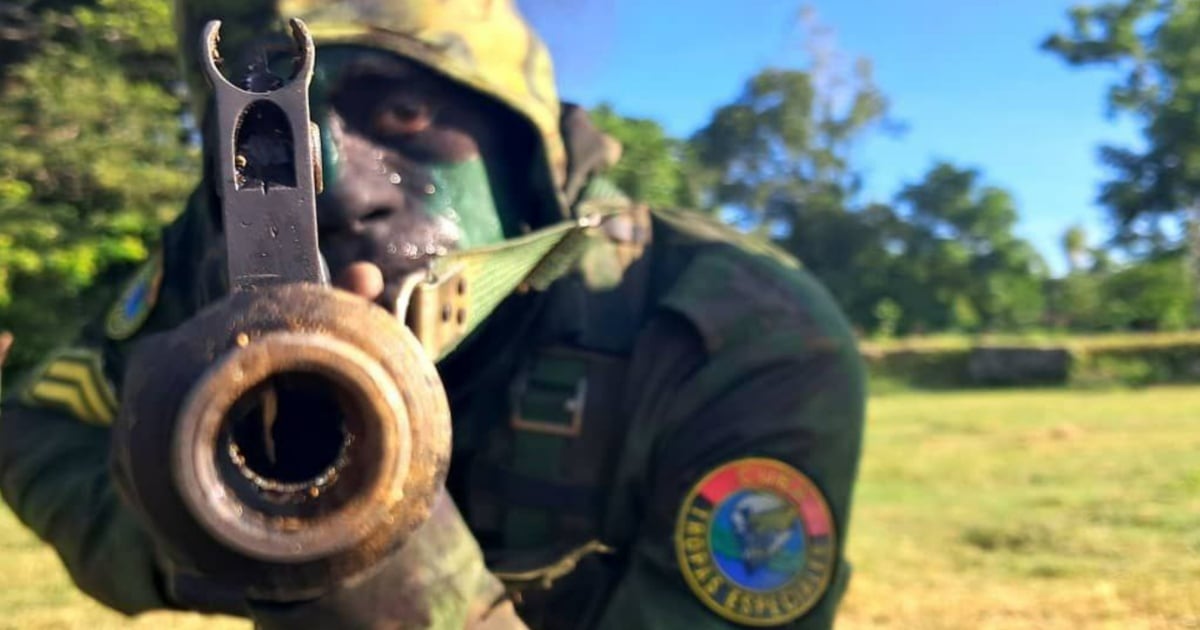
"Service in Active Military Duty is not just a stage in life, it is a school that instills values where our youth acquires habits and skills that contribute to their development as good citizens, as Cubans at Heart!!!", wrote the Eastern Army on X.
In recent days, several testimonies have emerged reflecting the concerns of many Cuban families regarding mandatory military service.
Last Thursday, with deep concern, a Cuban father offered a public prayer for his eldest son, who is scheduled for a mandatory military service medical check-up this Tuesday in Cuba.
David Espinosa, a member of the "El Calvario" Baptist Church in Havana, shared in a Facebook post how difficult it was for his family to face this moment.
They stated that they do not want their son to go through that stage, but they recognize that in Cuba, military service is an almost unavoidable requirement, especially for those aspiring to attend university.
"If they don't pass it, which is extremely difficult to do without getting into trouble, it hinders the future that a select few long for," Espinosa wrote, claiming to have served two years in the military.
In Guantánamo, a soldier from the Border Brigade sustained serious injuries while on duty, an incident that has reignited the debate about the conditions and risks faced by young recruits.
A few days earlier, a Cuban mother demanded justice for her deceased son during his military service, calling for transparency in the investigation and answers regarding the circumstances surrounding his death.
Their complaint has joined that of other parents who are questioning the lack of information and government support in light of these events.
Alarm has also been caused by the report of a father whose son lost vision in one eye while in military custody.
The case has generated shock due to the severity of the injuries and the lack of an official explanation that clarifies the circumstances surrounding the events.
These reports add to previous tragedies, such as the young people who lost their lives in an explosion inside a military unit, an event that deeply affected Cuban society and fueled concerns about the training, control, and safety within military institutions.
Together, these facts reflect a growing social unrest regarding a system that many consider coercive and lacking guarantees, where the suffering of families repeats itself while the State shirks responsibility for the consequences of mandatory military service in Cuba.
Frequently Asked Questions about Mandatory Military Service in Cuba
Why is mandatory military service criticized in Cuba?
Mandatory military service in Cuba is criticized due to the precarious conditions, mistreatment, and medical negligence that have led to the deaths of several young people. Furthermore, it is seen as an imposition that affects the future of young individuals who aspire to pursue higher education without participating in this program.
What consequences has military service had on Cuban families?
The mandatory military service in Cuba has generated a growing social unrest and suffering among families, who report a lack of information, mistreatment, and the hazardous conditions to which young recruits are exposed. Cases of deaths and serious injuries have increased the outrage and discontent of the population.
What measures have the Cuban authorities taken in response to the complaints about military service?
So far, Cuban authorities have not provided clear answers nor assumed responsibility for the reported deaths and abuses in mandatory military service. The lack of transparency and the absence of corrective measures have been criticized by activists and affected families.
What alternatives are available for young Cubans who do not wish to fulfill military service?
In Cuba, military service is a nearly unavoidable requirement for men who wish to attend university, which limits the alternatives for those who do not wish to fulfill it. However, some activists and organizations continue to push for the recognition of alternative options or for the elimination of the compulsory service.
Filed under: