
Related videos:
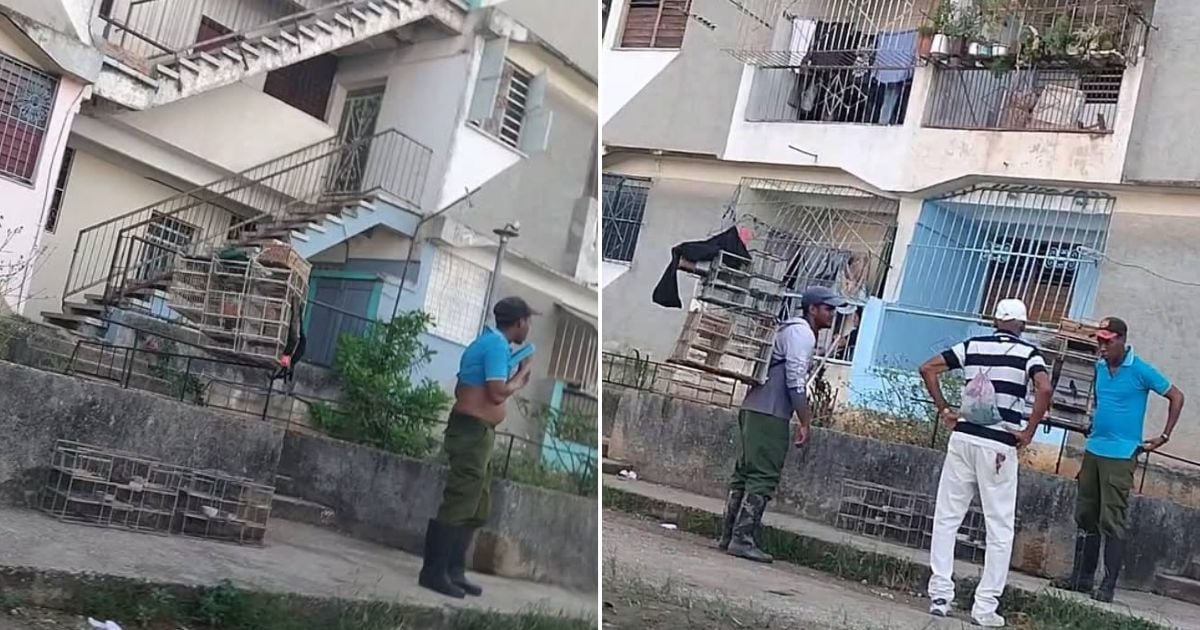
The use of illegal traps to capture migratory birds has raised concerns among activists and animal welfare advocates in Havana, where trap cages have been found in areas such as Cotorro and the Metropolitan Park.
Bienestar Animal Cuba, in its Havana chapter (BAC-Habana), reported this Saturday on Facebook that the birds arriving on the Island after long journeys from North America face not rest, but nets, cages, and captures that jeopardize their lives and ecological role.
According to the organization, species such as azulejos, bijiritas, and zorzales not only enrich the ecosystems they inhabit but also serve as natural pest controllers and seed dispersers.
"Trapping them in cages to listen to their song is a cruel and profoundly unfair act," they warned, pointing out that many of these birds die from stress, stop eating, or lose their feathers when deprived of their freedom.
Others survive merely to repeat, in captivity, a song that has lost its meaning.
In addition to the ethical and ecological consequences, the practice of capturing migratory birds is illegal in Cuba.
Decree-Law 31 on Animal Welfare expressly prohibits the retention of wild animals without authorization, and the country is a signatory to international agreements such as the Convention on the Conservation of Migratory Species of Wild Animals (CMS).
However, the lack of effective monitoring allows these captures to occur year after year, emphasized the protective organization.
Many birds end up sold as pets or confined in domestic cages, while indifference persists towards a phenomenon that erodes the natural balance.
Migratory birds do not belong to any territory, BAC-Habana reminded us; rather, they are part of the common heritage of life, and turning them into ornaments is to deny their essence.
The organization emphasized that keeping wild birds in captivity is not a demonstration of affection, but rather a form of selfishness and ignorance.
On the same day, BAC-Habana also publicly denounced that they have faced pressure due to their activism.
"Don't try to put more pressure on us. We don't believe in anyone's pressure. For years we have endured," they published in another message.
Cuba is a stopover for more than 300 species of migratory birds each year.
Its protection is not only an environmental duty but also an ethical responsibility towards living beings that symbolize freedom.
The hunting of migratory birds in Cuba is not only driven by economic motivations related to illegal trade or domestic ownership, but it has also become a desperate act in the face of the food crisis.
The bee-eater, for example, is already being sold for 400 pesos per pound in the black market of eastern Cuba, reflecting how a protected species is perceived as a temporary solution to alleviate hunger.
This situation jeopardizes the ecological balance, as the migratory bird plays a key role as a pest controller.
The trade in endangered species has reached shocking proportions. A man in Matanzas was caught attempting to auction a peregrine falcon, one of the fastest birds in the world and endangered, using social media to attract buyers.
Although it is unknown whether the operation was carried out, this fact highlights the impunity with which these practices are conducted, as well as the lack of effective oversight to deter the capture or trade of protected species.
The ways to obtain economic benefit through these birds also include clandestine export routes. At the José Martí International Airport, a Cuban citizen was detained who was trying to smuggle live birds hidden in his luggage, a clear example of how the smuggling of wildlife is connected to international networks of illegal trafficking.
Although Cuban laws prohibit these practices, the mechanisms for control and enforcement remain insufficient in the face of the magnitude of the problem.
Frequently Asked Questions about the Use of Illegal Traps to Capture Migratory Birds in Cuba
Why is it illegal to capture migratory birds in Cuba?
Bird migration capture is illegal in Cuba due to Decree-Law 31 on Animal Welfare, which prohibits the retention of wild animals without authorization. Additionally, Cuba is a signatory of the Convention on the Conservation of Migratory Species of Wild Animals (CMS), which aims to protect these species and their natural habitats.
What species of migratory birds are common in Cuba?
Among the species of migratory birds that pass through Cuba are bluebirds, bijiritas, and thrushes. These birds not only enrich the ecosystems they visit, but also act as natural pest controllers and seed dispersers, playing a crucial role in ecological balance.
What are the consequences of using illegal traps for birds and the ecosystem?
The use of illegal traps to capture migratory birds has serious consequences for both the birds and the ecosystem. Many birds die from stress, stop feeding, or lose their feathers when deprived of their freedom. This not only puts their lives at risk but also disrupts their ecological role as pest controllers and seed dispersers, affecting the natural balance.
What actions are being taken to protect migratory birds in Cuba?
Despite the existence of Decree-Law 31 on Animal Welfare and the international agreements signed by Cuba, the lack of effective monitoring allows the illegal capture of migratory birds to continue. Organizations such as Animal Welfare Cuba (BAC) work to denounce these practices and raise awareness among the public about the importance of protecting migratory birds.
Filed under: