
Related videos:
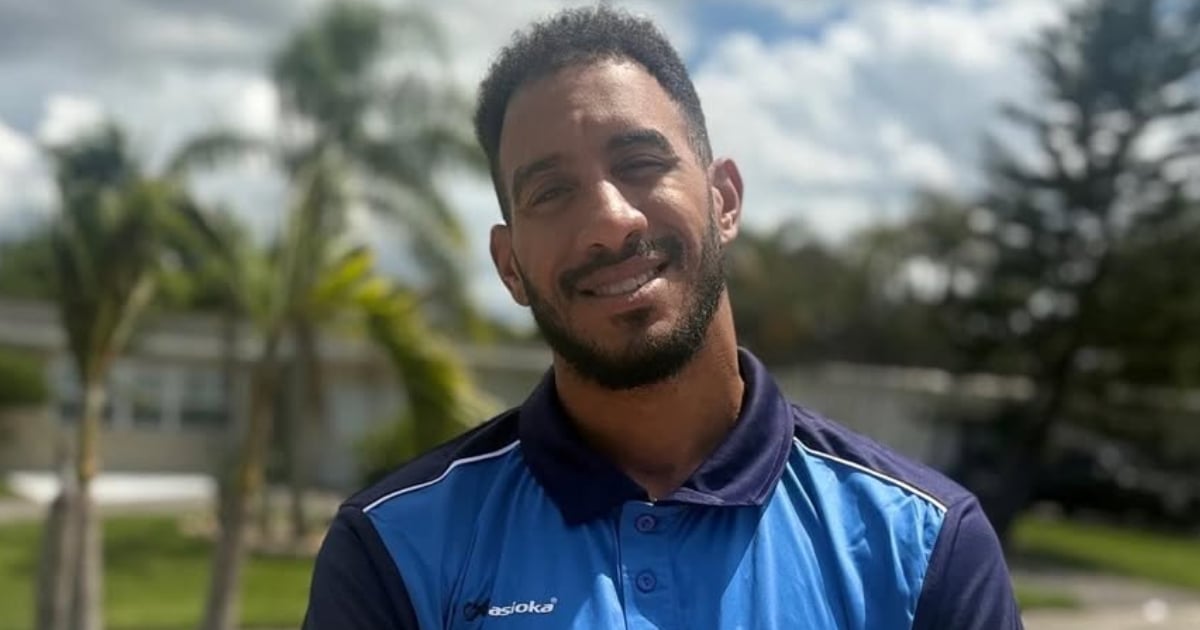
The Cuban hurdler Orlando Ortega said goodbye to the track this Monday, leaving an Olympic legacy competing for Spain.
The naturalized Spanish athlete, who won silver in the 110-meter hurdles at the Rio de Janeiro 2016 Olympics, is retiring after suffering from several injuries, he announced on his Instagram account.
"Suffering has its limits; one cannot always put their health at stake. A new injury accelerates what was already a goal in my mind: to retire from the track at 100%," he said.
"Unfortunately, it couldn't be, but I take comfort in having tried. I bid farewell to high-level competition, but not to my love for this sport," Ortega published on his social media, he added.
Ortega thanked his family, his late grandmother, his wife and daughter, as well as Artemisa, his hometown, and the Spanish Federation, his Olympic Committee, and the Higher Sports Council.
"I close this chapter filled with unforgettable moments. I leave with my head held high, proud of my athletic career and knowing that, thanks to God, I achieved what very few have been able to achieve in athletics," he reflected
The vaulter recalled his titles, such as the bronze medal at the Doha 2019 World Championships and the European Championships in Berlin 2018
"I leave with the desire to continue because my spirit has always been and will always be that of a winner and a great competitor," he affirmed.
"My love for this sport is so great that I would be willing to sacrifice my entire life, but I can no longer be selfish, neither with myself nor with my family, who has also sacrificed so much in pursuit of my dream—one that I have already fulfilled abundantly, but my desire to continue prevented me from realizing it. I have learned enough to understand that, despite being due to an injury, this is the best moment to say GOODBYE," he confessed in the heartfelt statement.
Finally, he directed a message to the sport where he succeeded: "Athletics, the moment has come to see you and enjoy you from a different perspective. I carry with me the pride of being able to look back and see that I have fought with passion, just as I now look to the future with the same intensity and excitement."
His departure from Cuba
A few years ago, Ortega spoke about the tough times he experienced when he arrived in Spain and confessed that he was “on the brink of depression.”
"I left Cuba and arrived in a new country where I practically didn't know anyone and had nothing. I found myself on the brink of depression, questioning whether I had made the right decision, and I didn't believe that I had. But then I sat down and told myself, 'You're here now, just move forward.' The next step is to do it right, and I'm going to do it right because I've sacrificed so much. I'm going to keep training even harder, and when I compete, I will fight for my dreams," he recounted.
The Cuban athlete left the official delegation from the island at the 2013 World Athletics Championships in Moscow, where he had arrived as one of the medal favorites, being ranked third in the world that year and sixth at the London 2012 Olympics.
After his departure, he was criticized by the sports institute of Cuba, which stated officially about the athlete:
"The decision to renounce the cause of the country that allowed him to develop as an athlete deprives him of the honor that comes with competing from the ranks of a sports movement grounded in its values."
Ortega established his residence in Spain. The leaders of the Cuban Sports Institute (INDER) tried to prevent Ortega from competing under the Spanish flag, and obviously, they did not accept him under the Cuban flag either.
Spain not only welcomed him as an emigrant in 2013, but also supported him as an athlete even without knowing if the IOC would allow him to compete.
The Olympic medalist is the grandson of the legendary Cristina Echevarría, champion of the Pan American Games in Winnipeg 1967 (4x100), and Orlando Ortega, who was a soccer player in his native Cuba.
Filed under: