
Related videos:
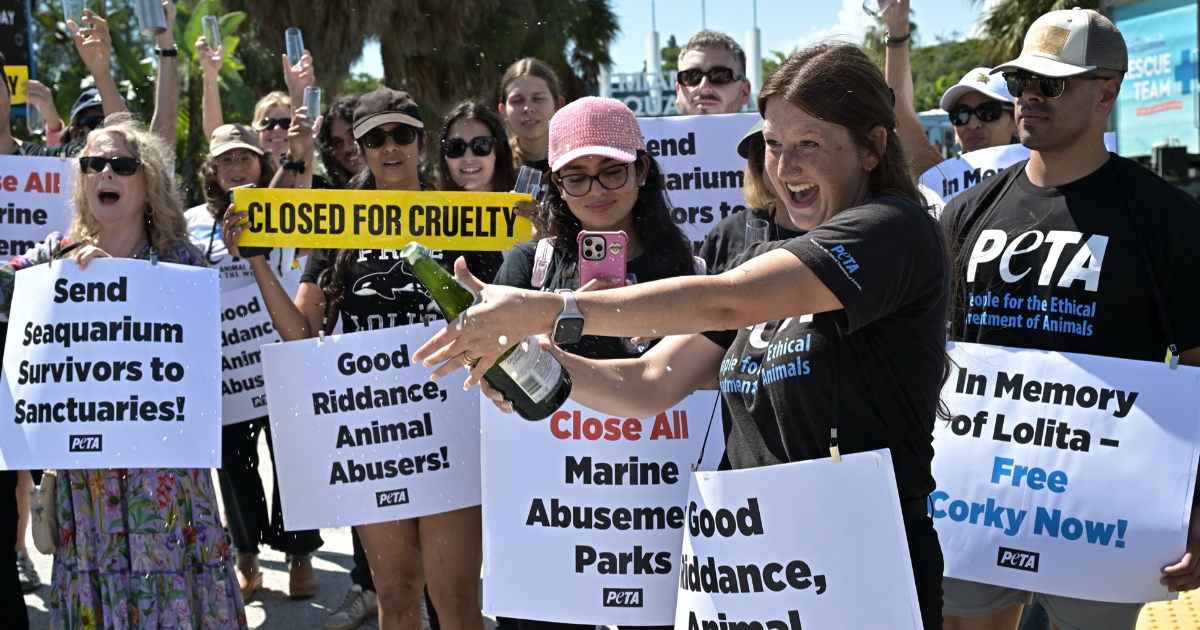
The Miami Seaquarium officially closed its operations this Sunday, amidst celebrations from environmental groups such as PETA (People for the Ethical Treatment of Animals), which had led protests for decades against the captivity and living conditions of marine mammals in the park.
In front of the aquarium sign on Virginia Key, activists popped champagne, displayed banners in English and Spanish with messages like "In memory of Lolita" and "Close all marine 'entertainment' parks," and affixed a symbolic sticker that read "closed for animal cruelty." The intervention was quickly removed by security personnel.
“After more than 50 years of confining animals in small concrete tanks, denying them veterinary care, and leaving them hungry, the Miami Seaquarium is finally closing,” said Wendy Fernández, a spokesperson for PETA, to the agency EFE.
The organization also requested that the more than 100 surviving animals —including dolphins and fish— be relocated to specialized sanctuaries.
The operational closure marks a milestone in a lengthy legal dispute between Miami-Dade County and the park operator, The Dolphin Company. The conflict escalated following the denial by a judge in 2024 to immediately evict the company, despite the county's arguments regarding contract violations and animal mistreatment.
In parallel, criticism increased following the death of the orca Lolita, also known as Tokitae, in August 2023, as preparations were being made for her transfer to a sanctuary in the Pacific Northwest. In December of the same year, the dolphin Sundance also passed away, which intensified public scrutiny.
A report from the U.S. Department of Agriculture (USDA) revealed multiple violations of animal welfare standards: deficiencies in facilities, lack of adequate veterinary care, prolonged exposure to the sun, and situations of species incompatibility. These observations were used by the county as grounds to terminate the lease in 2024 and file an eviction lawsuit.
In March 2025, The Dolphin Company filed for federal bankruptcy and set October 12 as the operational closure date, thereby facilitating the transition to a new owner.
The company Terra Group will take over the management of the site, after presenting a bid of 22.5 million dollars. The Seaquarium's conversion project, still awaiting final approval from the Delaware Bankruptcy Court, aims to transform the site into a modern space dedicated to environmental education, marine conservation, and recreation without animal shows. Among the proposals are immersive exhibits, seaside walks, green areas, restaurants, and shops, while preserving iconic structures such as Buckminster Fuller's dome.
Local authorities, including the Mayor of Miami-Dade, Daniella Levine Cava, and Commissioner Raquel Regalado, have endorsed the project, describing it as “a new chapter in marine life education and the preservation of Biscayne Bay.”
Although the final closure is still pending judicial resolutions, the operational shutdown represents a symbolic victory for animal advocates, who have been denouncing the conditions of the aquarium for years. For PETA and other groups, the fight now focuses on ensuring the welfare of the remaining animals and preventing similar facilities from continuing to operate under models that, they argue, prioritize entertainment over animal welfare.
Frequently Asked Questions about the Closure of the Miami Seaquarium
Why has the Miami Seaquarium closed?
The Miami Seaquarium closed due to decades of reports of animal mistreatment, including captivity in inadequate conditions and lack of veterinary care. Environmental groups, such as PETA, celebrated the closure, which was also driven by a legal conflict between Miami-Dade County and the park's operator, The Dolphin Company.
What will happen to the animals at the Miami Seaquarium?
About a hundred surviving marine specimens, including dolphins, as well as hundreds of fish, still remain at the Miami Seaquarium. PETA activists have requested that these animals be moved to sanctuaries where they can receive proper care and live in more natural conditions.
What is planned for the Miami Seaquarium space after its closure?
The Miami Seaquarium space will be transformed into a modern center for environmental education, marine conservation, and recreation without animal shows. Terra Group, the new owner, plans to offer immersive water experiences, exhibits, and recreational areas that respect animal welfare.
What role did the local authorities play in the closure of the Miami Seaquarium?
Local authorities, such as Miami-Dade Mayor Daniella Levine Cava and Commissioner Raquel Regalado, supported the Seaquarium transformation project, calling it a step forward in marine life education and the preservation of Biscayne Bay. However, the final closure still depends on court rulings.
Filed under: