
Related videos:
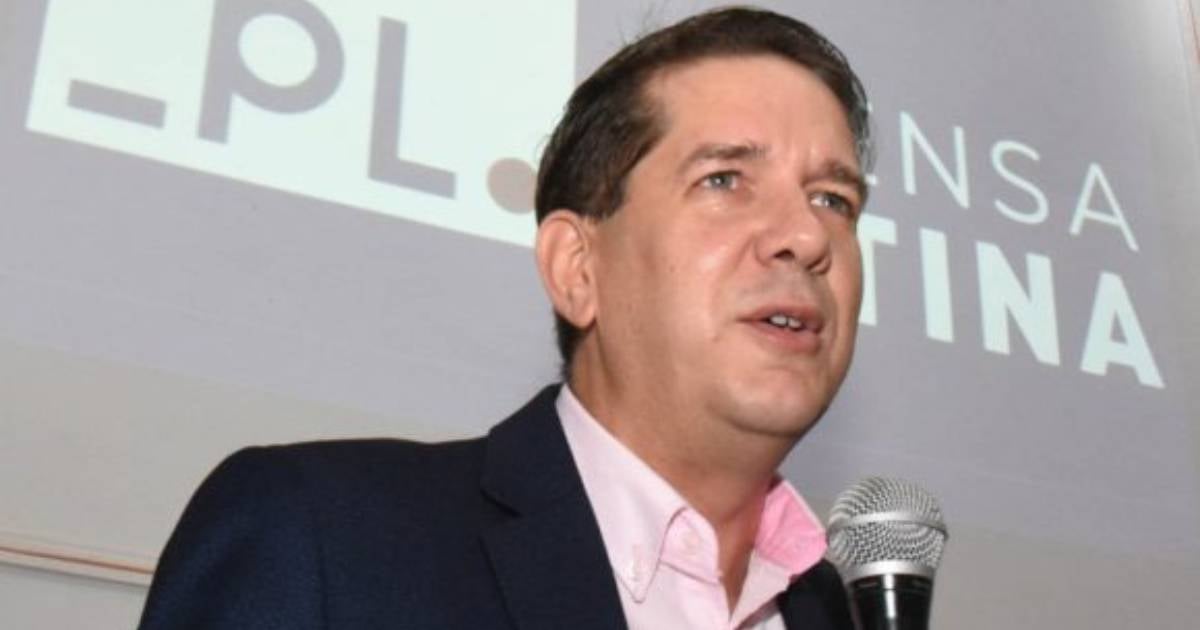
The journalist Jorge Legañoa Alonso, known for his role as a leader in various state journalism institutions, has been appointed as the new president of the Latin American Information Agency Prensa Latina, one of the main media outlets of the Cuban regime.
The decision, announced by state media on October 15, rewards one of the most prominent voices in the discrediting campaign against the opposition leader José Daniel Ferrer, whom Legañoa publicly labeled as “violent,” “delinquent,” and “mercenary.”
Days earlier, Legañoa was featured in a Cuban television intervention where he dedicated several minutes to present Ferrer as a common criminal, just after the activist was released from prison and deported to the United States.
He has a long record of violent actions in Cuba against people from his family circle, including ex-partners and some of his associates in counter-revolutionary activities, stated the journalist in the news report, before asserting that the dissident “makes a living from the anti-Cuban business in Miami” and “receives money from the United States government.”
The current president of Prensa Latina even went so far as to label the funding that Ferrer received for his opposition work as “mercenarism,” a common accusation in the regime's narrative against those who challenge power.
"The anti-Cuban business in Miami is very prosperous. Good money is made by shouting against Cuba and doing nothing," said Legañoa during his television commentary, while showing images of Ferrer and testimonies selected by the official press.
A designation rich in symbolism
The appointment of Legañoa was announced by Prensa Latina as a professional advancement, highlighting his "revolutionary trajectory" and his role in "defending the truth against media campaigns against Cuba."
Graduated in Journalism from the University of Havana, he has held positions within the Institute of Information and Social Communication, the Central Committee of the Communist Party, and the Cuban Journalists' Union (UPEC), organizations directly subordinate to the political power.
However, their appointment to lead the agency does not seem coincidental, especially knowing that the regime rewards strategic positions to those who most effectively carry out the script of discredit against activists, opponents, and independent journalists, at a time when controlling information has become a priority for Havana.
Founded in 1959, Prensa Latina was established with the explicit aim of "confronting the hegemonic narrative of the major news monopolies."
For over six decades, the agency has operated as a global platform for official propaganda, spreading the regime's version on internal matters and justifying repression under the pretext of "defending the revolution."
Their daily production —according to official figures, around 300 materials from 39 offices worldwide— follows the logic of a singular narrative: to silence critical voices and amplify the government’s version of events.
In that context, the promotion of Legañoa symbolizes the continuity of journalism subordinated to political power.
Frequently asked questions about the discredit campaign against José Daniel Ferrer and the role of the state media in Cuba
Who is José Daniel Ferrer and why has he been a constant target of the Cuban regime?
José Daniel Ferrer is a prominent Cuban opposition leader and founder of the Patriotic Union of Cuba (UNPACU). He has been a constant target of the regime due to his activism for human rights and his strong opposition to the Cuban government. Ferrer has faced multiple arrests, torture, and discrediting campaigns by the state-run media, which has labeled him a "mercenary" and accused him of receiving foreign funding to destabilize the regime.
What has been Jorge Legañoa Alonso's role in the smear campaign against Ferrer?
Jorge Legañoa Alonso, recently appointed president of the Latin American News Agency Prensa Latina, has played a crucial role in the campaign to discredit Ferrer. On Cuban television, Legañoa portrayed Ferrer as a "common criminal" and accused him of profiting from the "anti-Cuban business in Miami." These actions are part of a broader strategy by the regime to discredit opponents and independent journalists.
What does the appointment of Legañoa as president of Prensa Latina symbolize?
The appointment of Jorge Legañoa Alonso as president of Prensa Latina symbolizes the continuity of journalism subordinated to political power in Cuba. This appointment rewards his role in the smear campaign against opposition figures and reinforces the regime's control over the media narrative. Prensa Latina, founded in 1959, has been a platform for official propaganda, omitting critical voices and amplifying the government's version of events.
How has the international community reacted to the case of José Daniel Ferrer?
The international community has reacted with condemnations and support for José Daniel Ferrer. The United States, through its Department of State, has demanded his immediate release and has endorsed his fight for human rights. Additionally, organizations like Amnesty International have recognized him as a prisoner of conscience. His exile to the United States occurred after intense diplomatic pressure, highlighting the acknowledgment of his activism and the repression he faces in Cuba.
Filed under: