
Related videos:
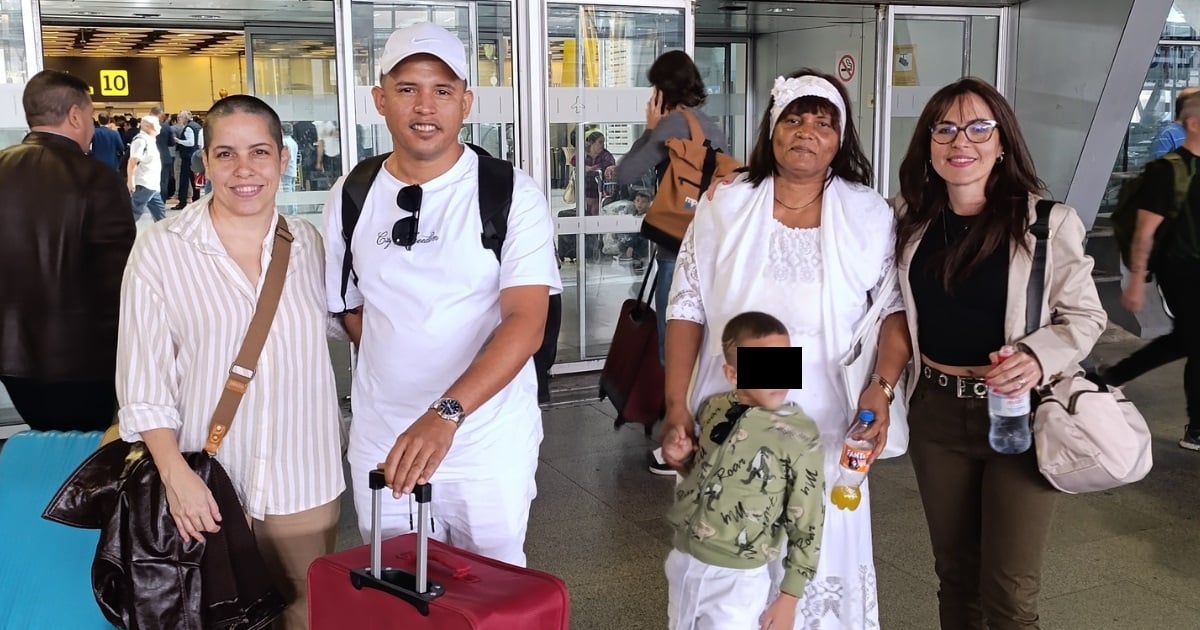
Cuban activists have called for solidarity on social media to support former political prisoner Luis Robles, who arrived in Spain this week with his mother, Yindra Elizástigui, and his seven-year-old son, after spending more than four years in prison and under house arrest for peacefully protesting in Havana in 2020.
"One of the things I personally avoid the most is asking for money, but there are times when it’s necessary to appeal to the solidarity and generosity of those willing to lend a hand. Today, I want to do this for our brave Luis Robles, who has just arrived in Spain with his family and needs that initial push to start a new life in a completely different reality," wrote on Facebook Mitchl EC, a Cuban exiled graphic designer and teacher.
According to his explanation, Robles has had a small support group that discreetly assisted him during his departure from the country. "Now is the time for all of us to come together and support him, helping to cover his initial expenses for accommodation, food, transportation, and legal proceedings," he added, specifying that while arrangements are being made to open his own bank account, donations will be made "through the same secure channel we used to cover the costs of his journey."
"Those who wish to collaborate can message me privately. In addition to cash donations, public transport cards for Madrid, gift cards, or prepaid cards are also helpful. However, cash offers greater flexibility to meet the most urgent needs," Mitchl explained.
The message was shared by the activist Leisam Rubio, who was among those who welcomed Robles and his family upon their arrival in Madrid. “Read carefully the messages from those who have written to us for help,” she requested on her profile.
The activist Massiel Rubio and the exiled producer Dayana Prieto, wife of the opposition playwright Yunior García, were also present at the airport to welcome them.
Robles arrived in Madrid this Monday, after being released at the beginning of 2025 as part of an agreement between the Cuban regime and the United States government. He had been arrested in December 2020 after walking with a sign on the San Rafael boulevard that read: “Freedom, no more repression, #FreeDenis.”
For that peaceful action, he was sentenced for "resistance" and "enemy propaganda" in a process heavily criticized by international organizations. In 2024, the United States sanctioned the judges and prosecutors who prosecuted him for "serious human rights violations."
During a press conference this week in Madrid, Robles explained that his departure took State Security by surprise. "They wanted me to leave, but without speaking," he stated in front of independent media.
He also revealed that the authorities imposed conditions on him to silence his testimony and that he decided to leave without informing anyone how or when, to avoid being intercepted.
In that same conference, her mother, Yindra Elizástigui, offered a moving testimony about the cost of defending a political prisoner. She denounced having been harassed at her job and monitored by State Security. “Today in Cuba, the greatest suffering for political prisoners is the silence of their family members. Because if you remain silent, you make yourself complicit,” she stated.
Now, they are trying to start from scratch in Spain. Those who have accompanied them in this process are asking for assistance so they can do it with dignity.
Frequently Asked Questions about Luis Robles and His Exile in Spain
Why was Luis Robles arrested in Cuba?
Luis Robles was arrested in December 2020 for peacefully protesting on San Rafael Boulevard in Havana, holding a sign that read: "Freedom, no more repression, #FreeDenis," in support of the rapper Denis Solís. He was convicted of "resistance" and "enemy propaganda" in a trial criticized by international organizations.
How did Luis Robles manage to leave Cuba?
Luis Robles managed to leave Cuba without the State Security intercepting him. His departure was discreet and without prior notice to the authorities, surprising the regime, which had tried to impose silence on him regarding his experiences in prison. Robles stated that he decided to leave without revealing how he would do so to avoid being intercepted.
What kind of support does Luis Robles need in Spain?
Luis Robles needs financial support to cover his initial expenses for housing, living costs, transportation, and legal procedures in Spain. Cash donations provide greater flexibility, but public transportation cards for Madrid, gift cards, or prepaid cards are also useful.
What sanctions did the Cuban officials involved in the Luis Robles case face?
The United States sanctioned four Cuban judicial officials —three judges and one prosecutor— for their role in the arbitrary detention of Luis Robles. These sanctions prohibit the entry of these officials and their families into U.S. territory and highlight the Cuban regime's intolerance towards dissent.
Filed under: