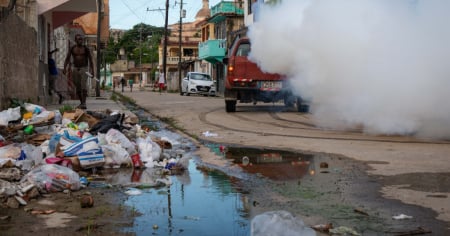
Doctor María Guadalupe Guzmán Tirado, head of the Research, Diagnosis, and Reference Center at the Pedro Kourí Tropical Medicine Institute (IPK) in Havana, explained the reasons behind the resurgence of chikungunya and dengue in Cuba.
Among the main causes, he mentioned unplanned urbanization, difficulties in water supply, and climatic conditions, especially the rise in temperatures, which accelerate the replication of the virus and cause the transmitting mosquito to become infectious in a shorter time.
However, the prolonged blackouts suffered by the vast majority of the Cuban population, which forces families to spend nights and early mornings without air conditioning or fans, were not mentioned.
It also did not reference the collapse of communal services and the failures in garbage collection in several Cuban cities.
In an interview with a team from the official Canal Caribe, the specialist pointed out that although dengue remains one of the most common illnesses in the country, the population has expressed greater concern about the speed with which chikungunya has spread across several provinces.
According to the explanation, the virus entered Cuba through a traveler in a viremic state who arrived in an environment conducive to the reproduction of the vector.
According to the scientist, chikungunya is new to the Cuban population, which has not developed immunity, facilitating its rapid spread.
In contrast to dengue, this disease provides lasting immunity after infection and rarely leads to death, although it can cause prolonged joint and muscle pain.
Other doctors warned that young children, the elderly, and individuals with chronic conditions such as diabetes, hypertension, asthma, or heart diseases are the most vulnerable groups to complications.
Finally, the professionals at the IPK emphasized that only early medical assistance and coordination between social and health sectors to reinforce hygiene and sanitation measures can reduce the spread of arboviruses in the country.
A Cuban mother reported the collapse of the "Juan Manuel Márquez" Pediatric Hospital in Havana, where emergency care forces dozens of children to sign up on makeshift lists.
This situation occurs amid a wave of febrile and gastrointestinal illnesses.
A user who shared the mother’s complaint described the hospital conditions as deplorable, with relatives sleeping on the floor, garbage piled up, and a "terrible stench" in the restrooms.
The journalist Yirmara Torres Hernández depicted the health and humanitarian collapse that Matanzas is experiencing due to the spread of chikungunya and remarked that as a consequence, “it now looks like a city of zombies...
According to Torres, the authorities began to react when the outbreak had been “growing and proliferating for a month and a half or two.”
After several days of denial, on October 15, the Ministry of Public Health of Cuba (Minsap) finally acknowledged the death of three people from dengue so far in 2025.
Frequently Asked Questions about the Spread of Chikungunya and Dengue in Cuba
What are the main causes of the increase in chikungunya and dengue in Cuba?
The main causes of the increase in chikungunya and dengue in Cuba include unplanned urbanization, difficulties in water supply, and climate conditions such as rising temperatures. In addition, there are infrastructure issues such as blackouts, the collapse of communal services, and poor waste management that contribute to the problem.
What impact does chikungunya have on the Cuban population?
Chikungunya is new to the Cuban population, which means they have not developed immunity, facilitating its rapid spread. Although it rarely causes death, it can lead to prolonged joint and muscle pain. The most vulnerable groups to complications include young children, the elderly, and individuals with chronic illnesses.
What measures are being taken to control the spread of these diseases?
To control the spread of chikungunya and dengue, hygienic and sanitary measures are being strengthened and the importance of early medical assistance is being emphasized. However, limitations in resources such as insecticides and technical personnel hinder efforts for spraying and vector control in the country.
What is the current situation of the healthcare system in Cuba regarding these diseases?
The healthcare system in Cuba is collapsed due to the rise in combined arboviral cases and a lack of medical resources. Hospitals are facing deplorable conditions, and there are reports of inadequate care and a shortage of essential medications. The official narrative has been criticized for its lack of transparency and for not properly acknowledging the situation.
Filed under: