
Related videos:
The rapid increase in cases of dengue, chikungunya, and oropouche among minors has raised health alarms in Guantánamo, where hospitals and health facilities are showing signs of saturation due to a crisis that cannot be addressed with continued slowness and bureaucracy.
The complaint was made by journalist Miguel Reyes through a post on Facebook, where he gathers citizens' testimonies and expresses concern over the collapse of institutions such as the Children's Hospital, the Dr. Agostinho Neto General Teaching Hospital, and other healthcare centers that, as he reports, are overwhelmed by the number of patients.
Reyes warns that the institutional response has been weak, characterized by excessive meetings and a lack of concrete action on the ground.
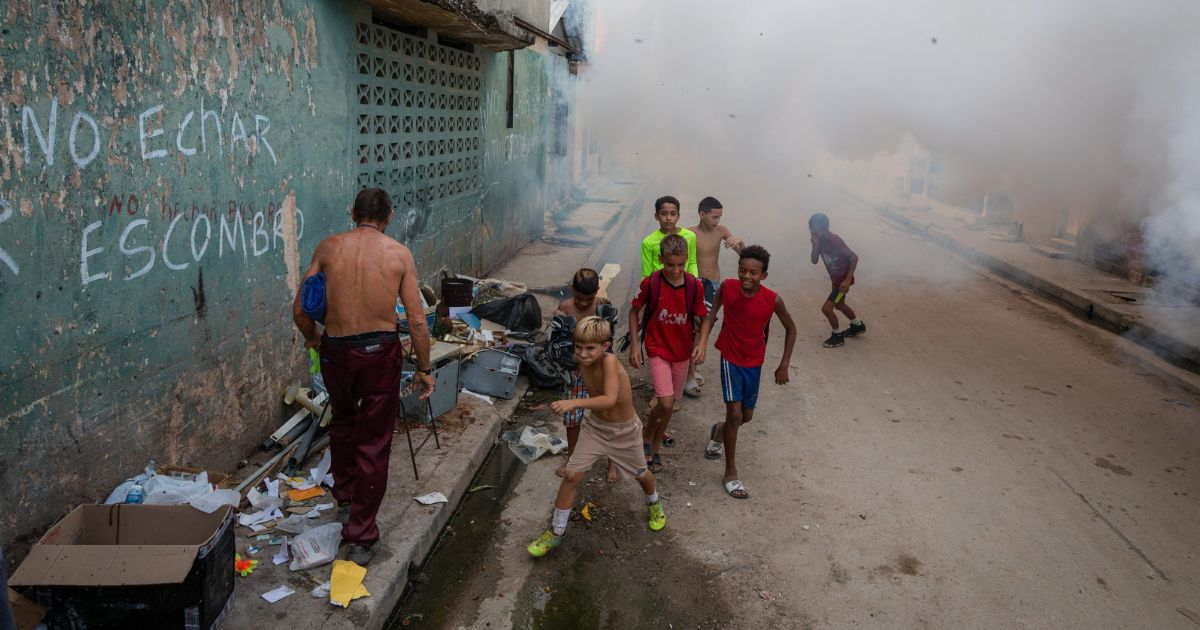
It emphasizes that vector-borne diseases are fought at the neighborhood level, in backyards, in illegal dumping sites, and in every space where mosquitoes find shelter. Therefore, it calls for an emerging, dynamic, and coherent strategy, coordinated with all social actors.
The journalist emphasizes that the active participation of families, communities, and popular councils is crucial to breaking the cycle of transmission; however, all of this is ineffective when the regime acts passively, as is happening in several Cuban provinces.
Household hygiene, the cleaning of common areas, and the responsibility of institutions and workplaces in environmental sanitation must be non-negotiable priorities.
The publication also highlights serious shortcomings in the investigations, which in many cases are conducted incompletely or routinely, failing to properly document suspicious cases. This turns each unreported patient into an invisible focal point of transmission and increases the costs of the health response.
Reyes regrets that action is limited to the publication of figures and demands consistency, transparency, and genuine commitment.
Cuba, it states, has the experience to tackle these types of outbreaks, but it needs to reactivate epidemiological discipline and strengthen active surveillance in the territories.
Although the journalist presents an "optimistic" narrative, some of the comments reveal a different reality.
Placido Ferreiro recalled that while he was denouncing the proliferation of garbage dumps, the authorities and official media remained silent, and now the situation is a direct consequence of that inaction.
Kamy Suárez criticized that, in a country with good scientists and doctors, there has not been any innovation of a simple repellent or effective control mechanism against gnats and mosquitoes.
For her part, Elizabeth Betancourt stated that those who signed blank statements must now show creativity in demanding real solutions.
Other voices, like those of María Elena Selguera, Elma Hernández, and Blanca Sánchez, pointed out the lack of fuel, medications, fumigation, and garbage collection as structural issues that hinder an adequate response to the crisis.
Catherine Valles summarized what many people perceive: without concrete action from the government and without visible institutional responsibility, the emergency will continue to worsen while citizens bear the burden of the problem alone.
Frequently Asked Questions about the Arbovirus Crisis in Cuba
What is the current situation of arboviral diseases in Guantánamo?
The situation in Guantánamo is critical due to a rapid increase in cases of dengue, chikungunya, and oropouche, especially among minors. Hospitals are overwhelmed, which reflects a significant health crisis. The government's response has been weak, with an excess of meetings and a lack of concrete actions.
How is the Cuban government responding to this health crisis?
The Cuban government has been criticized for its handling of the situation, as it has shown a lack of transparency and an inefficient response. Despite the seriousness of the crisis, authorities have avoided publicly acknowledging the extent of the problem, making official information limited and unreliable.
What measures are being taken to control arbovirus outbreaks in Cuba?
The measures implemented include actions for environmental sanitation, elimination of mosquito breeding sites, and fumigation. However, these measures are insufficient due to a lack of resources and proper coordination. Active community participation is essential, but the government must also improve its institutional response.
What is the impact of the health crisis on Cuban hospitals?
Hospitals in Cuba, particularly in provinces like Guantánamo and Matanzas, are overwhelmed due to the increase in arboviral disease cases. The shortage of medical staff, medications, and basic resources further complicates the situation. The precarious conditions of the hospitals reflect the seriousness of the health crisis in the country.
Filed under: