
Related videos:
A new message filled with official propaganda was spread on social media to discredit Cuban doctors who have emigrated and publicly denounce the shortcomings of the healthcare system on the island.
The text was published this Saturday by the government-run TV Santiago on its Facebook page, attributed to the Public Health Union, although in practice it is nothing more than an extension of the regime's discourse aimed at criminalizing criticism and demanding ideological loyalty even from exile.
Under the title "You Don't Spit on the Plate That Made You," the message begins by questioning those who studied medicine on the island and are now—according to the text—"dedicated to insulting the medicine that made them doctors," when it is merely an exposition of the real collapse of the healthcare system, a truth known by all.
In a moralizing tone, it states that it is not a legitimate criticism, but rather “ingratitude” and “betrayal.”
However, when it comes to ingratitude, it is also necessary to mention the doctors who, after years of commitment to the regime's healthcare system, request their release only to be met with punishment: their exits from the country are withheld, forcing them to postpone their life plans and live under a modern form of confinement for wanting to take a different path.
Although the statement acknowledges the existence of structural issues, such as a lack of resources, the fatigue of healthcare personnel, and the need for improvements, the text emphasizes that Cuban medicine is "worthy," "humane," and "supportive."
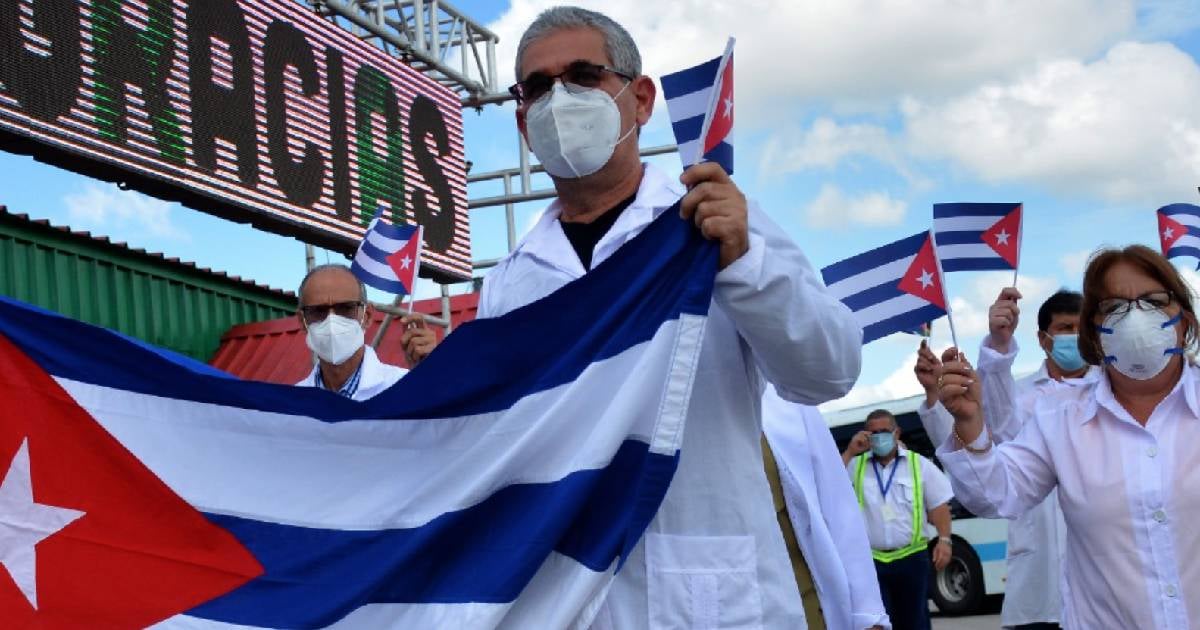
"The white coat in Cuba is a symbol of resistance," he asserts, while dismissing the reports of poor conditions in hospitals and the lack of supplies.
The message directly targets emigrated professionals who have raised their voices to denounce the reality of the healthcare system, accusing them of using their freedom to "spit on what shaped them."
It defends the Cuban medical training as one of ethical and vocational excellence and presents itself as a response to what it describes as "hatred" and "resentment" from those who emigrated.
Although the text is signed by the Public Health Union, its content mirrors word for word the typical rhetoric of the ideological apparatus of the Communist Party, which seeks to symbolically shield Cuban medicine from external criticism.
As has happened with other similar messages, dissent is not tolerated, nor is the legitimacy of the professional voices who have experienced the precariousness of the system from within recognized.
The speech concludes with a phrase that captures its defiant tone: "Cuban medicine is a beacon. And beacons do not go out because of the poison of those who have forgotten where they come from."
The official reaction of the Cuban regime against emigrated doctors does not happen in a vacuum: it responds to a growing wave of testimonies from abroad that starkly expose the ruins of the healthcare system in Cuba.
Dr. Manuel Guerra, from the United States, described the Cuban system as “a dying organism”, devastated by a lack of medications, the exodus of healthcare personnel, and the structural ruin of hospitals and clinics. In contrast, he recounted how, in his new environment, medical care is immediate, effective, and dignified.
Other professionals have also raised their voices. An exiled doctor reflected that "staying in Cuba was self-destruction", remembering that what is recognized in the world as professional dignity is punished on the island with surveillance, blackmail, and repression if one thinks differently.
In their experience, vocation wears thin in the face of hunger, exhaustion, and lack of freedom.
The account of these doctors dismantles the narrative of a "medical powerhouse." Another physician, trained in Cuba and later in Spain, revealed that thousands of doctors survive on miserable salaries, in hospitals without water or supplies, while the state treats them as exportable commodities and imposes penalties if they decide to leave the system.
Even years ago, Dr. Alexander Figueredo had warned that no doctor in the world sacrifices as much as a Cuban doctor. Expelled from the system for exposing its shortcomings, Figueredo became a symbol of the professional dignity silenced on the island.
His testimony anticipated the wave of voices that today challenge the propaganda with the strength of their lived truth.
Frequently Asked Questions about the Emigration of Cuban Doctors and the Healthcare System in Cuba
Why does the Cuban regime accuse emigrating doctors of being "ungrateful"?
The Cuban regime accuses emigrating doctors of being "ungrateful" because they believe these professionals are "insulting" the medical training system that educated them. The regime uses this narrative to delegitimize criticism of the Cuban healthcare system and demand ideological loyalty. Such statements are part of the official rhetoric that seeks to criminalize dissent and demand ideological allegiance.
What are the conditions faced by Cuban doctors on international missions?
Cuban doctors on international missions face labor exploitation conditions, such as the retention of a large portion of their salaries by the Cuban regime, constant surveillance, and the possibility of being considered "deserters" if they leave the mission. The medical missions are viewed by the regime as a propaganda tool and a source of income, while the doctors denounce exploitation and a lack of freedom.
What challenges do Cuban doctors face when they decide to emigrate?
Cuban doctors who emigrate face challenges such as the retention of their diplomas and professional documents, which makes it difficult to validate their degrees abroad. Furthermore, they are penalized with the inability to return to Cuba for eight years, impacting their personal and professional lives. These measures aim to deter professionals from breaking away from state control.
How does the health system crisis in Cuba impact the population?
The crisis of the healthcare system in Cuba severely impacts the population, with overcrowded hospitals, a lack of medicines and basic supplies, and unsanitary conditions that promote the spread of diseases. The population is facing a healthcare collapse that is exacerbated by government inaction and a scarcity of resources, leading to despair and a loss of confidence in public institutions.
Filed under: