
Related videos:
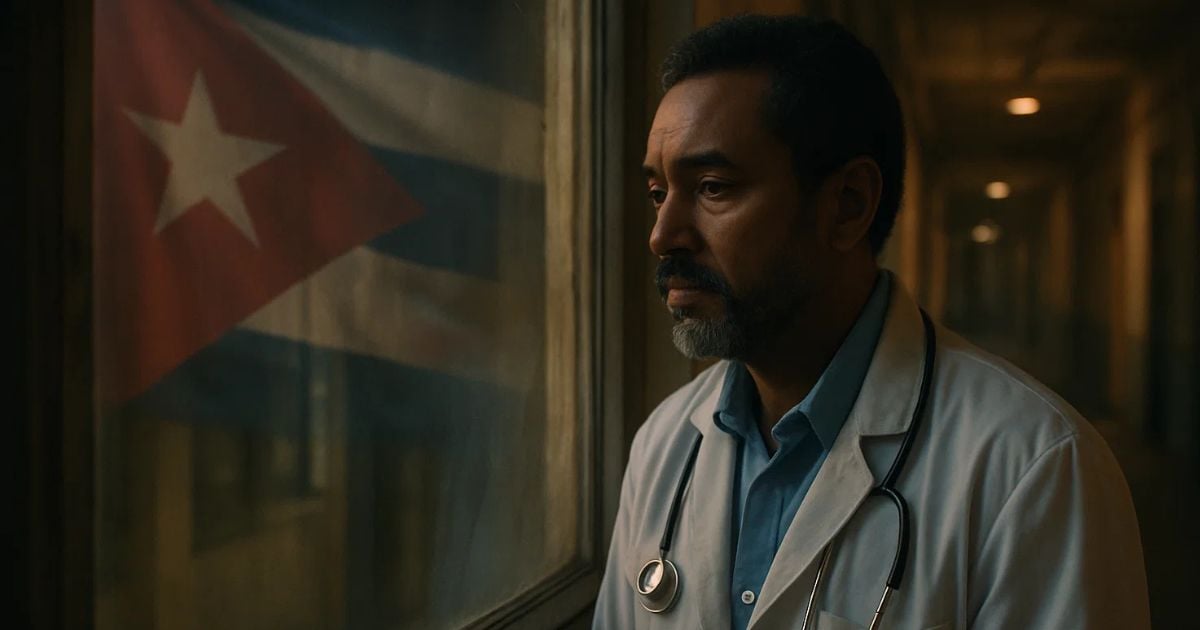
From exile, an increasing number of Cuban doctors have dismantled, through their testimonies, the official narrative that portrays Cuba as a medical powerhouse.
On this occasion, the reflection that has gained traction on social media was not written by a government official or an academic, but by an ordinary doctor who experienced the system from within and decided to leave.
Dr. Lázaro Elieser Leyva García, a specialist in Internal Medicine with training in Spain, shared on his Facebook profile a text published by his colleague Águila Osmany Francisco, in which he questions what would have happened if they had not emigrated.
The reflection explores, from an intimate and painfully honest perspective, what it means to leave behind life, career, and loved ones in the pursuit of freedom.
What would have happened if we had stayed in today's Cuba is not a mystery, brother, it is a sentence written with pain and certainty,” the text begins.
“Had we continued walking with our heads down, surviving in a system that rewards obedience and punishes dignity,” he added.
The reflection describes the moral exhaustion of practicing medicine in Cuba without resources, autonomy, and under political pressure.
“We would have been professionals in name, but slaves to misery”, says one of the most shared excerpts.
The text also addresses the emotional and familial cost of exile, contrasted with the helplessness of remaining in the country.
“Being far away hurts, but being there would have been a prison for everyone,” he/she points out.
And regarding dignity, he adds: "We would have stayed, yes, but staying would have meant dying while alive."
For many Cuban doctors, the message reflects the contradiction between the vocation to serve and the frustration of doing so in a system that uses them as propaganda.
Emigrating, the text concludes, was not surrender, but an act of resistance: “Leaving was not surrender, it was to save the flame they wanted to extinguish over there.”
Frequently asked questions about the emigration of Cuban doctors and the situation of the healthcare system in Cuba
Why do Cuban doctors decide to emigrate?
Cuban doctors primarily choose to emigrate due to the challenging working and economic conditions on the island. They practice their profession without adequate resources, under political pressure, and with very low salaries that do not reflect their training or effort. Many also seek better opportunities for their families and an environment where they can practice their profession with dignity and autonomy.
How does exile affect Cuban doctors and their families?
Exile represents a significant emotional and familial cost for Cuban doctors. Although emigrating may offer them freedom and opportunities, they must confront the separation from their loved ones and the uncertainty of adapting to a new country. However, for many, the pain of exile is preferable to the helplessness of remaining in a system they consider oppressive and exploitative.
What role does the Cuban government play in the situation of emigrated doctors?
The Cuban government implements restrictive policies that make life difficult for migrating doctors. This includes the denial of essential documents needed to validate their degrees abroad and the imposition of an eight-year forced exile for those who leave official missions without authorization. These measures aim to control and limit the ability of doctors to settle and work in other countries.
What is the reality of the Cuban healthcare system according to exiled doctors?
Exiled doctors claim that the Cuban healthcare system is collapsed and is used as a propaganda tool by the regime. Despite the rigorous training of professionals, they face a chronic lack of resources, medications, and basic equipment. Furthermore, medical missions abroad are seen as a lucrative business for the government rather than an expression of solidarity.
Filed under: