
Related videos:
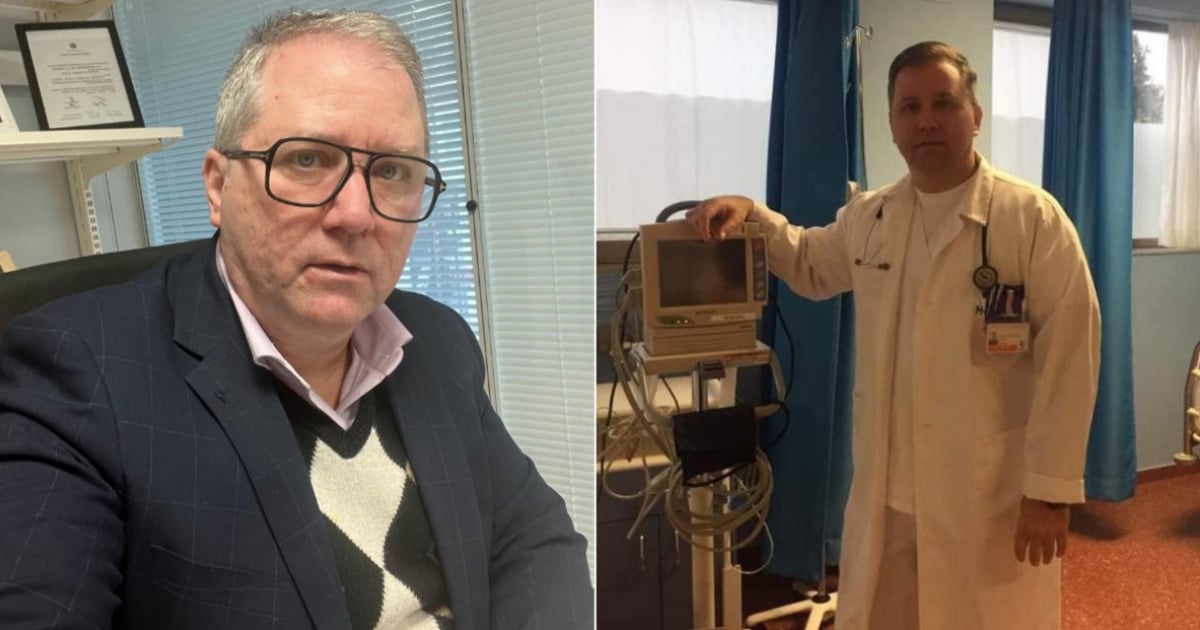
The Cuban doctor Lázaro Elieser Leyva García, a specialist in Internal Medicine with academic training in Spain, challenged on social media the official narrative that depicts Cuba as a "medical powerhouse."
With a career focused on teaching and hospital care in Villa Clara, he claims that this image is a propaganda facade disconnected from reality.
In a post on Facebook, the professional reported that, although medical training on the island has been rigorous and many doctors have supported the system with personal dedication, the official propaganda has used that dedication to conceal the real precariousness.
He pointed out that the Cuban doctor has been exploited for decades under a narrative of greatness that does not align with his daily life.
In Cuba, he worked as an internist at the Arnaldo Milián Castro Hospital in Santa Clara, where he was the head of the Internal Medicine Department from 1997 to 2010.
Despite holding responsible positions, his monthly salary barely amounted to 32 euros. "That was the system's recognition of years of study, responsibility, and sacrifice," he recounted.
According to the explanation, low salaries have historically forced doctors to survive in miserable conditions.
The specialist also described the deterioration of Cuban hospitals, where there is a shortage of medications, basic equipment, and even essential supplies like syringes or gloves.
The patients, he added, must bring their own resources to receive care, while an image of an exemplary system is projected to the outside.
Leyva emphasized that the true cornerstone of that "medical power" lies in the business of international missions, where thousands of professionals are sent abroad under restrictive contracts, with salary retention, family separation, and political control.
"That is not solidarity, it is exploitation," he stated.
In their view, medicine in Cuba has been turned into a political instrument: internally, it serves as a justification to silence demands, and externally, it acts as an export product that generates foreign currency for the regime.
“The power lies only in the propaganda narrative, not in everyday reality,” he stated.
Originally from Manacas, Villa Clara, and currently the manager of a medical service in Valencia, Spain, he insisted that the true greatness of Cuban healthcare has always resided in its doctors, but it was betrayed by a system that used them as ideological and economic cogs.
Frequently Asked Questions about the Reality of the Health System in Cuba
Is Cuba really a "medical power"?
Cuba is not a "medical powerhouse" in everyday reality. Although the Cuban regime promotes this image, testimonies from Cuban doctors, such as Lázaro Elieser Leyva García, reveal that the official propaganda hides the precariousness of the healthcare system on the island. The lack of medications, basic equipment, and adequate conditions in hospitals contradict the government’s narrative.
What is the situation of Cuban doctors on international missions?
Cuban doctors' international missions are seen as a scheme for labor exploitation. Doctors like Antonio Guedes and Daycee Zamora have reported that the regime retains a large portion of their salaries, exerts political control, and subjects them to abusive working conditions. These missions are more a profitable business for the Cuban government than an act of solidarity.
Why do Cuban doctors abandon missions abroad?
Cuban doctors are leaving missions in search of better working and personal conditions. In countries like Italy, they have found opportunities that the Cuban system denies them, such as higher salaries and freedom of movement. However, they face reprisals from the regime, which include a ban on returning to Cuba for eight years.
How does the crisis in the Cuban healthcare system affect citizens?
The crisis of the Cuban healthcare system is seriously affecting citizens. The lack of medications, basic supplies, and the deterioration of hospitals forces patients to seek resources on their own or even travel abroad for proper care. This situation stands in stark contrast to the official narrative of an exemplary healthcare system.
Filed under: