
Related videos:
The Cuban Government has started to organize 15th birthday celebrations for teenagers in various regions of the country, claiming to support the "most vulnerable" families.
The measure, promoted by the Communist Party (PCC) in Camagüey, was portrayed by official media as a supportive and solidarity action, but it has generated discontent and mockery on social media.
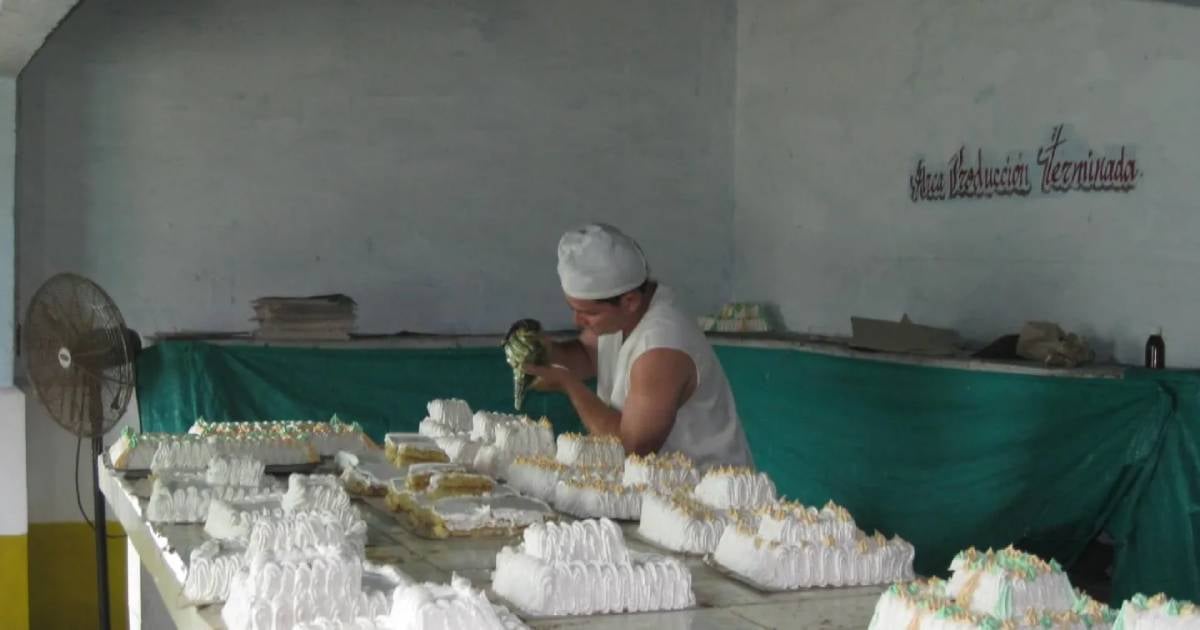
According to Radio Cadena Agramonte, the Municipal Trade Company of Minas, a municipality located north of the city of Camagüey, is implementing a program that offers families a package that includes the preparation of snacks and a cake, “all at an affordable price, much lower than that offered by the non-state sector”.
The service is managed through a contract with the candy store El Deleite and, in accordance with local authorities, aims to ensure "a meaningful celebration" for teenagers who are entering this stage.
The director of the Base Business Unit, Yosbel Cobas Soriano, explained that the process is conducted with "formal organization and transparency," and emphasized that they work "carefully to ensure the quality of each order."
The initiative, he added, is part of the state's efforts to "strengthen the efficiency and sustainability of actions that support Camagüey families".
However, what the official discourse presents as a strategy for inclusion has been met with sarcasm and discontent in other provinces where similar actions have been replicated.
In Santa Clara, the state broadcaster Estereocentro published a notice aimed at teenagers who turned 15 in September, informing them that they could purchase a “cake” on October 15 and 16 at the pastry shop La Suiza.
The announcement, far from generating enthusiasm, provoked a flood of critical comments on social media. Many users described the measure as yet another example of economic deterioration and the government's disconnection from the real needs of the population.
"Is it a meme? On what grounds is that story?" an internet user quipped, while another pointed out: "The one who turned 15 last year won't be able to get a cake now in October... just like the rice from June that is distributed in September."
The popular discontent was also expressed in a tone of frustration and resignation. “I don't want scraps, I want to be free to buy what I desire,” wrote a user, reflecting the sentiment of many Cubans who associate these measures with state control over daily life.
Others, with bitter humor, lamented that the country is regressing to times when the State decided even the most intimate details of family celebrations. “I remember the weddings that were held to redistribute what was given at the groom's house. Let's go back to when we had gone through 52 years and more,” he noted.
Although some defended the idea as a “solidarity option” for those who cannot afford a cake in the private market, the majority agreed that the gesture is insufficient in the face of a crisis that affects all sectors.
“If there isn’t enough for everyone, nothing should be sold. That would be the fairest approach,” said a mother who also questioned the disorder in the dates and the exclusion of those who celebrated their birthdays in other months.
In the midst of basic food shortages, inflation, and widespread hopelessness, the government's attempt to present itself as a benefactor through a cheap cake seems to have had the opposite effect: reminding many Cubans that, even to celebrate adolescence, they depend on the State's goodwill.
Filed under: