
Related videos:
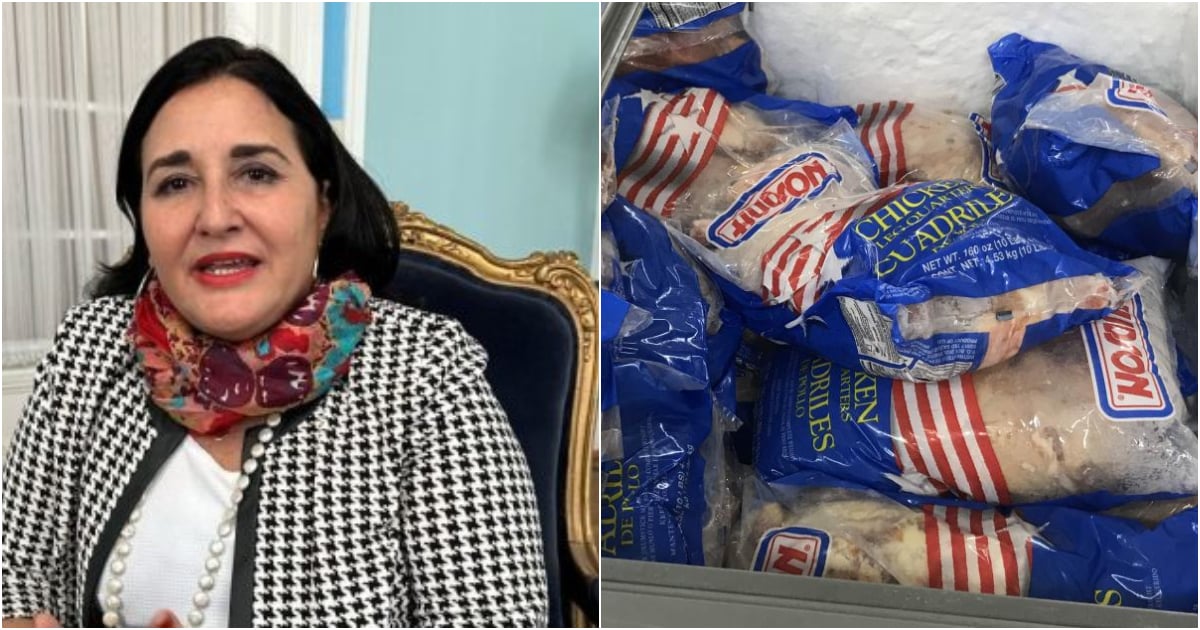
The Deputy Director General of the United States at the Cuban Ministry of Foreign Affairs Johana Tablada acknowledged that Cuba cannot purchase food in the United States due to a lack of liquidity, despite the fact that the laws of the embargo allow it, referring to the financial sanctions that, according to the island's regime, prevent the country from generating revenue.
“The policy of this government –she said– leaves us without money and then tells us: ‘come here and buy all the food you want’. How lovely,” the diplomat sarcastically remarked during the conference titled “Cuba Facing Extermination: A Hope That Must Not Die. Update on the Impact of the Blockade and Its Relations with the U.S.”
Tablada compared the situation to "someone who steals money from your wallet and then invites you to a store."
According to their argument, financial sanctions, the targeting of banks, transfers, remittances, and service exports hinder Cuba from generating the necessary income for making purchases, even when they are legally authorized.
The statements from the newly appointed Deputy Head of Mission abroad, however, overlook the internal productive and financial collapse that prevents the country from paying for its imports, as well as the dysfunction of the highly centralized economic system, whose failed policies and bureaucratic obstacles hinder Cuban farmers from realizing their full production potential and freely marketing their goods.
It also did not mention the hundreds of thousands of hectares of idle land or land infested with marabou in Cuba, nor the tens of thousands of tons of products that rot each year in the fields and storage centers due to the bureaucracy and restrictions governing the heavily state-controlled agricultural activity.
Recently, the United States Embassy in Havana stated that Cuba can acquire food, medications, and medical equipment without restrictions from Washington, refuting the official narrative from Havana that blames the "blockade" for the lack of basic supplies.
In August, during an interview granted to the official video podcast Alma Plus, Tablada acknowledged that the country can acquire "all the chicken it wants" in the United States.
"In the street, they tell you that there is no blockade because Cuba can buy all the chicken it wants from the United States, and I would say, it's true, Cuba can buy all the chicken it wants from the United States," he said.
However, he justified that the imposed conditions make these purchases a process that is "onerous" and limited, and that transactions must be made with advance payment and with high additional costs.
All these operations are carried out under the provisions of the Trade Sanctions Reform and Export Enhancement Act (TSREEA) of 2000, which permits agricultural and humanitarian sales to the Island.
Between January and May 2025, Cuba imported food from the United States for over 204.9 million dollars, with chicken being the main product.
One of the most striking figures from May was the purchase of an unprecedented amount of powdered milk, valued at $7,357,388. Additionally, sanitary products were imported for $52,281, $1.1 million in rice, $3.8 million in pork, and nearly $480,000 in coffee. Furthermore, eggs are also being acquired.
In June, purchases of U.S. food and agricultural products reached 38.4 million dollars, an increase of 10% compared to the 34.9 million recorded in the same month of 2024 and the 37 million in June 2023.
These products, which were locally produced in past decades, now reflect the increasing food dependency of the country.
Since its implementation in December 2001, Cuba has spent more than 7.885 billion dollars on food imports from the United States, according to data from the Department of Agriculture of that country.
During the interview, Tablada also admitted that the Cuban regime withholds a portion of the salary of doctors who are sent on international "missions" and asserted that the professionals “know this from the beginning” because they sign it in their contracts.
Filed under: