
Related videos:
A prolonged malfunction in a distribution valve turns a central corner of Cienfuegos into a constant spring, while thousands of liters of drinking water are lost in front of the indifference of local authorities.
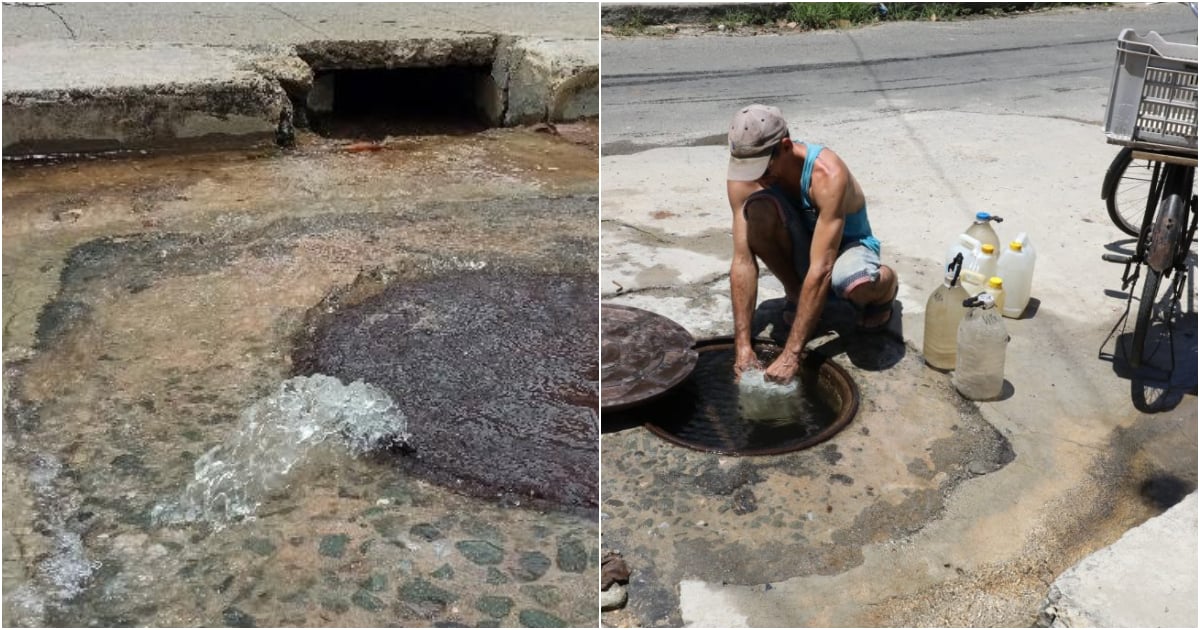
The photo report published in the official newspaper 5 de Septiembre reveals an image that symbolizes the deterioration of public services in Cienfuegos: a broken faucet, right at the intersection of Santa Elena and Cuartel streets (avenue 60 and street 43), which has been uncontrollably releasing water intended for the city's supply for months.
The leak, visible at any time, creates a constant flow that turns the pavement into a small spring.
It occurs right during the supply hours for the population, which automatically reduces the pressure in nearby homes and forces many neighbors to carry water in buckets and drums.
Around him, the area has turned into a muddy expanse of several square meters, never covered by asphalt or concrete, making it difficult for pedestrians and vehicles to pass. Despite repeated complaints, the problem remains unsolved.
"Complaints, many; visits, a few here and there, but nothing definitive... in short, the waste continues, and that water, so essential, is lost, with no possibility of recovering it anymore," the text laments.
Meanwhile, the liquid—so scarce and necessary—is lost day by day, a symbol of official neglect and a country where abandonment seeps even through the pipes.
This is happening while several Cuban provinces are experiencing a dry period that has led to extended supply cycles, sometimes stretching for several months without receiving the vital liquid through the water supply networks.
Likewise, hundreds of thousands of Cubans rely on supply through trucks, also due to failures in pumping caused by prolonged power outages and equipment breakdowns.
According to Yorgi Luis Gómez Solano, deputy director of the Aqueduct and Sewerage Company in Ciego de Ávila, in the central city approximately 30% of the water is lost in the pipelines due to the poor condition of the network, which was built in the early part of the last century and is also affected by sediment from the groundwater.
The formation of genuine puddles due to water wastage on the streets is not only a sign of inefficiency but also a serious risk factor at a time when Cuba is facing an epidemiological crisis due to the circulation of several serotypes of dengue, chikungunya, oropuche, and hepatitis.
Mosquitoes, transmitters of several of these diseases, breed in any accumulation of water, including puddles and sewage, a situation exacerbated by the inadequacy of sanitation and hygiene services.
Frequently Asked Questions about the Water Crisis in Cuba
What is the current situation of the water supply in Cienfuegos?
In Cienfuegos, a prolonged malfunction in a distribution valve has turned a central corner into a constant spring, wasting thousands of liters of drinking water. The problem persists despite citizens' complaints and the lack of effective responses from the authorities. This situation symbolizes the decline of public services in the region.
How does the water crisis affect other Cuban provinces?
The water crisis in Cuba is not exclusive to Cienfuegos. Provinces such as Santiago de Cuba and Havana also face significant issues due to drought and pumping failures. In Santiago de Cuba, nearly 400,000 people are affected by the lack of drinking water. The situation is worsened by power outages and the lack of adequate infrastructure.
What impact do blackouts have on the water supply in Cuba?
Frequent blackouts in Cuba complicate the water supply, as they halt the necessary pumps for distribution. In Havana, for example, power outages have interrupted water pumping, leaving entire neighborhoods without access to this vital resource. This situation reflects the degradation of the public services system on the island.
What measures are the Cuban authorities taking to address the water crisis?
The Cuban authorities have called for a "more efficient use" of resources and have implemented emergency measures, such as repairing systems and eliminating leaks. However, these actions have not succeeded in alleviating the desperation of the population, which continues to suffer from the lack of effective solutions.
Filed under: