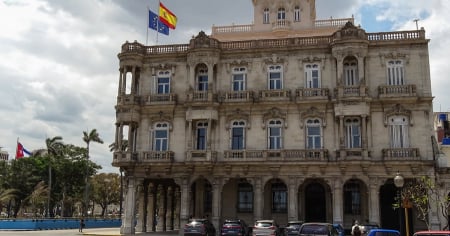
The story of Ramón Vargas does not begin in Venezuela, but in Cuba, the land where his mother was born and where he learned, through hardship and repression, what it means to live under a dictatorship.
She, with the experience of Castroism etched in her memory, warned her son about what was to come: that the regime in Caracas would end up repeating the same model of misery, censorship, and lack of freedoms.
According to Vargas himself, as reported by the portal La Voz de Asturias, he initially did not take his mother's warnings seriously.
However, the years proved him right: the economy collapsed, insecurity soared, and life became unlivable.
“I never imagined that what had happened in Cuba would happen in Venezuela, especially since it is a country with one of the largest oil wealth reserves in the world,” acknowledged the 52-year-old entrepreneur, who ended up fleeing from two dictatorships: the one that marked his family and the one that forced him to emigrate.
In 2017, after nearly a decade of processing documents and dreaming of a different future, Ramón left his home and first moved to the Canary Islands, where he started from scratch.
Later, he met with his family: his partner, his son, his parents, and his sisters.
“At the end, we all had to emigrate,” he recalls with sadness, although he is convinced it was the right decision.
Five years later, driven by love, he moved to northern Spain. It was in Oviedo, the capital of Asturias, where he began to rebuild his life and he is now the owner of La Pollería de Otero.
There, among the mountains and the humid air of the Cantabrian Sea, the Cuban found a landscape that reminded him of Mérida, the Venezuelan city where he grew up: "We have more or less a similar temperature, not as cold in winter," he comments.
He also discovered the warmth of the Asturians, whom he describes as "very cool and welcoming people."
Over time, his experience in the hospitality industry—passed down from his father, who was Basque and had up to 14 businesses—led him to open La Pollería de Otero, a small establishment with an open kitchen where Ramón blends the flavors of Spanish, Venezuelan, and Cuban cuisine.
From arepas to tequeños, including rice dishes, paellas, and fideuás, the standout dish is their roasted chicken with cider sauce, a nod to Asturian tradition.
"I can sell between 50 and 60 units on just one Sunday," he says proudly.
The road, however, was not easy. He invested thousands of euros, took out loans, and remodeled an old space to turn it into his restaurant.
"The aid they claim exists, I have never seen," he confesses.
But with effort and homemade flavor, their business grew to become a landmark in the Otero neighborhood, where they already have a loyal clientele that comes even from Gijón and Mieres.
"As long as I can pay the loans and live comfortably, I'll keep cooking," says Vargas, who is not thinking about retirement yet.
His dream, he assures, is to open a restaurant where he can serve his dishes at the table and share with diners the story of his life, marked by struggle, emigration, and hope.
Despite everything, he/she still holds onto the hope of returning to a free Venezuela someday, and of visiting the Cuba of his/her mother, when both dictatorships are nothing but a bad memory.
I want to return when it's possible to live freely and without fear," he asserts, certain that his story, like that of so many exiles, is a lesson in resilience and rebirth.
Filed under: