
Related videos:
The Cuban regime launched a new national offensive against drug trafficking and consumption, with simultaneous actions in Pinar del Río, Holguín, and Havana, according to reports published by the Ministry of the Interior (MININT) and official media.
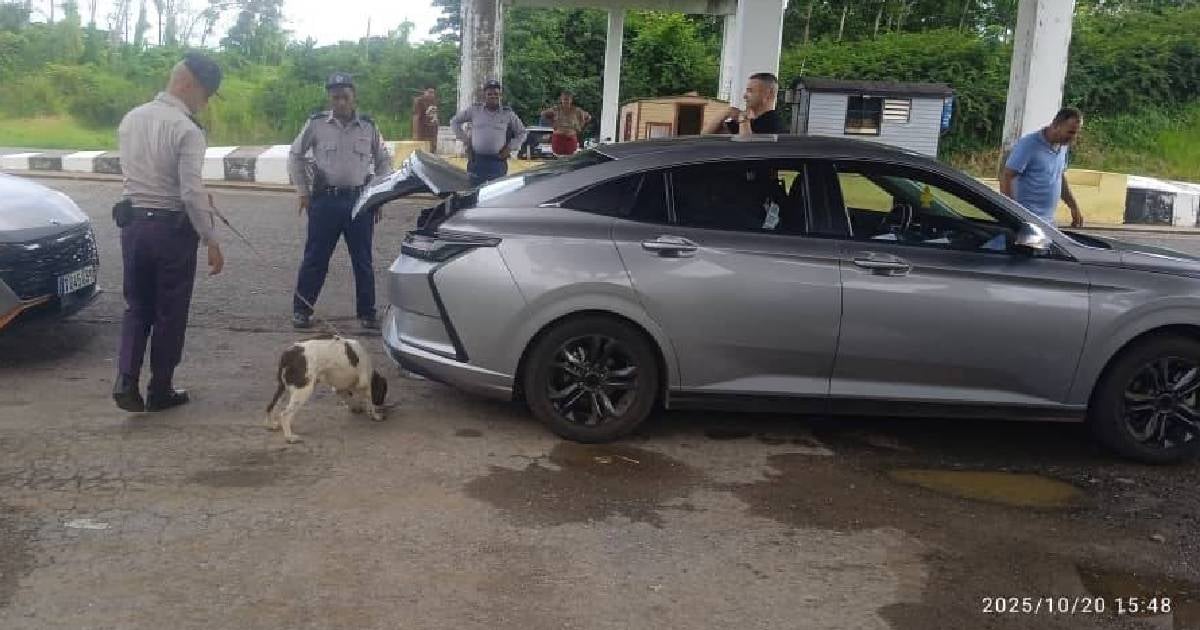
Under the slogan “We Win Against Drugs”, and pressured by the rising drug consumption on the island, the National Revolutionary Police and other forces of the MININT claim to have strengthened controls at terminals, road checkpoints, and strategic areas, using trained dogs for the detection of illicit substances.
“In Cuba, there is, and there will be, no space for drugs. Those who choose to ignore this should be aware that the consequences will be real and severe,” warned the agency of the Ministry of the Interior on social media.
In Pinar del Río, authorities stated that the "search for any trace of illicit substances" has intensified, while in Holguín the eighth edition of the National Operation “Against Drugs We Win” took place, with arrests in the municipalities of Urbano Noris, Mayarí, and Holguín, and warnings issued to individuals allegedly linked to these crimes.
According to MININT, the strategy includes everything from controls in community pharmacies to educational talks in schools in Banes, Gibara, and other municipalities.
In the ESBU Raúl Cepero Bonilla, students and teachers participated in a "frank debate" about the consequences of drug use, according to the official report.
In parallel, the Border Guard Troops patrol the coasts of Gibara and Guardalavaca to “enhance monitoring against possible attempts of maritime trafficking.”
Also in Havana, the University of Computer Sciences (UCI) hosted a "preventive intervention" regarding the legal and health consequences of drug trafficking and use, with participation from authorities of the Communist Party, the municipal government, and representatives of the Anti-Drug Enforcement Agency.
The meeting included discussions on the legal and social impact of drug trafficking, the risks to mental health, and the importance of prevention in the educational sector. The organizers stated that there is “zero tolerance” from the State towards this phenomenon.
“This struggle is not only the responsibility of the authorities, but of everyone. Only together, from family, school, and community, can we protect our future and win the battle against this evil,” the MININT insisted in its statement.
Although authorities insist on portraying Cuba as a "drug-free" country, the growing number of arrests, seizures, and operations in recent months points to a more complex reality.
Unofficial sources and citizen testimonies indicate an increase in drug consumption among young people, particularly in urban areas, driven by the economic crisis and lack of opportunities.
On social media, some users have questioned the triumphant rhetoric of the campaign, pointing out that the Cuban state prioritizes repression over rehabilitation and that the real issue lies in the deterioration of the social fabric and the loss of values.
While the regime speaks of "moral and preventive victory," the population faces a landscape marked by poverty, youth exodus, and despair—a fertile ground for the evils that the system itself claims to combat.
Filed under: