
Related videos:
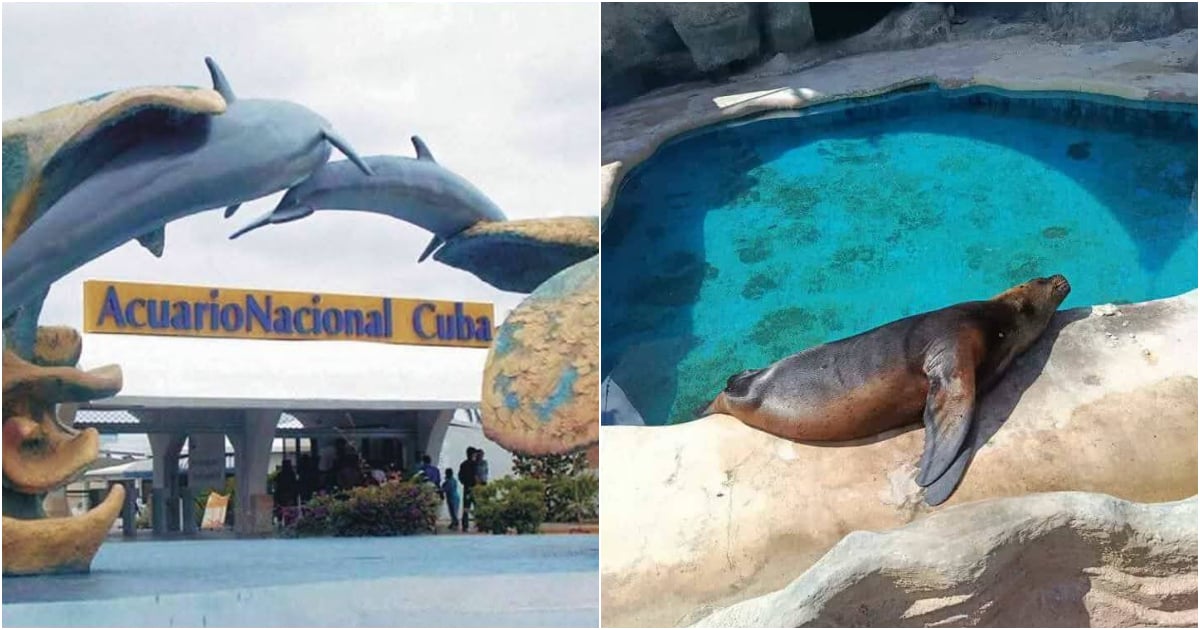
A Cuban mother reported on social media the severe deterioration and neglect she witnessed at the National Aquarium of Cuba in Havana, where she claimed to have observed scenes of animal cruelty and sorrow before the helpless gaze of her son.
“Families, I say this from the heart: we left with more sadness than joy. My son was incredibly excited... and we ended up with our souls shattered,” wrote the woman in a testimony shared on the Facebook page of the user La Tijera, which quickly went viral on social media.
The visitor reported that there are no shows, performances, or educational activities, only silence, neglect, and animals in evident suffering.
"The seal they keep there... you can tell by its eyes that it wants to leave Cuba more than anyone else. My child told me: 'Mom, rescue her, she's all alone.'"
According to the description, the jicoteas have broken shells and swim in green water, a small shark moves aimlessly in a narrow tank, and the fish tanks are in ruins, with peeling walls and a nauseating smell.
"That is neither environmental education nor children's entertainment; it is torture," he concluded.
The testimony was confirmed by the organization Bienestar Animal Cuba (BAC), which described the situation at the Aquarium as "deeply sad" and reported that the facilities "are in a deplorable state."
The group indicated, via a message on its Facebook page, that despite the deficiencies, the venue continues to charge full admission to visiting families.
BAC requested the management of the National Aquarium to adopt urgent measures to improve the well-being of the animals, enhance cleanliness, and ensure a dignified environment.
"We know that the economic crisis affects everyone, but the lack of resources cannot justify negligence. Taking care of them is not a luxury; it is a moral duty," she emphasized.
Reports about the deplorable condition of the iconic Havana facility, once a symbol of recreation and environmental education, have become increasingly common in recent months.
In June, a family visit confirmed the poor condition of the facility, characterized by neglect, structural deterioration, and the clear lack of care for the marine animals that still remain in the enclosure.
At the end of August, a report broadcast by the Canal Habana emphasized that the center's primary urgency is the replenishment of marine life.
Considering that the population of sea turtles has drastically decreased, the institution requested special permits from the Ministry of Food Industry to capture new specimens, according to the source.
A few weeks later, the arrival of two green turtles (Chelonia mydas) was announced, as part of the efforts of the "Las Mar-tinez" project, led by Jorge Félix Martínez, in response to a collaborative action aimed at promoting the conservation of marine species, despite the critical state of the country's main oceanographic center.
Founded in 1960, the National Aquarium has promoted itself for over half a century as a center dedicated to scientific research and environmental education focused on the preservation of marine life.
However, testimonies from non-governmental organizations and reports from animal rights advocates have indicated that, behind that conservationist image, the facility may have operated as a source for unregulated dolphin trafficking, primarily destined for nations that maintain diplomatic relations with the Cuban government.
According to these allegations, these transactions—carried out without public environmental oversight or verifiable protocols—are said to have represented a source of foreign currency income during times of economic hardship, sacrificing the welfare of animals and operating in institutional opacity.
Filed under: