
Related videos:
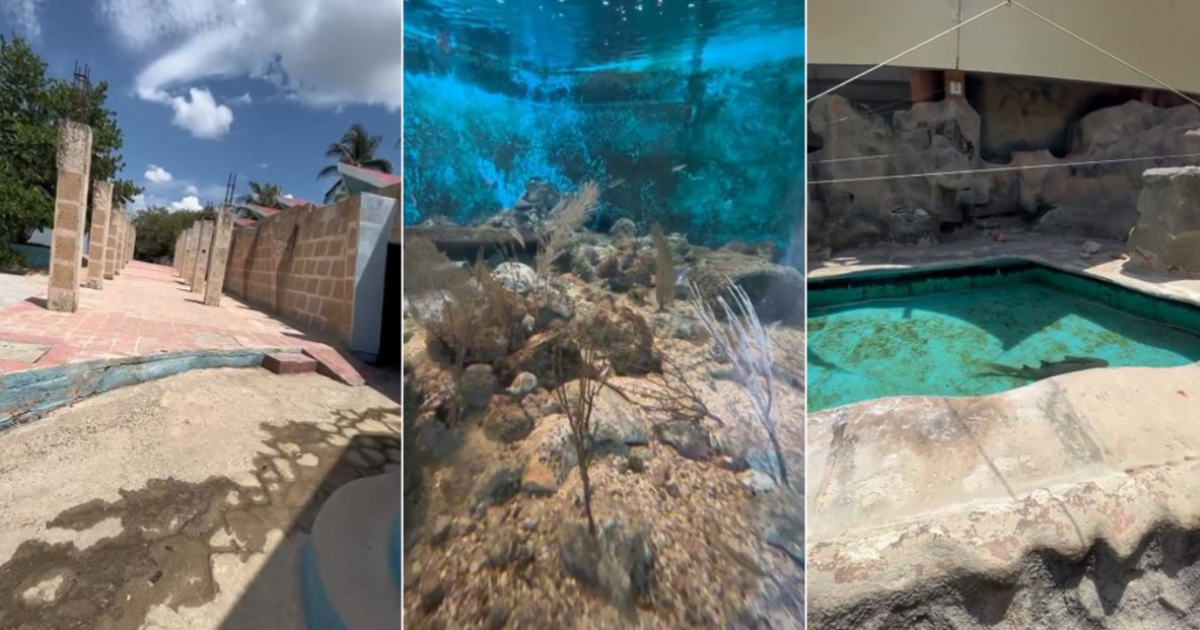
A recent family visit to the National Aquarium of Cuba, shared on social media by the user @yaimara.jose, has sparked a new wave of public outrage regarding the current state of the facility, characterized by neglect, structural deterioration, and a clear lack of care for the marine animals that still remain on the premises.
"It's very sad to enter here and see it in these conditions, nothing like the last time I visited (many years ago). You feel a sense of sadness and neglect upon entering through that door; it makes you not want to continue," wrote the Cuban in a message accompanied by images showing poorly maintained ponds, empty spaces, and a sparse presence of animals.
Your complaint not only reflects the citizens' discontent with the decline of a center that was once a symbol of recreation and environmental education, but it also revives an old debate about the dark role that the Aquarium played under the Cuban regime, which for several years turned it into a facade for covert operations involving the trafficking of dolphins and other marine species.
Inaugurated in 1960, the National Aquarium has been presented for decades as a scientific and educational institution focused on the care of marine ecosystems.
However, independent reports and activist allegations have stated that, beyond its environmental facade, the aquarium was used as a platform for the irregular export of dolphins, especially to countries with diplomatic ties to Havana.
These operations, conducted outside of any transparent environmental scrutiny, would have been intended to generate foreign currency during times of crisis, at the expense of animal welfare and without accountability.
The complaints from Cuban families are not isolated. Users on platforms like Facebook, TikTok, and Instagram have shared similar experiences over the past few years: leaks in roofs, uncleaned ponds, species in cramped spaces, and lacking basic conditions.
"It's sad to see those few animals living like that," commented another visitor.
At the same time, there is a growing perception that while public facilities are falling apart, private businesses linked to international tourism display a contrasting vitality and care. “The aquarium is destroyed, but the five-star hotels for tourists are impeccable. Where are the country’s priorities?” wrote an internet user.
The deterioration of the National Aquarium recalls other emblematic cases of institutional neglect in Cuba, such as Lenin Park or the Sports City of Havana.
The repetition of the same pattern has led many Cubans to lose hope for a genuine recovery of these public spaces.
In April 2022, the death of the sea lion "Jocker," allegedly due to malnutrition, raised alarms. Although the management of the Aquarium denied this account, attributing it to health problems related to the animal's age, activists like Beatriz Batista called for the immediate closure of the facility and the relocation of the species.
Meanwhile, the Aquarium continues to promote activities such as "dolphin encounters" on its social media, with prices that are unaffordable for most Cubans.
Frequently Asked Questions about the Deterioration of the National Aquarium of Cuba
What is the current status of the National Aquarium of Cuba?
The National Aquarium of Cuba is in a state of neglect and significant deterioration, with damaged structures, poorly maintained ponds, and a notable lack of care for the marine animals. This situation has sparked public outrage and a series of criticisms directed at the Cuban regime for the lack of maintenance of public facilities.
What complaints have been made about the National Aquarium?
Infrastructure problems, lack of cleanliness in the ponds, and a limited presence of animals have been reported. Additionally, there are allegations that the aquarium has been used as a front for dolphin trafficking operations and other marine species, which may have been exploited to earn foreign currency irregularly during times of crisis.
How does the state of the National Aquarium compare to other facilities in Cuba?
The National Aquarium reflects a pattern of neglect similar to that of other public facilities in Cuba, such as Lenin Park and the Sports City of Havana. Meanwhile, private businesses associated with international tourism display contrasting maintenance and care, which has led to criticism regarding the regime's priorities when it comes to infrastructure investment.
What impact does the deterioration of the National Aquarium have on public perception?
The deterioration of the National Aquarium has reignited the debate over inefficient management of public spaces in Cuba and institutional neglect. Citizen outrage has grown, especially when observing the contrast between tourist facilities and the conditions of places that should be publicly accessible and educational.
Filed under: