
Related videos:
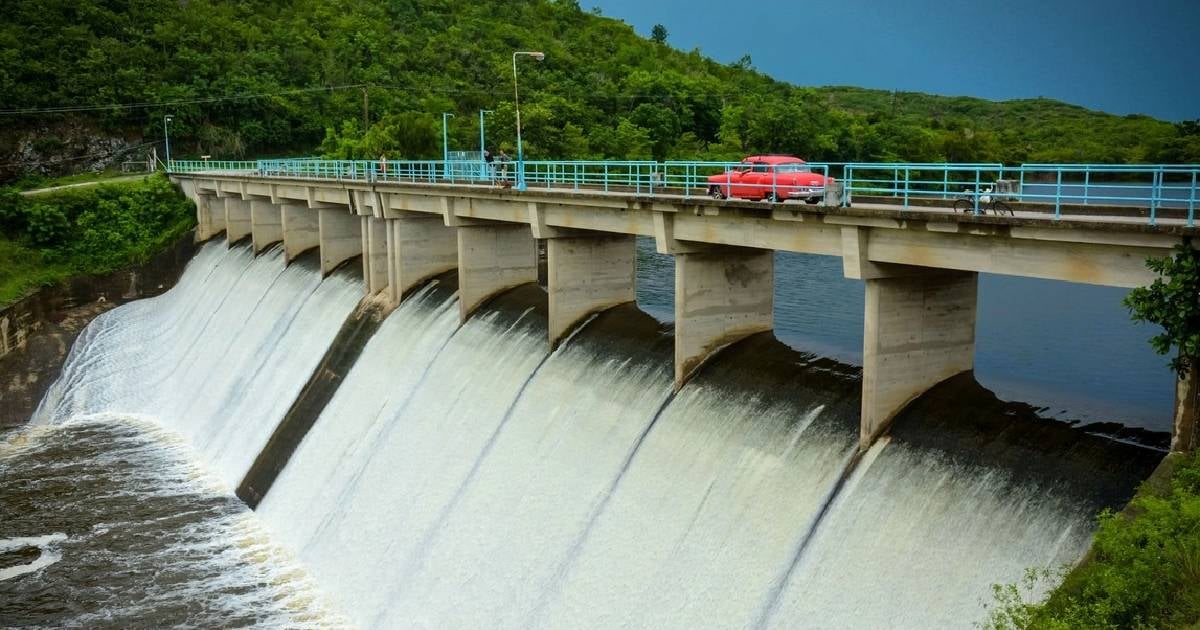
In light of Hurricane Melissa's approach, Holguín, Granma, and Santiago de Cuba are intensifying surveillance over their reservoirs, which are capable of accommodating additional rainfall, while they organize preventive evacuations in at-risk areas.
The Provincial Defense Council of Holguín reported that the reservoirs in the province are holding nearly 67% of their capacity, while the Jagüeyes dam is releasing water in a controlled manner.
The authorities keep constant communication with the population and are preparing protective measures to face possible impacts from heavy rains, reported the digital site of the provincial broadcaster Radio Angulo.
In Granma, the 11 reservoirs in the eastern territory are approximately 60% full, according to Marbelis Campos Busquet, delegate of the National Institute of Hydraulic Resources.
The Cauto del Paso dam operates with controlled discharges, while the Paso Malo, Cilantro, Guisa, and Corojo dams receive special attention due to potential spillovers.
It is expected that the reservoirs could accommodate up to 940 million cubic meters more before reaching their limit, reported the provincial newspaper La Demajagua.
The intense rainfall that is forecasted could alleviate the effects of the prolonged drought that these areas have been facing in recent months.
Santiago de Cuba is also strengthening preventive measures, prioritizing the monitoring of the Carlos Manuel de Céspedes and Protesta de Baraguá reservoirs, identified as the main points of risk due to the potential overflow from increased rainfall.
The authorities ordered the immediate evacuation of individuals residing downstream of both reservoirs, with particular attention to vulnerable groups, including children, pregnant women, and patients with chronic illnesses, who will be relocated to emergency shelters.
It was stated that the evacuation should be completed by 11:00 AM this Sunday.
Constant monitoring and preparation of hydraulic systems aim to ensure that reservoirs can accommodate the forecasted rainfall volume, minimizing flood risks and protecting communities in critical areas.
According to the latest report from the U.S. National Hurricane Center (NHC), Melissa will continue to strengthen on Monday and will impact eastern Cuba on Tuesday night.
The meteor, which by Sunday morning had sustained winds of 220 km/h, could intensify in the coming hours and reach Category 5, the highest on the Saffir-Simpson scale (winds of over 250 km/h), warned the director of the Provincial Meteorological Center of Guantánamo, Carlos Román González.
“We must prepare for the impact of a major hurricane,” stated the expert, who specified that the main effects of the phenomenon in Guantánamo will be torrential rains, hurricane-force winds, and tidal surges both to the north and south of the territory.
The Institute of Meteorology of Cuba warned today about the imminent strong waves in the southern seas of Granma, Santiago de Cuba, and Guantánamo.
Filed under: