
Related videos:
Holguín is facing the worst drought in 10 years, with over 200,000 residents affected by cuts and reductions in supply, while authorities and generals oversee hydraulic projects that arrive late and do not resolve the collapse of the system.
During his visit to the province, Major General Ramón Pardo Guerra, head of the National Civil Defense General Staff, toured reservoirs and pumping stations alongside the First Secretary of the Party in Holguín, Joel Queipo Ruiz, and Governor Manuel Hernández Aguilera.
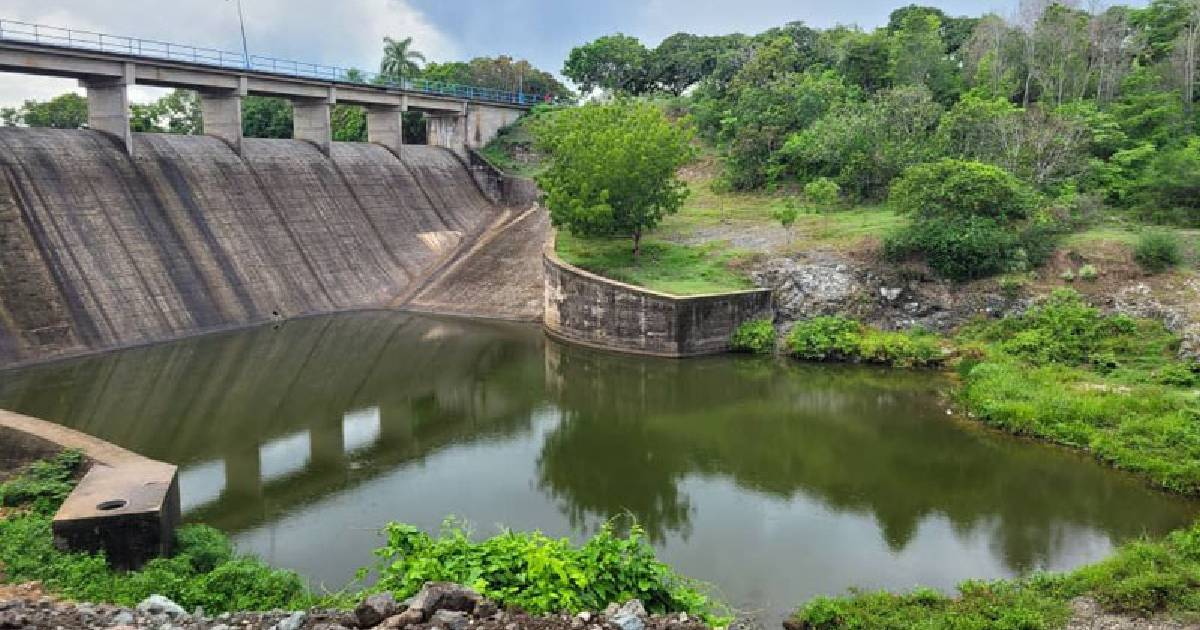
They verified that the Cacoyoguín reservoir, one of the three that supplies the provincial capital, has barely 2.7 million cubic meters of water -50% of its capacity-, which has paralyzed the northern system and affects more than 85,000 people, reported the official newspaper ¡Ahora!
Although a new pumping station is being built and is "almost completed," which would allow for the reservoir coverage to be extended to 162 days, the problems are structural.
From January to date, precipitation has hardly reached 54% of the historical average, with municipalities such as Gibara, Rafael Freyre, Banes, Antilla, Mayarí, and Moa at critical levels below 50%.
The delegate of Hydraulic Resources, Juan Mario Hechavarría, admitted that the reservoirs in the province are 60.4% full, while breakdowns in equipment and electrical failures continue to affect the service in municipalities such as Báguanos, Banes, Gibara, and Frank País.
The shortage of rainfall is compounded by the ongoing power outages and equipment breakdowns. As a result, more than 213,000 residents in the province are currently facing difficulties with the water supply due to these reasons, the source stated.
To alleviate the pressure, private wells have been activated in institutions such as the Vladimir I. Lenin Hospital, the Felipe Fuentes Meat Company, and the Dairy Combine, in addition to the revival of the Cauto-Güirabo transfer, which had been halted for three years, he added.
However, thousands of families continue to rely on tankers and alternative sources, with the added risk of contamination.
Despite the official rhetoric of "innovative solutions," the reality is that the drought has once again exposed an overwhelmed hydraulic system, unable to ensure the most basic need: drinking water for its citizens.
Since January, the northern system that supplies the city of Holguín has experienced recurrent outages due to insufficient electrical power, an issue that is worsened by the drought and the lack of fuel for the generators attempting to maintain the service.
In May, 39.4% of the residents in the province of Holguín, which amounts to over 370,000 people, were affected by the water supply service due to a combination of prolonged drought, frequent blackouts, and technical failures in the pumping systems.
The eastern territory recorded a 22% deficit in rainfall at that time. According to a report from the Meteorological Center, 47.7% of the province was experiencing meteorological drought (which occurs during a prolonged period without rainfall or with precipitation that results in accumulations below the average), particularly in Banes, Sagua de Tánamo, and Moa.
The water crisis in Cuba has reached very alarming levels, as more than three million people, amounting to 30% of the population residing in the country, are currently suffering from a total or partial lack of this resource throughout the nation, according to official data released this Monday by national television.
The municipality of Santiago de Cuba is experiencing a critical situation, as the approximately 500,000 residents face the most intense drought in 10 years, with reservoirs at minimal levels and water distribution cycles of up to 38 days, amidst accumulated failures in the hydraulic system.
More than 90,000 people in the city of Las Tunas are experiencing difficulties in accessing a regular water supply in their homes, particularly in the higher areas of the urban landscape, where the pressure never reaches the households.
The Zaza dam, the largest reservoir in Cuba, accumulates only 106.4 million cubic meters of water, which represents just 12% of its design capacity of 1,020 million cubic meters and places it at the second lowest point in its history.
In contrast, in Ciego de Ávila, 30% of the water is lost through damaged pipelines, complicating the supply which already reaches cycles of nine days.
The problems with drinking water distribution also affect several municipalities in Havana and Matanzas, among other areas.
The Cuban government decided to release from their usual jobs the district delegates so they can fully dedicate themselves to addressing the needs of the population, amid a deep energy crisis and water supply issues that have sparked growing protests in several regions of the country.
Frequently Asked Questions about the Water Crisis in Holguín and Cuba
How many people are affected by the water crisis in Holguín?
More than 200,000 people in Holguín are impacted by the water crisis, caused by a combination of drought, power outages, and failures in pumping systems. This situation is part of one of the worst droughts in the region in the last ten years, severely affecting the water supply.
What is the situation of the reservoirs in Holguín?
The Cacoyoguín reservoir, one of the main ones in Holguín, is at 50% capacity, which has halted the northern system and affects more than 85,000 people. Overall, the reservoirs in the province are at 60.4% of their capacity, well below what is needed for a stable supply.
What measures has the Cuban government taken to address the water crisis?
The Cuban government has decided to release the district delegates from their regular jobs so they can fully focus on directly assisting the population. However, these measures come too late in the face of a persistent drought and a water infrastructure that is unable to provide stable service. The situation continues to reveal an overwhelmed system incapable of addressing longstanding structural problems.
How does the energy crisis affect the water supply in Holguín?
The energy crisis in Cuba, marked by frequent blackouts that can last up to 18 hours a day, severely affects the water supply. Without sufficient electricity, pumping systems cannot operate continuously, worsening the existing water shortage caused by drought.
Which regions in Cuba are most affected by the lack of water?
In addition to Holguín, regions such as Santiago de Cuba and Las Tunas are facing critical situations. In Santiago, water distribution cycles can exceed 30 days in some municipalities. In Las Tunas, more than 90,000 people have difficulty receiving water regularly due to the drought and infrastructure issues.
Filed under: