
Related videos:
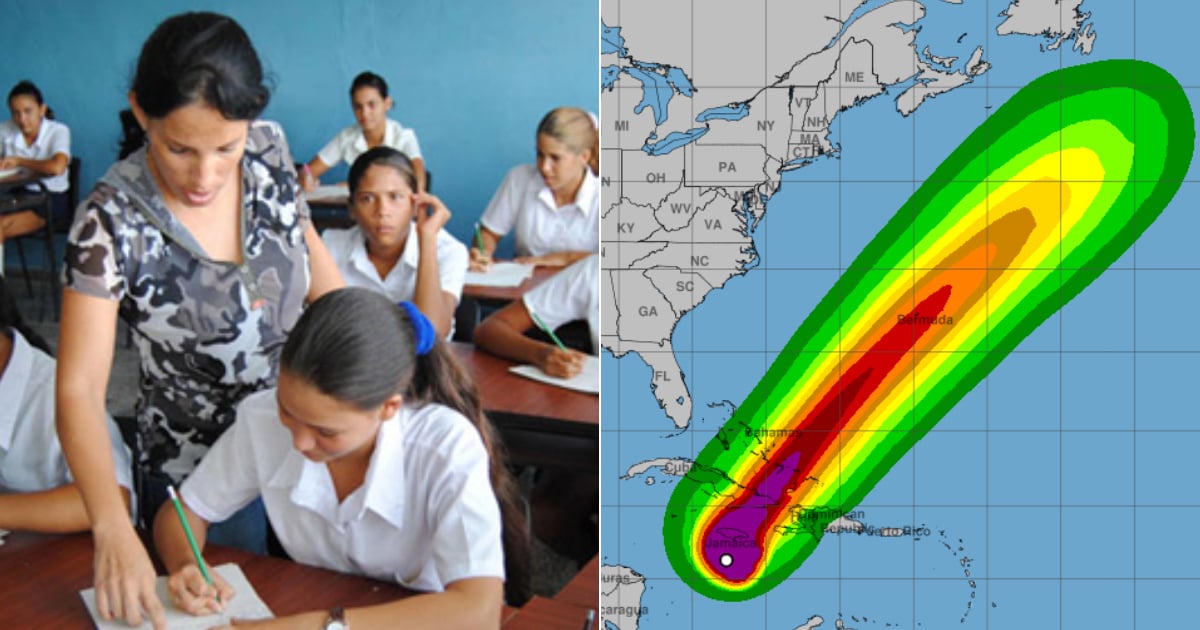
The Ministry of Education of Cuba announced the suspension of classes from Guantánamo to Camagüey in anticipation of the imminent impact of the hurricane Melissa, which reached Category 5 this Monday, with sustained winds of 257 kilometers per hour, according to the latest report from the National Hurricane Center (NHC).
The measure, published on Sunday in an official note from the Ministry of Education (MINED), includes all types and levels of education in the eastern provinces of Cuba most threatened by the cyclone.
Meanwhile, in the provinces of Ciego de Ávila, Sancti Spíritus, Cienfuegos, and Villa Clara, teaching activities are being gradually suspended only in internal centers, while other educational levels continue to be monitored. In the west —from Matanzas to Pinar del Río, including Isla de la Juventud— classes are proceeding normally, although authorities warn that decisions could change depending on the hurricane's progress. “The school year will have interruptions corresponding to the declared phases and the assessments of the Defense Councils,” stated the ministry, urging the population to maintain “caution, solidarity, and responsibility” in caring for children and adolescents.
Transport halted and mass evacuations
The school closures are accompanied by the total cancellation of trains, buses, flights, and maritime transport in the eastern part of the country, according to the Ministry of Transport (MITRANS). Departures of national trains — such as the Havana-Guantánamo and Havana-Santiago — as well as flights to and from Santiago de Cuba and Holguín have been suspended. Navigation between Batabanó, Nueva Gerona, and Cayo Largo del Sur has also been interrupted.
The Cuban government confirmed the evacuation of around 650,000 people in the most threatened provinces. In Santiago de Cuba, more than 258,000 people will be displaced; in Guantánamo, nearly 140,000; and in Holguín, about 69,000. Authorities assure that evacuation and food preparation centers have been established, although citizen reports indicate a lack of information, disorganization, and shortages of supplies.
Lines, shortages, and questioned measures
Amid the emergency, the government of Guantánamo announced the sale of charcoal for cooking in anticipation of possible power outages. However, the measure led to long lines and frustration due to a lack of coordination. "Where and when is the sale? No one knows and no one responds," wrote a user on the profile of the Solvisión telecentre.
There was also controversy surrounding the publication of photos by the Electric Company of Holguín, which showed solar panels "secured with tape" to withstand the hurricane. The images sparked mockery on social media, where Cubans questioned the effectiveness of such measures against winds exceeding 200 km/h. "It would have been more sensible to take them down for a few days than to watch them fly away," commented an internet user.
Hurricane Melissa: Category 5 and direct threat
The hurricane Melissa has intensified to category 5, with maximum sustained winds of 160 mph (257 km/h) and central pressure of 917 mb, according to the latest bulletin from the NHC. Weather conditions in Jamaica are expected to deteriorate this Monday, and the system is forecasted to move towards southeastern Cuba between Tuesday night and Wednesday morning.
The agency warned that the cyclone could cause storm surges of up to nine feet, catastrophic flooding, and landslides in the mountainous areas of eastern Cuba.
A country vulnerable to a powerful hurricane
The arrival of Melissa finds Cuba in the midst of a deep economic crisis, with blackouts, food shortages, and a declining infrastructure system. On social media, Cubans express fear and distrust in the regime's ability to protect the population.
"If the power goes out with a heavy rain, just imagine what will happen with a category 5 hurricane," wrote a resident of Holguín, reflecting the feelings of many in the most exposed provinces.
Filed under: