
Related videos:
Authorities in Granma province have initiated the controlled release of water from the El Corojo reservoir in the municipality of Guisa this Tuesday, as a precautionary measure against the heavy rains associated with Hurricane Melissa.
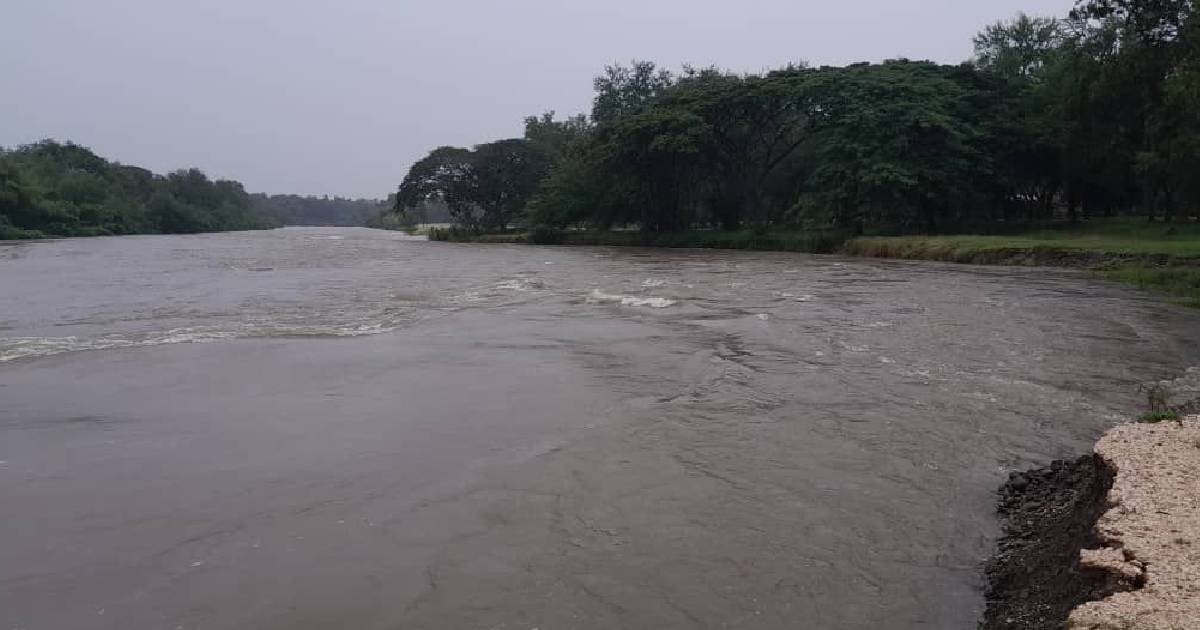
The Bayamo River is experiencing a significant rise at this hour, according to official reports from local television.
According to information published by CNC TV Granma, water releases are being carried out in a controlled manner to prevent overflow and minimize flooding risks in nearby communities, in light of the threat posed by Hurricane Melissa, which is approaching eastern Cuba with heavy rainfall and strong winds.
The measure aims to reduce the pressure on the dams and prevent sudden overflow during the passage of the cyclone, they explained.
"The Bayamo River is currently experiencing a significant rise in its level due to controlled discharges being carried out from the El Corojo reservoir in Guisa as a preventive measure against the heavy rains forecasted by Hurricane Melissa," the official report stated.
Local authorities urged the population to stay alert to information from the municipal defense councils and to avoid moving through low-lying areas or riverbeds.
So far, no material damages or casualties have been reported, although rainfall continues to increase in the central and southern parts of the province.
The hurricane Melissa, currently a Category 5, continues its trajectory towards the northeast, and according to the latest report from the National Hurricane Center (NHC) of the United States, the phenomenon is expected to make landfall in the coming hours in the area of Uvero–Chivirico, in Santiago de Cuba, with sustained winds of up to 295 km/h and extreme rainfall that could lead to flooding and landslides in the eastern provinces.
Controlled releases are part of the set of measures implemented by provincial authorities in response to the meteorological situation.
According to official sources, the evacuation centers are now active in several municipalities of Granma, including Guisa, Buey Arriba, and Bartolomé Masó.
The National Institute of Hydraulic Resources (INRH) reported that monitoring continues on all reservoirs in the eastern region, especially those with high filling levels following recent rains.
The director of the National Hurricane Center, Michael Brennan, described Melissa as a "catastrophic" hurricane, with the potential to cause total structural damage along its path through Jamaica and eastern Cuba.
In statements from Miami, the official urged residents of vulnerable areas to seek immediate shelter and avoid going outside during the passage of the eye of the cyclone.
"We are facing a very dangerous scenario that will unfold in the coming hours. Winds could exceed 200 miles per hour in mountainous areas, and rainfall of up to 25 inches is expected in isolated regions," Brennan warned.
The NHC also predicts a storm surge of between 8 and 12 feet (2.4 to 3.6 meters) for the southeastern coast of Cuba, accompanied by destructive waves and possible coastal flooding in the municipalities of Santiago de Cuba, Granma, and Guantánamo.
Filed under: