
Related videos:
While Hurricane Melissa lashes out at the Caribbean after making landfall in Jamaica as a powerful category 5 system, with winds of up to 295 kilometers per hour, Cuba's Electric Union (UNE) defended the protection measures implemented in the island's solar parks, claiming that these actions are “in line with international standards.”
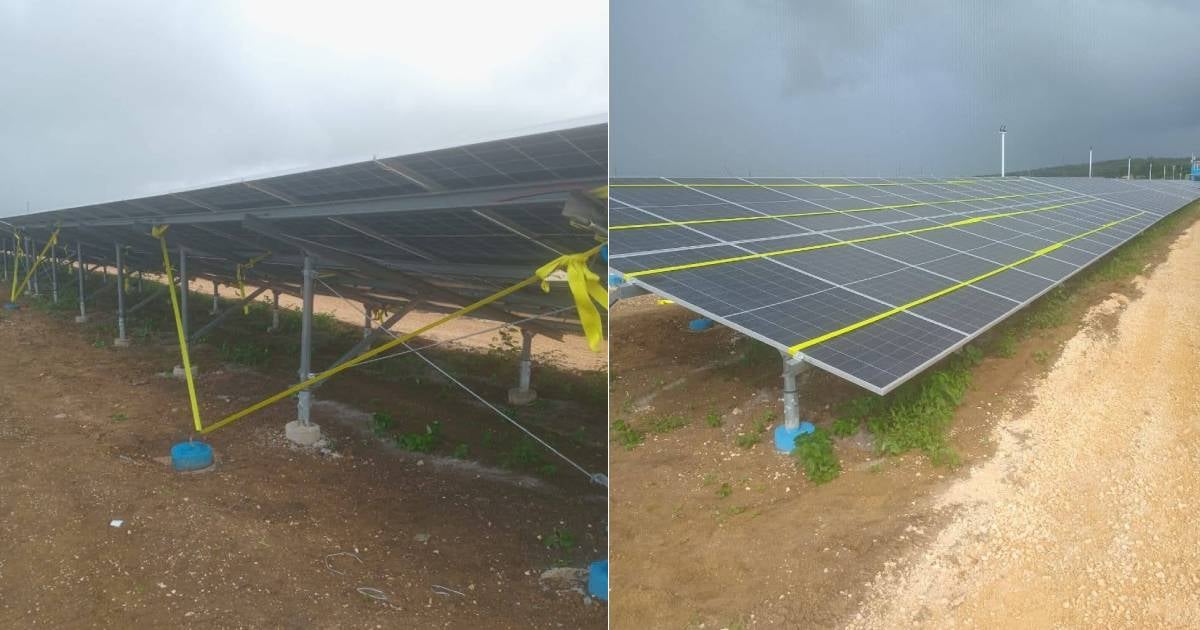
The publication from the state agency comes after a wave of criticism and ridicule generated by images of solar panels “tied” with plastic straps in the Serones II park in Holguín and at other facilities in eastern Cuba.
The photos, shared by the authorities themselves, sparked disbelief and skepticism among internet users who questioned the effectiveness of those measures in the face of such a massive phenomenon.
In May of this year, the UNE stated that photovoltaic systems in Cuba "comply with the technical regulations established by manufacturers and the current international standards," and that the structures are designed to withstand winds of up to 228 kilometers per hour, according to the book "Photovoltaic Energy for Cuba" by Professor Daniel Stolik, a pioneer in the development of such projects in the country.
The agency explained that the solar parks in the country have a configuration that "enhances wind resistance," thanks to their low height, southward tilt, row arrangement, and, in some cases, natural protection from the terrain.
The National Hurricane Center (NHC) confirmed this Tuesday that Melissa made landfall in the southwest of Jamaica, near New Hope, with maximum sustained winds of 295 km/h and a central pressure of 892 millibars, describing it as “one of the most powerful in Atlantic history.”
The U.S. agency warned of catastrophic winds, storm surges, and flash flooding, urging residents to remain sheltered.
As the cyclone slowly moves northeast and threatens to approach eastern Cuba, many citizens watch the official responses with a mix of fear and skepticism.
On social media, the phrases of "commitment and responsibility" stand in stark contrast to the genuine concern of those wondering if, this time, prevention will hold up as well as the slogans.
Filed under: