
Related videos:
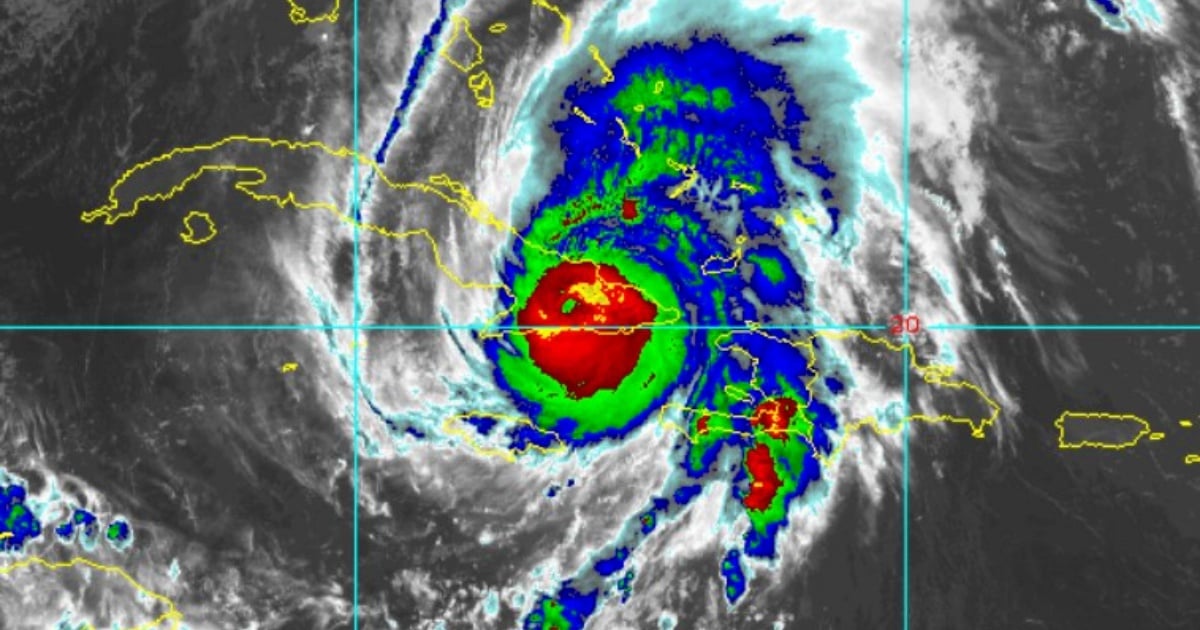
Hurricane Melissa, which made landfall this morning in Cuba as a category 3 on the Saffir-Simpson scale, is moving vigorously over the eastern part of the country, leaving behind a trail of heavy rains, floods, dangerous storm surges, and destructive winds that are affecting several provinces.
At 5:00 AM this Wednesday, the center of the phenomenon was located just 95 kilometers west of Guantánamo, moving northeast at a speed of 19 km/h, as reported in its most recent bulletin by the National Hurricane Center (NHC).
The sustained winds of the hurricane reach speeds of up to 185 km/h, with even stronger gusts.
In Leeward Point Field, in Guantánamo Bay, gusts of up to 120 km/h were reported, reflecting the severity with which Melissa is impacting eastern Cuba.
Direct impact on the Cuban east
The provinces of Granma, Santiago de Cuba, Guantánamo, Holguín, and Las Tunas are under hurricane warning, as confirmed by the National Hurricane Center.
In these areas, the authorities have activated emergency protocols and thousands of families have sought shelter in state-run facilities or in safe homes, in anticipation of the imminent impact of the system.
Although the center of the storm will quickly cross the island this morning, its effects will extend well beyond the cyclone's core.
The area of winds with tropical storm strength extends up to 295 km from the center, which has increased the impact radius across much of the eastern territory.
Torrential rains and catastrophic flooding
One of the main dangers associated with Melissa is heavy rainfall.
Accumulations of between 250 and 500 mm of rain are expected in areas of eastern Cuba, with localized amounts that could reach 625 mm (25 inches) in mountainous regions such as the Sierra Maestra and the eastern part of Holguín.
These conditions have already caused flash floods and landslides in rural communities, where saturated soils have given way under the pressure of water.
Local authorities have warned of the possibility of catastrophic flooding, especially in low-lying areas and near rivers and reservoirs.
Rescue and Salvage Brigades, Civil Defense, and medical personnel remain deployed to respond to any emergency situation.
Melissa's passage through Santiago de Cuba leaves devastation in multiple municipalities
A report from journalist Cuscó Tarradell indicated that Hurricane Melissa has strongly struck the province of Santiago de Cuba, causing heavy rains, hurricane-force winds, and severe damage to infrastructure.
The municipality of Guamá has been the most affected, with waves exceeding 4 meters and visible damage to coastal homes.
In the city of Santiago de Cuba, flooding has been reported in urban areas and damage has occurred at the recreational center Zona+.
In El Cobre, the river's rise has impacted key buildings and left 17 people trapped in Loma del Cimarrón, where rescuers have been working tirelessly.
Palma Soriano has experienced the overflow of the Charco Mono dam, with more than 150 mm of rain in less than an hour.
In Contramaestre, Segundo Frente, and San Luis, there have been reports of flooding, isolated communities, and the complete loss of productive areas such as Poza Blanca.
Rescue and salvage brigades have been deployed throughout the province, while the Civil Defense has warned that the coming hours will be decisive. Authorities have urged the population to stay home and follow official information channels.
Dangerous cyclonic swells
In addition to the wind and rain, Melissa generates a significant storm surge, with destructive waves pounding the southeastern coast of Cuba.
At the point of impact closest to the eye of the hurricane, wave heights are estimated to be 8 to 12 feet (2.5 to 3.5 meters) above normal tide levels.
This combination has caused coastal flooding in several locations, including bays and coves, which are already experiencing damage to fishing infrastructure and homes.
Rough seas of between 5 and 8 feet are also expected in the southeast Bahamas—where Melissa is heading in the coming hours—and up to 4 feet in the Turks and Caicos Islands.
Hurricane Melissa, categorized as extremely dangerous, made landfall in Cuba at 3:10 a.m. on Wednesday, October 29, along the southern coast of Santiago de Cuba province, in the municipality of Guamá, specifically at El Francés beach, near the city of Chivirico, as confirmed by the National Hurricane Center of the United States.
The radar and satellite images indicate that Melissa made landfall with maximum sustained winds of 195 kilometers per hour and a minimum central pressure of 952 millibars, keeping it as a Category 3 hurricane on the Saffir-Simpson scale.
The impact occurred after the system left a trail of destruction in Jamaica, where it caused catastrophic flooding, landslides, and severe structural damage.
A dangerous route to the Bahamas and Bermuda
The NHC forecast indicates that Melissa will continue its path toward the northeast, with a faster movement throughout the day.
The system is expected to move through the southeastern or central Bahamas this afternoon and pass near or west of Bermuda between Thursday afternoon and evening, still as a major hurricane.
The Bahamas is already preparing for the arrival of the hurricane, with active warnings throughout the region. Meanwhile, in Bermuda, a hurricane alert is in effect, with possible impacts starting on Thursday night.
Regional conditions: Haiti, Jamaica, and Hispaniola
The impact of Hurricane Melissa has not been limited to Cuba. In Jamaica, where between 12 and 24 inches of rain have already accumulated, flash flooding and landslides persist, especially in mountainous areas.
Although the winds are starting to diminish on the island, the authorities have urged the population to remain sheltered.
In Haiti and the southern part of Hispaniola, significant rainfall is also reported, with accumulations that could exceed 1,000 mm in certain areas. These downpours are impacting vulnerable infrastructure and causing disruptions in communications.
Filed under: