
Related videos:
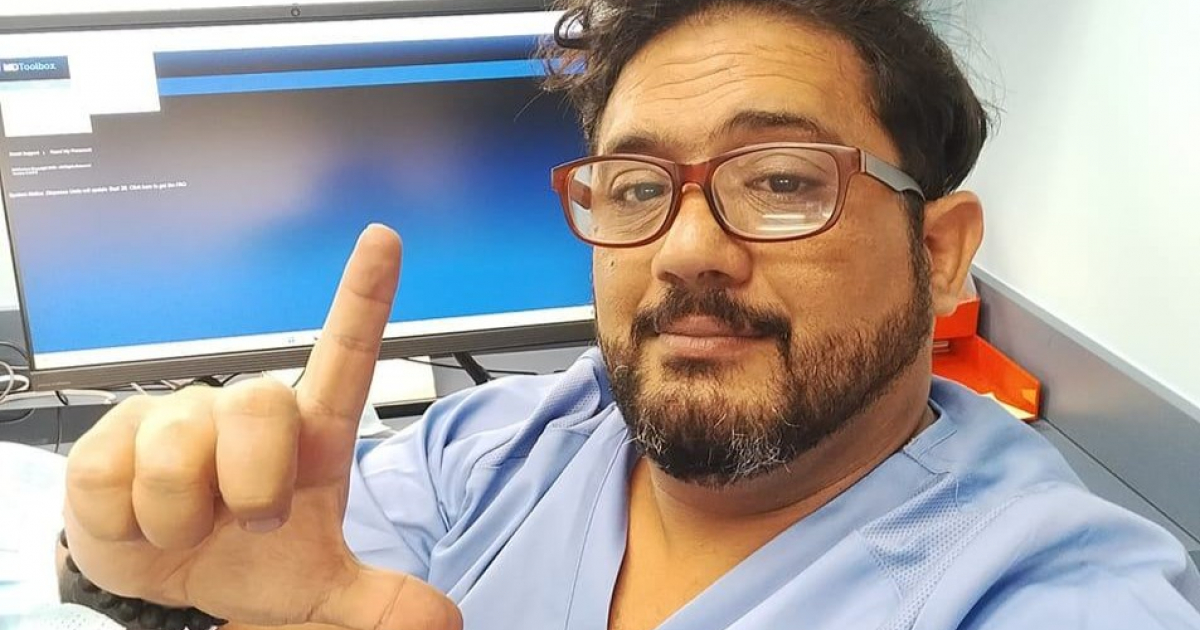
Doctor Alexander Jesús Figueredo Izaguirre, one of the most recognized exiled Cuban doctors for his activism against the Castro regime, has released an "open letter" online offering to return to Cuba to care for the victims of the Hurricane Melissa.
In an emotional post published on Facebook, Figueredo - expelled from the Cuban healthcare system in 2021 and currently residing in Houston, Texas - addressed U.S. Secretary of State Marco Rubio, who announced his Government's willingness to provide immediate assistance to the Cuban people.
"We receive your offer of humanitarian aid with the same hope that a community looks to the sky after a hurricane," wrote Figueredo.
"We are ready. Ready to return to Cuba with our lab coats, not with slogans. Ready to heal wounds, not to repeat speeches. If the United States creates a humanitarian corridor without the intervention of the Communist Party, it will find in us a white army willing to enter the country and directly assist the people."
The doctor, known for his criticisms of the precariousness of the Cuban health system, emphasized that "the real revolution today is healing."
In his message, he also held the regime responsible for exacerbating the suffering of those affected by prioritizing ideology over the most urgent human needs.
"The east of Cuba bleeds under the rubble left by Hurricane Melissa, and while they calculate the political cost, we just want to save lives," he wrote, referring to the catastrophe that has left entire communities without water, electricity, or adequate medical care.
Figueredo's message follows the announcement of humanitarian aid by Marco Rubio, who stated that the United States can provide assistance to affected Cubans, both directly and through organizations and local partners capable of distributing it effectively.
Rubio, one of the staunchest critics of the Havana regime, emphasized that his country's solidarity is directed towards the people and not the Cuban government.
"We stand in solidarity with the brave people of Cuba, who continue to fight to meet their basic needs," he wrote on X, in a gesture of support for civil society in the face of the regime's inefficiency.
An uncomfortable voice for the Cuban regime
Dr. Figueredo Izaguirre, originally from Granma, worked for years in the municipality of Río Cauto, where he attended to more than 60 patients daily in the Urology clinic before being professionally disqualified for political reasons.
In 2021, he was expelled from the health system and monitored by State Security after publicly criticizing the lack of medications, supplies, and working conditions for Cuban doctors.
His case became a symbol of state harassment against dissenting health professionals.
In July 2022, after a migratory journey through Central America alongside fellow doctor and activist Alexander Pupo Casas, he managed to reach the United States, where he works in the healthcare sector while validating his degree.
Since his exile, Figueredo has maintained a frontline stance against the Cuban government, which he accuses of having destroyed public healthcare and using doctors as instruments of propaganda.
"We are the ones who never betray our patients, the ones who continue to dream of a hospital free of lies and a country where healing is not a crime," he wrote in his letter.
The contrast between aid and propaganda
Figueredo's offer comes at a time when the Cuban government is trying to project an image of control and efficiency in the aftermath of the devastating Hurricane Melissa, while blaming the U.S. embargo for the economic damage that exacerbates the crisis.
However, reports from the ground reveal a different reality: flooded hospitals, a lack of fuel, medicine shortages, and a healthcare system collapsing after decades of neglect.
While Díaz-Canel tours affected areas speaking of "vitality" and "spirit of resilience," doctors inside and outside the Island are denouncing that the population is facing the tragedy almost alone.
In that context, the proposal from the exiled doctor takes on significant symbolic value: a call to action without slogans, and an implicit denunciation against the internal blockade that the State itself imposes on its people.
"If they let us in, we will go with our hands clean and our oath intact. Because healing, in Cuba, remains an act of rebellion," concluded Figueredo.
Filed under: